
The universe of stocks trading at a 12-month forward price-to-earnings (P/E) multiple of 50x or more has swelled by 2.5x to 104, indicating the growing froth in the market. In March 2023, the number of stocks with a P/E of 50x and 100x stood at 41 and 3, respectively, which has now grown to 104 and 9, according to an analysis by Kotak Institutional Equities (KIE).

'Sectors like e-commerce, small finance, housing finance, and healthcare are in great favour, and people are paying a PEG ratio of up to 5, which is dangerous.' 'Wealth destruction is inevitable.'
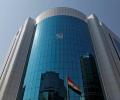
The Securities and Exchange Board of India (Sebi) is mulling changes to the 'fit & proper' criteria for market infrastructure institutions (MIIs), such as stock exchanges, in a bid to segregate the role of an individual from the entity, said sources. Under the current framework, wrongdoing by senior personnel could lead to a debarment of the MIIs such as stock exchanges, depository participants and clearing members-with quite a few such instances in the past. Additionally, Sebi is also mulling to introduce a clause through which any order passed against an MII will not affect their operations, unless it is specifically mentioned so in the order.

Adani group opened a $1.2 billion copper plant, bought a port in Odisha, raised stakes in a cement company and stitched an alliance with rival Mukesh Ambani's Reliance Industries, all in a matter of one week in signs that the apples-to-airport conglomerate has shrugged off the Hindenburg effect and is back to rapid expansion spree. In the last one week, Adani group has through regulatory filings and press statements announced expansions and investments in its mainstay ports business, diversification into metal refining, fund infusion into a two-year-old cement foray and continuing progress in the commissioning of its mega solar project.

Adani Enterprises Ltd, the flagship incubator of billionaire Gautam Adani's conglomerate, on Thursday reported a 37 per cent drop in March quarter net profit, bogged down by one-time past airport dues and commercial mining losses. Its consolidated net profit of Rs 450.58 crore in January-March - the fourth quarter of fiscal year 2023-24 - compares to Rs 722.48 crore net profit in the same period last year and Rs 1,888.45 crore earning in the preceding quarter, according to a stock exchange filing by the company.
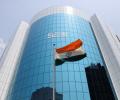
If Hindenburg or its partner do not join the investigation, then Sebi may pass an ex-parte order against it, which may be enforced as a foreign award in US courts.

Tata Motors reported a consolidated net profit of Rs 17,483 crore (adjusted for exceptional gains and losses) for Q4FY24, surpassing TCS' consolidated net earnings of Rs 12,434 crore. For the automotive major, this marked a 213.7 per cent year-on-year increase in the bottom line, from Rs 5,573.8 crore a year ago. In contrast, India's biggest IT firm saw a more modest Y-o-Y growth of 9.1 per cent in net profit, from Rs 11,392 crore.
The change will help companies address market rumours without being worried about the impact on deal pricing.

Fresh meat and seafood delivery unicorn Licious is intensifying its talent acquisition endeavours as it pursues profitability and readies for an initial public offering (IPO) within the next 24 months. Delightful Gourmet, Licious' parent company, has named 39-year-old Karishma Gupta as its new chief financial officer (CFO). Her appointment aligns with Licious' drive for profitable growth through an omnichannel strategy.

Viom Networks is planning to raise arouns Rs 1500 crore (Rs 15 billion) and is likely to list its shares on the London Stock Exchange (LSE), say sources.

Anil Agarwal-owned Vedanta Resources (VRL), which has hired Standard Chartered Bank to raise funds for its Konkola copper mine assets, says it is engaging with several potential partners for both short-term funds and long-term equity financing for the Zambian project. A Vedanta official said its commitment to optimising capital allocation and driving expansion is a key cornerstone of its strategy for the mines. It will enhance value creation and operationalise the Konkola Copper Mines (KCM).
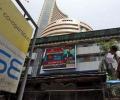
Shares of Avenue Supermarts (DMart) have rallied 15 per cent in the past month, even as the benchmark National Stock Exchange Nifty has remained flat. The stock has garnered favourable commentary from both fundamental and technical analysts after three years of poor performance. "DMart has reached its first 52-week high since October 2021, taking off from solid base formations.

Trends in the global markets, trading activity of foreign investors and announcement of domestic macroeconomic data are the major factors that would drive investors' sentiment in a holiday-shortened week ahead, analysts said. Benchmark indices had a record-breaking rally in the past week driven by impressive GDP data. Equity markets would remain closed on Friday for Mahashivratri.

Which entrepreneur would willingly part with her or his hard-earned money for grasping, self-serving politicians? asks Debashis Basu.

'China is struggling to get out of its property bubble.' 'Japan took 35 years to walk out of its equity bubble.' 'Bubbles can be difficult to forecast.'

Among the Sensex firms, Tata Steel, Tata Motors, Asian Paints, Wipro, State Bank of India and Larsen & Toubro were the major gainers. ICICI Bank, NTPC, Axis Bank and Mahindra & Mahindra were among the laggards.

'India's fundamentals are a lot better (than those of other emerging market economies).' 'India will suffer (witness a fall in its stock market) what I call the second order effect.' 'And the second order will happen when these funds (belonging to macro and hedge fund investors and which have leveraged Japanese yen-carry trades), because they lose money elsewhere as lot of their positions were financed by borrowing Japanese yen, will have to book profits in investment destinations where they are making money, including in markets like India.' 'They (these investors) will have to effectively sell in countries like India and which is the consequence (the crash in equity markets) that Indian markets might see.'

'I have serious doubts about the longevity of the NDA government and the longevity of the 18th Lok Sabha itself.'

Bank of America has named Infosys McCamish Systems as a source of a data breach that it said affected 57,028 customers, as per documents submitted to the Maine Attorney General in the US. Infosys McCamish Systems (IMS) is an Infosys' step-down subsidiary. The notification, penned on behalf of Bank of America, describes the breach as an "external system breach (hacking)", while the information acquired has been mentioned as "name or other personal identifier in combination with: social security number".
Among the Sensex firms, Tech Mahindra, Tata Motors, Infosys, Wipro, Tata Steel, Tata Consultancy Services, Reliance Industries and Axis Bank were the major gainers. Bajaj Finance, IndusInd Bank and Power Grid were the laggards.

Indian Oil Corporation (IOC) on Tuesday reported halving of its March quarter net profit largely because of losses in the petrochemical business and shrinking margin after it announced a pre-election fuel price cut despite rising input costs. The net profit of Rs 4,837.69 crore in January-March compared to Rs 10,058.69 crore a year back and Rs 8,063.39 crore in the preceding October-December quarter, according to a stock exchange filing by the company.

Please promise, especially those millions who trust you with their hard-earned money, never to let your voting preferences determine your actions on the markets. The most appalling and scary phenomenon was fund houses and brokerages going out on election yatras and writing copious reports promising more than 300 for the BJP. That was your wish as voters. Your investors are paying for it now, points out Shekhar Gupta.
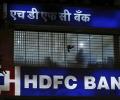
HDFC Bank's latest shareholding data showed that the room for foreign investment has fallen just 5 basis points short of the threshold set by Morgan Stanley Capital International (MSCI) to fully include the stock in its indices. Currently, the index provider has applied an adjustment factor of 0.5 since the foreign room is less than 25 per cent. Removal of the adjustment factor will result in inflows of a massive $4.8 billion (Rs 40,000 crore) into HDFC Bank, according to Brian Freitas, a New Zealand-based analyst with Periscope Analytics.

The initial public offerings (IPOs) by small and medium enterprises (SMEs) hit a new high in 2023-2024 (FY24). In this financial year, data from the Prime Database showed that 190 companies raised Rs 5,579 crore through the SME IPO route. This financial year's tally bettered the fundraising in the previous financial year when 125 companies raised Rs 2,235 crore.

Infosys has received a tax demand of Rs 341 crore for assessment year 2020-21 from the Income Tax Department, the IT services company said on Monday adding it is evaluating filing an appeal against the said order. The Bengaluru-headquartered company said it is in the process of evaluating the impact of the order on its financial statements for the quarter and year ending March 31, 2024. Infosys also said it is evaluating filing an appeal against this order.

Dwaipayan Bose examines the seven important factors that investors about exchange traded funds must know before they start investing/trading in them.
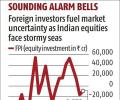
Foreign portfolio investors (FPIs) have withdrawn Rs 25,305 crore from domestic markets since September. FPIs were net sellers in the first two months of 2023, but from March to August, they purchased equities worth Rs 1.7 trillion. This selling trend has caused the National Stock Exchange Nifty Index to decline by 3.2 per cent from its September highs. FPI selling initially began in September as profit-taking but intensified due to rising US bond yields and uncertainty regarding the rate hike trajectory.

The upper market capitalisation (mcap) threshold for midcap and smallcap stocks in the mutual fund (MF) industry's revised list of stocks, to be announced this month, is set to see the second-highest yearly rise in the past five years. The list was first announced in 2018, and it has been revised every six months since then. According to estimates released by Nuvama Alternative & Quantitative Research, the upper threshold for the midcap and smallcap universes could come in at Rs 66,700 crore and Rs 21,900 crore in the next list.

'It is advisable to stay away from the markets for now and buy only on a dip.'
Retail investors now own a larger share of smallcap companies than they did a year ago, thanks to their conviction in mutual fund (MF) schemes focused on this segment. Data from Capitaline shows that MFs' average holding in the National Stock Exchange Nifty Smallcap 250 Index stood at 9 per cent at the end of the October-December quarter of 2023-24 (FY24), up from 7.76 per cent in the same quarter of 2022-23.

Equity mutual fund (MF) schemes have raked in Rs 46,200 crore in net lump-sum inflows in the past six months (ended February 2024), almost thrice the inflow in the previous six-month period.

'Investors need to be stock specific and should not rush to buy stocks at the current levels.'

The dealers operating in the space have jumped nearly three times over the past two years.

Culver Max Entertainment, formerly known as Sony Pictures Networks India (SPNI), has terminated merger agreements with Zee Entertainment, which could have otherwise created a USD 10 billion media enterprise in the country.

Among the Sensex firms, JSW Steel, Tata Steel, Tech Mahindra, Infosys, Wipro, Tata Consultancy Services, Nestle, HCL Technologies, HDFC Bank and Maruti were the major laggards. IndusInd Bank, ITC, Bharti Airtel and State Bank of India were among the winners.

Amid intense scrutiny from short-sellers and regulators, Adani group stocks have seen a significant shift in their shareholder base: Relatively opaque foreign portfolio investors (FPIs) have given way to more recognisable investors and broad-based funds. The list of large public shareholders - those directly holding at least 1 per cent - is now dominated by entities, such as the state-owned Life Insurance Corporation (LIC), US-based GQG Partners, Abu Dhabi-based International Holding Company, and Qatar Investment Authority's INQ Holding.


The combined market valuation of all listed companies on the leading stock exchange BSE reached the $4-trillion milestone for the first time ever on Wednesday. The 30-share BSE Sensex climbed 305.44 points to 66,479.64 in early trade after beginning the day on a positive note. Thanks to the optimism in equities, the market capitalisation of BSE-listed companies reached Rs 3,33,26,881.49 crore in morning trade, translating into $4 trillion at the exchange rate of 83.31.

Equity benchmark indices Sensex and Nifty hit their all-time high levels on Friday helped by impressive GDP data and fresh foreign fund inflows. Also, a rally in global markets added to the positive momentum in the equity markets. The 30-share BSE Sensex jumped 1,139.04 points to 73,639.34 -- its all-time peak -- in the late afternoon trade.

Among the Sensex firms, Larsen & Toubro, Axis Bank, Tata Steel, Bajaj Finance, Power Grid, Asian Paints, Mahindra & Mahindra and Bajaj Finserv were the biggest gainers. State Bank of India, Hindustan Unilever, Tata Motors and Titan were the laggards.
 © 2026 Rediff.com - Advertise with us - Disclaimer - Privacy Policy - Sitemap - Feedback - About us - Terms of use - Grievances