
As Bhagwant Mann repeatedly invokes Bhagat Singh in his speeches, Utkarsh Mishra picks five takeaways from the legendary revolutionary's thoughts that may help Punjab's new chief minister identity his goals.

The finance ministry said the sharp inflows last fiscal were due to the government's policy initiatives and economic recovery.

The stimulus measures include extension of the 90-day moratorium on recognition of impaired loans to 180 days, in addition to several relaxations in bank lending limits, including allowing banks to fund interest on working capital loans.

Falling for the sixth straight session, the BSE Sensex plunged 1,114.82 points or 2.96 per cent to close at 36,553.60 on Thursday, tracking a heavy selloff in global markets. The market capitalisation of BSE-listed companies stood at Rs 1,48,76,217.22 crore, down by Rs 11,31,815.5 crore in six sessions. Since September 16, the 30-share BSE benchmark index has fallen by 2,749.25 points.

Maintaining a rapid pace of the vaccination drive and quickly bridging healthcare infrastructure gaps across both urban and rural areas would emerge as the most sustainable stimulus for durable recovery of the Indian economy, says a report by the department of economic affairs.

Noting that the situation on the ground was "very difficult", the Congress leader said it was high time the prime minister announced a relief package for the poor and a financial stimulus for the economy.

Foreign Direct Investment flows to India in 2021 were 26 per cent lower, mainly because large M&A deals recorded in 2020 were not repeated, the UN trade body has said.

Leading economists on Friday called for more fiscal measures to sustain the Indian growth story.

The Budget oration of the finance minister and the confidence with which she delivered it, along with the measures and the recent upsurge in the economy would all contribute to unleashing the storied 'animal spirits' and help the economy run on the growth path quite smoothly. Or so the government hopes, notes Shreekant Sambrani.

Waves of foreign portfolio investments worth over Rs 51,000 crore splashed into the Indian market in 2021 as overseas investors turned net buyers of domestic securities for the third straight year while excess global liquidity and other factors steered the ebb and flow of their investing ways. With the global financial system still flush with liquidity, emerging market assets, especially equities, might well remain the preferred investment avenue for many more months to come, experts opined. As the equities sizzled during most of 2021, that also saw economy slowly coming back into the recovery path, Foreign Portfolio Investors (FPIs) turned net buyers but their investment is much less compared to net inflows of Rs 1.03 lakh crore in 2020.

Institutional investments in real estate may fall 20 per cent to $4 billion during this calendar year because of a higher inflow of funds in 2020, according to property consultant JLL India. During the January-September period, the institutional investment rose to $2,977 million from $1,534 million in the year-ago period. "Unless some large portfolio deals are not inked at the end of the year, annual investments are expected to be in the $3.8-4 billion range in 2021," JLL said in a statement. Institutional investments managed to cross the $5 billion mark in 2020 due to large portfolio deals worth $3.2 billion during the last quarter of the year.

'Good investment opportunities should not be missed.'

Continuing their selling spree for the sixth consecutive month, foreign investors pulled out a massive Rs 41,000 crore from the Indian equity market in March on anticipation of rate hikes by the US Federal Reserve and deteriorating geopolitical environment amid the Russia-Ukraine war. Further, flows from foreign portfolio investors (FPIs) are expected to remain volatile in the near term given the headwinds in terms of elevated crude prices and inflation, experts said. According to data available with the depositories, FPIs were net sellers to the tune of Rs 41,123 crore in the equity market last month.

American brokerage firm Morgan Stanley on Thursday sharply cut its India FY23 real GDP growth estimate to 7.9 per cent, mainly due to the impact of the Russia-Ukraine conflict on oil prices. Analysts at the brokerage also raised their inflation forecast to 6 per cent - the upper end of the tolerance band for the RBI - and flagged stagflation risks because of the ongoing events. "We believe that the ongoing geopolitical tensions exacerbate external risks and impart a stagflationary impulse to the economy," they said. It can be noted that stagflation involves a stagnancy in output or growth, coupled with high inflation.

IndusInd Bank was the top gainer in the Sensex pack, rallying over 15 per cent, followed by Bajaj Finance, HDFC, Axis Bank, ICICI Bank, M&M and SBI. On the other hand, Sun Pharma, Nestle India, NTPC, HCL Tech and Bajaj Auto were among the laggards.

Mahindra and Mahindra was the top gainer in the Sensex pack, surging over 16 per cent, followed by Maruti, Titan, Bajaj Finance, HDFC, Bajaj Auto and Hero MotoCorp. On the other hand, HUL, Tech Mahindra, IndusInd Bank and Nestle were the laggards.

According to traders, Chief Economic Adviser Subramanian's comments practically ruling out a stimulus package for the economy weighed on investor sentiment.

Coordination between defence and civilian authorities has freed up airspace for commercial airlines in India, resulting in routes becoming shorter and costs coming down, apart from mitigating pollution. "Due to various restrictions of the military, only about 58 per cent of the Indian airspace was being utilised. It is close to 70 per cent now," said an official of the Airports Authority of India (AAI). Officials of the AAI said to date 119 routes had been shortened. Sources said since December 2020 the cumulative savings of airlines had been close to Rs 200 crore while there was a reduction in emission of around 45,000 tonnes of carbon.

Kotak Bank was the top gainer in the Sensex pack, rallying over 8 per cent, followed by TCS, Infosys, ICICI Bank, HCL Tech and ONGC. On the other hand, Titan, HUL, PowerGrid, NTPC and Nestle India were among the laggards. NSE Nifty advanced 126.60 points, or 1.38 per cent, to settle at 9,313.90.

Banks should neither be timid nor adventurous while lending as the loans of today should not become NPAs of tomorrow, he said.

Strength coach Spoorthi, Cult.fit tells you how to build muscles without the use of weights.

Investors have become poorer by a massive Rs 19,50,288.05 crore as equity market sell-offs continued for the fifth day in a row on Monday. The BSE Sensex plunged 1,545.67 points or 2.62 per cent to settle at 57,491.51 on Monday, while, the NSE Nifty slumped 468.05 points or 2.66 per cent to settle at 17,149.10. This is the steepest single-day drop for the indices in about two months. Over the last five sessions, the 30-share Sensex has tumbled 3,817.4 points or 6.22 per cent.

SBI was the top loser in the Sensex pack, shedding around 3 per cent, followed by Kotak Bank, IndusInd Bank, NTPC, ICICI Bank, Axis Bank and HDFC Bank. On the other hand, HUL, ITC, L&T, Bajaj Finserv and Tech Mahindra ended with gains.

'It may sound like sacrilege, but does it really matter if the global raters downgrade India for fiscal slippage?' asks Tamal Bandyopadhyay.
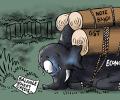
'The current budgetary practice of shifting expenditures off-balance sheet in order to be seen to be meeting fiscal targets should be discontinued; additional fiscal stimulus would be imprudent; individual income tax rates should not be cut; GST rates should not be raised now,' advise Arvind Subramanian and Josh Felman.

By any economic theory or doctrine, this is no Budget that supports economic recovery, whether through supporting aggregate demand, or through expansionary stimulus, declares Rathin Roy.

The Niti Aayog vice chairman noted that green shoots of recovery are already visible in multiple sectors. In 15-16 sectors, businesses are coming back to pre-COVID levels," he said.

With private consumption growing 3.6 per cent versus 18.1 per cent for government in April-September 2009, and investment growth falling to around half, any decision on phasing out has to be taken carefully.

Titan was the top loser in the Sensex pack, shedding over 1 per cent, followed by TCS, HCL Tech, Reliance Industries, UltraTech Cement and Bharti Airtel. NSE Nifty settled 45.65 points down at 15,814.70.
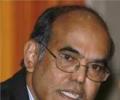
The Reserve Bank of India (RBI) on Monday said that the timing and sequence of exit from an easy monetary policy were still a challenge.

All Sensex components ended in green, with Bajaj Finserv, HCL Tech, Bharti Airtel, IndusInd Bank, L&T, TCS, ONGC and ICICI Bank, Bajaj Finance and SBI gaining up to 6.64 per cent.

Infosys was the top gainer in the Sensex pack, rising over 2 per cent, followed by Bajaj Finance, HCL Tech, Tata Steel, Tech Mahindra and NTPC. On the other hand, Maruti, Sun Pharma, HUL and ITC were among the laggards. Nifty rose 122.15 points to 17,343.55.

As the global economic scenario is improving, Ajay Chhibber, regional director (Asia and the Pacific) for the United Nations Development Programme, believes employment will be the major indicator to gauge the firmness of the economic recovery.

Reliance Industries was the top gainer in the Sensex pack, rallying nearly 4 per cent, followed by Infosys, Tech Mahindra, HCL Tech, TCS and L&T.

Games likely to open in July 2021 according to Japanese media

'Indian markets may initially react and follow the pattern of US and other global markets post US elections.'

S&P Global Ratings on Wednesday slashed India's GDP growth forecast for the current financial year to 9.8 per cent saying the second Covid wave may derail the budding recovery in the economy and credit conditions.

At present, Indian indices are under-performing as compared to others and a package from the government can help cover the ground.

'You should always maintain an allocation to gold as it has the ability to counterbalance any correction in the equity market.'

Investor wealth grew by Rs 3.41 lakh crore on Tuesday as markets made a dashing comeback after two days of losses. The 30-share BSE Sensex soared 834.02 points or 1.72 per cent to close at 49,398.29. Following the upbeat sentiment, the market capitalisation of BSE-listed companies jumped Rs 341,846.01 crore to Rs 1,96,19,149.34 crore.
 © 2026 Rediff.com - Advertise with us - Disclaimer - Privacy Policy - Sitemap - Feedback - About us - Terms of use - Grievances