
If the government cuts wasteful expenditure as it is trying now, the deficit would at most fall to 8 per cent, not less than that.

Crisil Research expects retail inflation to rise 60 basis points to 4 per cent this fiscal from 3.4 per cent in 2018-19.

Risk aversion is currently a dominant depressant to economic recovery, points out Shankar Acharya, former chief economic advisor to the Government of India.

The previous low at 1.8 per cent was recorded in October 2017.

The Reserve Bank of India, which mainly factors in retail inflation to decide its monetary policy, has been tasked by the government to ensure the rate of price rise remains around 4 per cent.

Niti Aayog vice-chairman Rajiv Kumar said that the two major constraints being faced by the investors are less availability of finance and high interest rates.

Fruits, vegetables and eggs continued to witness deflationary trend during January this year, with their prices declining 4.18 per cent, 13.32 per cent and 2.44 per cent, respectively.

Recalibrating data of past years using 2011-12 as the base year instead of 2004-05, the Central Statistics Office estimated that India's GDP grew by 8.5% in the financial year 2010-11 and not at 10.3% as previously estimated.

Capital goods output rose by a robust 20 per cent in the month under review as against a contraction of 2.4 per cent earlier.

According to Central statistics office press note, GDP at current prices in Q1 of 2015-16 is estimated at 32.43 lakh crore, as against 29.80 lakh crore in Q1 of 2014-15, showing a growth rate of 8.8 percent.

If Nirmala Sitharaman does indeed present a 'never-before' like Budget on February 1, going by her promise, she would create a new benchmark for post-contraction Budgets, observes A K Bhattacharya.

The previous high was recorded at 7.5 per cent in the July-September quarter of 2016-17.
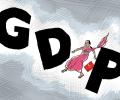
During the six-month period (April-September 2019), the Indian economy grew 4.8 per cent as against 7.5 per cent in the same period a year ago.
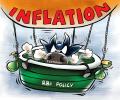
RBI Governor Shaktikanta Das on Friday said that inflation is on a declining trajectory, as it has fallen by 170 basis points from its January 2020 peak. Retail inflation fell to four-month low of 5.91 per cent in March over the previous month, mainly due to easing food prices.

Manufacturing output, which constitutes about 76 per cent of the industrial production, fell by an annual 6 per cent, the Statistical Office said.

'Without reviving employment, consumer confidence will not go up.'

The biggest loss of jobs among salaried employees was of 'white-collar professional employees and other employees'. Among these are engineers including software engineers, physicians, teachers, accountants, analysts and so on, who are professionally qualified and are employed in some private or government organisation All the gains made in their employment over the past four years were washed away during the lockdown, reveals Mahesh Vyas.

Reflecting general rise in living standard, India's per capita income is estimated to grow above Rs 60,000 per annum or over Rs 5,000 per month, said the government data.
Reflecting growing prosperity, India's per capita income grew by 15.6 per cent to Rs 53,331 per annum in 2010-11, crossing the half-a-lakh rupees mark for the first time, according to government data.
Reflecting growing prosperity, India's per capita income grew by 15.6 per cent to Rs 53,331 per annum in 2010-11, crossing the half-a-lakh rupees mark for the first time, according to government data.

One in five students drop out from school.
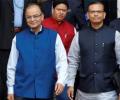
Securing the GDP estimates a month in advance would be a challenge and the government should take the Central Statistics Office on board before embarking on the new schedule for Budget presentation

Beside manufacturing, deceleration was also witnessed in sectors like agriculture, construction and electricity, gas and water supply.
Going forward, the February factory output may be impacted as several industries such as automobiles, technology, pharma and fashion have some exposure to imports of raw and intermediate materials from China.
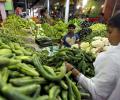
Andhra Pradesh posted 8.14% consumer inflation in October.

"The process of rectification began immediately. . . it has already begun. . . the immediate correction was already there. So far what else I can do to improve the quality of the expenditure side figures, I have already started," Chief Statistician TCA Anant said.

Capital goods, a barometer of investments, showed a sharp increase in output by 14.6 per cent in January, 2018 as against a decline of 0.6 per cent year ago.

'In 2016, we had De-Mon and in 2017, we had GST.' 'The combined impact of these two started showing up in 2019 and 2020.' 'COVID-19 only added insult to injury.'

If imputed inflation for April and May is used, then you have inflation of over 6 per cent for two consecutive quarters, which is a worrying signal for the RBI.

It came on the back of tepid dispatches in the March quarter as consumer sentiment took a knocking, owing to uncertainty ahead of the general election.

The previous low was recorded at 3.8 per cent in May this year.

Among other things, the agenda is likely to focus on increasing private investment, employment generation and giving relief to the farm sector

Output of capital goods -- a proxy for infrastructure investments in the country -- contracted 1 per cent in July
The technical report of the NSSO has generated controversy following its observation that as much as 36 per cent units forming part of MCA-21 database, used in computing GDP, could not be either identifiable or traceable in the field.
Currently, the retail inflation is well below the RBI's comfort level. The government has asked the central bank to keep inflation in the range of 4 per cent.

Germany grew by a stunning 2.2 per cent in the three months ended June, recording its fastest quarterly expansion in more than 20 years.

Clearly, the extra borrowing of Rs 4.2 trillion the government has planned so far will not be enough to meet the shortfall in revenues which could be between Rs 8 trillion and Rs 10 trillion, points out A K Bhattacharya.

The Bill states a worker will be paid twice his or her wage if he or she is allowed to work overtime. A majority of workers in India worked more than 48 hours in a week, which is higher than the International Labour Organisation's prescribed time-limit.

"We are extremely happy to know that according to Central Statistic Office reports the state has achieved a growth rate of 16.59 per cent. . . It's a miracle," Kumar told reporters in Patna while releasing performance card of his government for the past 55 months.
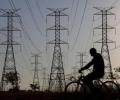
Most of the economic activity in the country had come to a standstill after the government imposed a 21-day nationwide lockdown beginning March 25 to check the spread of coronavirus.
 © 2026 Rediff.com - Investor Information - Advertise with us - Disclaimer - Privacy Policy - Sitemap - Feedback - About us - Terms of use - Grievances