
"The people of Gaza need food, water, medicine, shelter. Today, I asked the Israeli cabinet to agree to the delivery of life-saving humanitarian assistance to civilians in Gaza...and the aid should go to civilians, not to Hamas. Israel agreed that the humanitarian assistance can begin to move from Egypt to Gaza. If Hamas diverts or steals the assistance it will have demonstrated once again that they have no concern for the welfare of the Palestinian people.. and it will stop the international community from being able to provide this aid," Biden said.

The government on Friday deferred the implementation of the import restriction order on laptops and computers (including tablet computers) by about three months till October 31, a move that gives more time to electronic companies to import these devices without a licence. Nw, these companies would need to take a licence from the government to import these devices from November 1. On August 3, the government put the import of these devices under a licence regime with immediate effect.

The government has brought back the windfall profit tax on domestically produced crude oil after international prices firmed up while the levy on export of diesel has been cut to nil, according to an official order. The levy on crude oil produced by companies such as Oil and Natural Gas Corporation (ONGC) is now Rs 6,400 per tonne with effect from Wednesday, the order dated April 18 said. At the last revision on April 4, windfall tax on domestically produced crude oil was cut to nil as international oil prices dipped below $75 per barrel.

India's pharmaceutical exports to Iran have been hit owing to depleting rupee reserves in the West Asian country because of India stopping the import of crude oil from it in 2019 following US sanctions. Pharmaceutical exports dropped 71.25 per cent in April-August this year over the same period last year. The data from the Pharmaceutical Exports Promotion Council (Pharmexcil) showed exports to Iran had declined 31.29 per cent in 2022-23 as against the previous financial year.

The government has raised the windfall profit tax levied on domestically produced crude oil as well as on the export of diesel and ATF, in line with firming international oil prices, according to an official order. The levy on crude oil produced by companies such as Oil and Natural Gas Corporation (ONGC) has been increased to Rs 2,100 per tonne from Rs 1,700 per tonne, the order dated January 2, said. Crude oil pumped out of the ground and from below the seabed is refined and converted into fuel like petrol, diesel and aviation turbine fuel (ATF).

Zetwerk is not exactly a household name, but this unicorn, boasting revenues of Rs 11,450 crore as of last year, is among the top four electronics manufacturers in India. The startup is capitalising on a notable trend in smart TV sales - fall in collective shipments from top brands like Xiaomi, Samsung, LG and an uptick in the market share of smaller, regional, and online brands. Emerging as a key Electronics Manufacturing Services (EMS) player, Zetwerk operates a plant in Haryana that caters to 10 per cent of the country's overall smart TV production capacity.

Tea planters and exporters are "extremely worried" over the possible impact on their shipments to Russia, India's second largest buyer of tea, in the wake of the Russia-Ukraine crisis. Western sanctions and disruption of payments in dollars as well as transhipments to Russia are expected as a fall-out of Russia launching an attack on Ukraine on Thursday. "The Russian market for Indian tea is extremely important as there are payment issues for shipments to Iran, another vital tea export destination. "Around 18 per cent of India's tea shipments go to Russia," India Tea Association chairperson Nayantara Palchoudhuri told PTI.

Korean electronics major Samsung expects its new foldable devices Galaxy Fold 5 and Galaxy Flip 5 will enable it to capture half of the super premium smartphone segment in India, currently dominated by iPhone maker Apple.

Hundreds of tailors from a local apparel unit in Kannur have been working tirelessly to get the uniform shirts ready for the Israel police force for the past eight years.

A shipment containing several kilograms of uranium, which could potentially be used for making a dirty bomb was seized at United Kingdom's Heathrow Airport in a cargo consignment originating in Pakistan, reported British tabloid The Sun.
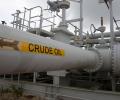
The government has slashed the windfall profit tax levied on domestically-produced crude oil as well as on export of diesel and ATF following a drop in global oil prices, according to an official order. The levy on crude oil produced by companies such as Oil and Natural Gas Corporation (ONGC) has been cut steeply to Rs 1,700 per tonne from Rs 4,900, the order dated December 15 said. Crude oil pumped out of the ground is refined and converted into fuel like petrol, diesel and aviation turbine fuel (ATF).
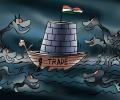
Indian exporters shipping goods to Israel may face higher insurance premiums and shipping costs due to the Israel-Hamas conflict, according to experts. Israel witnessed a surprise and unprecedented multifront attack by air, land and sea by the Hamas militant group, which rules the Gaza Strip, in its southern parts on Saturday morning. The International trade experts said the conflict may reduce the profits of domestic exporters but will not impact trade volumes unless war escalates.
The government has reduced the windfall profit tax levied on domestically-produced crude oil as well as on the export of diesel and ATF, in line with softening international oil prices, according to an official order. The levy on crude oil produced by companies such as Oil and Natural Gas Corporation (ONGC) has been cut to Rs 1,900 per tonne from Rs 2,100 per tonne, the order dated January 16, said. Crude oil pumped out of the ground and from below the seabed is refined and converted into fuel like petrol, diesel and aviation turbine fuel (ATF).

Barely days after imposing a 40 per cent export tax on onions to cool down soaring prices, which, in turn, triggered widespread protests across the main growing belts, the Centre on Tuesday sought to mitigate both political and economic tensions gripping parts of Maharashtra. It decided to procure an additional 200,000 tonnes of onions at Rs 2,410 per quintal for its buffer stock from farmers, a rate that is strikingly close to the price at which they were being exported before the 40 per cent duty was levied on August 19. The export price before the imposition of the duty stood at around $320 per tonne free on board (approximately Rs 2,650 per quintal).

India's merchandise exports spurted to a record high of $418 billion in the 2021-22 fiscal on higher shipments of petroleum products, engineering goods, gem and jewellery and chemicals, according to official data released on Sunday. Outbound shipments touched an all-time high of $40 billion in a month in March 2022, Commerce and Industry Minister Piyush Goyal told reporters. Exports stood at $34 billion in March 2021.
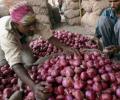
The government on Saturday imposed a 40 per cent duty on the export of onions to increase domestic availability amid signs of increasing prices. The export duty, which is the first time ever on onion, has been imposed as the retail sale price of the kitchen staple, according to government data, touched Rs 37/kg on Saturday in Delhi. The finance ministry through a Customs notification imposed a 40 per cent export duty on onions till December 31, 2023.

India's passenger vehicle exports rose by 26 per cent in April-June 2022 aided by enhanced shipments to Latin America and Africa and a low base of the year-ago quarter that was hit by the second wave of COVID-19. As per the latest data released by the Society of Indian Automobile Manufacturers (SIAM), passenger vehicle shipments rose to 1,60,263 units in the April-June period of this fiscal as compared with 1,27,083 units in the same quarter of 2021-22. Passenger car shipments saw an 88 per cent year-on-year growth at 1,04,400 units while utility vehicle exports rose 18 per cent to 55,547 units during the period under review, SIAM data showed.

Making the Pixel 8 in India will not necessarily bring the price down -- witness iPhones made in India that are more expensive than those in the US and Dubai.

What is more surprising is that a surge in Russian oil supplies has come after the G7 imposed stringent sanctions on Moscow.

India was the world's biggest importer of Russian oil in February, exceeding China by 20 million barrels.

Adani Group on Thursday said it has formed a 50:50 joint venture with Japanese conglomerate Kowa Group for sale of green hydrogen in Japan, Taiwan and Hawaii markets. Billionaire Gautam Adani-led conglomerate is investing up to $50 billion over the next 10 years in setting up a fully integrated green hydrogen ecosystem in India. This includes the production of 1 million tonne of green hydrogen in the initial phase which will be ramped up to 3 million tonne later.

As many as 37 per cent of smartphones sold in India in 2022 cost Rs 15,000 or more.
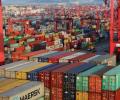
Exports in June rose by 23.52 per cent to $40.13 billion while the trade deficit ballooned to a record level of $26.18 billion mainly due to jump in gold and crude oil imports, the government data said on Thursday. The country's export growth in May was 20.55 per cent. Imports expanded by 57.55 per cent to $66.31 billion in June compared to the year-ago month, the data showed.

Xiaomi will strengthen its product portfolio and launch 5G devices in the sub-Rs 15,000 segment as it looks to increase its market share in the segment. Xiaomi led the shipments in overall smartphone category in 2021 with a 24 per cent share, according to Counterpoint Research. However, in the 5G segment it is ranked fourth behind One Plus, Samsung, and Vivo, with a 13 per cent share.

The Indian Navy, which regards itself as the 'net security provider' in the Indian Ocean Region, has also stepped up to the plate, with a warship stationed at all times off the Gulf of Aden for counter-piracy tasks. 91 Indian warships have been deployed in the region since 2008, patrolling high risk areas where piracy was rampant.

Brokerages lowered their earnings estimates following muted results in Q1FY24. While analysts remain optimistic about the stock's medium-term prospects, they highlight near-term concerns stemming from lower realisations due to changes in the product mix and margin pressures resulting from new plane additions.

China is also providing supertankers and insurance coverage to move Russian Urals crude to PRC ports, as Moscow seeks vessels for exports after a G-7 oil price cap restricted the use of Western cargo services and insurance.

Dr Reddy's Laboratories is in a pact with Russian Direct Investment Fund to sell the first 125 million people doses (250 million vials) of Sputnik V in India.
The pharmaceutical and the consumer durables sectors, which depend on China for imports, have not been impacted yet due to unrest in China with people protesting against lockdowns. But the lockdown could have an impact on the supply of components used in consumer durables if it continues for the next fortnight. In the pharmaceutical industry, Indian players import 66-70 per cent of their bulk drug requirements from China.

India will soon meet Iraq and the United Arab Emirates (UAE) to seek a definitive rate of discount on crude oil similar to what Russia has provided so far, sources said. Multiple officials and industry executives said Iraq, which is India's biggest oil supplier, wants to discuss the level of discounts expected by Indian refiners. India's focus on snapping up ever-increasing volumes of Russian crude oil has led to a corresponding decline in imports from the Middle East. Flows from Iraq, Saudi Arabia, and the UAE have suffered as a result.

All essentials are in short supply due to import restrictions forced by the forex crisis.
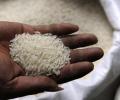
The government on Thursday imposed a 20 per cent export duty on non-Basmati rice except for parboiled rice to boost domestic supplies amid a fall in area under the paddy crop in the current Kharif season. According to a notification by the revenue department, an export duty of 20 per cent has been imposed on 'rice in husk (paddy or rough)' and 'husked (brown) rice'. The Central Board of Indirect Taxes & Customs further said the export of 'semi-milled or wholly-milled rice, whether or not polished or glazed(other than Parboiled rice and Basmati rice)' will also attract a customs duty of 20 per cent.

The US Customs and Border Protection (CBP), ahead of the holiday shopping season, warned consumers to be extra diligent while shopping online for children's toys after the recent seizure of toys that were coated in unsafe levels of lead, cadmium and barium.

United Nations leaders and agencies have welcomed the entry of a humanitarian aid convoy into Gaza via the Rafah border crossing with Egypt but noted that it is only a small beginning, still far from enough and reiterated their appeal for an immediate ceasefire.

Maruti Suzuki India on Tuesday reported a 28 per cent rise in exports at 263,068 units in 2022, its highest ever overseas shipments. The company's previous highest exports was achieved in 2021 with 205,450 units. The highest exported models in 2022 were Dzire, Swift, S-Presso, Baleno and Brezza, the company said in a statement.

Textile stocks have exhibited a mixed performance so far this calendar year (CY23), amidst higher domestic cotton prices and tepid global demand. Shares of Page Industries, Dollar Industries, Lux Industries, and VIP Clothing have declined up to 13 per cent so far in CY23, as against a 9 per cent jump in the S&P BSE Sensex. On the contrary, shares of Arvind, Welspun India, Raymond, and Gokaldas Exports have gained up to 51 per cent, during the same period.

Biden said over a year later Russian President Vladimir Putin has "failed and he continues to fail".

Unlike Israeli company NSO, whose sale of Pegasus cyber tech grabbed worldwide attention, and other manufacturers of offensive-cyber products, Cellebrite operates in a grey area between security exports and civilian ones.
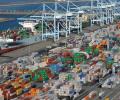
India's exports contracted 12.2 per cent to $34.48 billion in December 2022, mainly due to global headwinds, and the trade deficit widened to $23.76 billion during the same period, according to official data released on Monday. Imports in December 2022 also declined 3.5 per cent to $58.24 billion as against $60.33 billion in the year-ago period. In December 2021, exports stood at $39.27 billion and the trade deficit was at $21.06 billion.
Indian imports of Russian oil plunged by a record in August month-on-month (M-o-M) as discounts on the fuel shrank in tandem with rising Brent oil prices. Higher crude prices will drive inflation or hurt earnings at oil companies and India's fiscal position if such spikes are not passed on to consumers. Indian purchases of Russian crude declined by around 24 per cent in August from July to the lowest level since January, with refiners expecting volumes to drop further amid rising rates of Russian benchmark Urals grade, substantial stocks at refiners, and planned maintenance at Indian refineries, according to ship tracking data and industry officials.
