
Finance Minister Nirmala Sitharaman on Friday said the entire fiscal stimulus announced by the government would be funded by borrowings and revenues, and taxpayers will not be charged even a single penny. "I am not expecting the stimulus to be funded by taxpayers. Not a rupee from the taxpayer. The entire amount .... is shown as revenue and borrowings. "The government is borrowing to spend, but it is not taking from people," she said while interacting with journalists at the IWPC (Indian Women's Press Corps).

There are 350,000 jewellers, of which 13,000 are BIS-certified.

The wholesale price-based inflation shot up to an all-time high of 10.49 per cent in April, on rising prices of crude oil and manufactured items. Also, a low base of April last year contributed to the spike in inflation in April 2021. The WPI inflation was 7.39 per cent in March 2021, and (-) 1.57 per cent in April 2020. This is the fourth straight month of uptick seen in the wholesale price index (WPI)-based inflation.
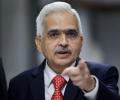
Reserve Bank Governor Shaktikanta Das on Wednesday said underlying economic activity in India continues to be strong, but external factors will cause some "dent" to the economy. Speaking at the BFSI Insight Summit 2022 organised by Business Standard, Das said the RBI tracks 70 fast moving indicators and most of them are in the "green box". It is the external sector, mired by a fear of recession or clear visibility about slowing growth in a large part of the world, where the challenges lie, he said, adding that the impact of external demand will "dent" the economy.

Major gainers in the Sensex pack were Hero Motocorp, which rallied 7.01 per cent, followed by Bharti Airtel (6.69 per cent), Yes Bank (5.30 per cent), Adani Ports (4.90 per cent), Tata Steel (3.75 per cent) and Bajaj Auto (3.70 per cent).

Gold reserves were up by $1.525 billion in the reporting week to $37.625 billion.

When he didn't respond (Mr Saver has lost count of how many relationship managers he has had in the past few years!), the gentleman landed up at his doorstep and started pleading with him to open fixed deposits with the bank, observes Tamal Bandyopadhyay.

The Reserve Bank of India (RBI) on Wednesday announced an extension of interim ways and means advances (WMAs) limit of Rs 51,560 crore to state governments till September, to help them tide over the financial stress posed by the second wave of COVID-19. WMAs are temporary advances given by the RBI to the states to tide over any mismatch in receipts and payments. There are two types of WMA - normal and special. While normal WMA are clean advances, special WMA are secured advances provided against the pledge of the government of India dated securities.
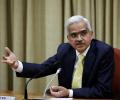
The Reserve Bank remains laser-focused to bring back retail inflation to 4 per cent over a period of time in a non-disruptive manner, Governor Shaktikanta Das stressed while voting for status quo in interest rates, as per minutes of the October policy meeting released on Friday. The central bank has been mandated by the government to ensure the Consumer Price Index (CPI) based inflation is at 4 per cent, with a band of 2 per cent on either side. The retail inflation, which was above 6 per cent during May and June, has started moving down and stood at 4.35 per cent in September.

'When the average growth in the last three years was just 2.5%, how does that make us the fastest growing country?' 'They only tell you what has happened in the last 2 years; they are not taking into account what happened in FY21 on account of their mistakes.'

In twin blows to Indian economic revival, higher food prices drove retail inflation to a five-month high of 7.4 per cent while factory output fell for the first time in 18 months. The second consecutive month of rise in consumer price index (CPI)-based inflation will add to the pressure on the Reserve Bank of India (RBI) to again raise interest rates to tame high prices. Inflation has been above the targeted zone for the ninth month in a row and as per statute, the RBI will now have to explain to the government in writing why it failed to keep prices below 6 per cent.
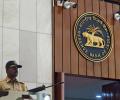
The Reserve Bank of India (RBI) unions have decided to intensify their stir demanding revision of wages, pending since November 2017, and have called for mass casual leave of employees at the central bank on November 30. However, several sources in the RBI told Business Standard that the unions may not have to go on agitation, as the new contours of the wage pact have been almost finalised and could be announced any time. An email sent to the RBI was not answered. The United Forum of Reserve Bank Officers and Employees had deferred its agitation earlier after it was told that RBI Governor Shaktikanta Das was to hold talks with the human resource management department (HRMD).

The Lok Sabha elections in 2024 are not a consideration when it comes to monetary policymaking, said Reserve Bank of India governor Shaktikanta Das to underscore the central bank's commitment to controlling inflation. "It's not possible for me to comment what we do in the next MPC (Monetary Policy Committee), but one thing I can tell and I would like to make it very clear-that the fact of elections coming up in 2024 is not a factor at all so far as monetary policymaking is concerned. "Monetary policymaking is for checking (and) controlling inflation," Das said at the Business Standard, BFSI Insight Summit.

The Reserve Bank's growth projection for next financial year is lower than 8-8.5 per cent projected by the finance ministry in the recent Economic Survey which was tabled in Parliament on January 31. Unveiling the bi-monthly policy, RBI governor Shaktikanta Das said, "Recovery in domestic economic activity is yet to be broad-based, as private consumption and contact-intensive services remain below pre-pandemic levels."
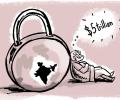
India is much better placed today to deal with future waves of the pandemic relative to the first wave, RBI deputy governor Michael Patra said.

Admitting that credit growth is "very low" given the size and growth rate of the economy, the Reserve Bank on Wednesday said for both the numbers to match, "the very very wide output gap" has to close. The central bank also clarified that low credit growth does not necessarily mean low credit flow to the economy, or choking of credit to the system, as bank credit growth numbers that the central bank publishes regularly represent only the outstanding credit in the system. Output gap means due to poor demand conditions, companies are unable run their plant at full installed capacity or, in a larger sense, an economy is not producing optimally as the demand is missing.

India's manufacturing sector activities moderated in August, as business orders and production rose at softer rates due to the pandemic and rising input costs, a monthly survey said on Wednesday. The seasonally adjusted IHS Markit India Manufacturing Purchasing Managers' Index (PMI) stood at 52.3 in August, down from 55.3 in July, indicating a softer rate of growth that was subdued and below its long-run average. The August PMI data pointed to an improvement in overall operating conditions for the second straight month.

With Deputy Governor Viral Acharya and another member Chetan Ghate voting for a status quo, RBI governor Shaktikanta Das and three others outvoted them for reduction in repo rate to 6.25 per cent from the existing 6.50 per cent.

After two years of a record low interest-rate regime, Indian corporate houses are experiencing a sharp and abrupt increase in funding costs. With the Reserve Bank of India last month making an unequivocal turn towards policy tightening amid high inflation, firms looking to tap the capital markets for funds are ending up shelling out more. The yield on the benchmark triple-A-rated corporate bonds maturing in three years has climbed 98 basis points (bps) since the policy rate hike in May. It was last at 7.47 per cent, Bloomberg data showed.

Shaktikanta Das said in Washington, DC, that there was nothing sacrosanct about the 25 bps rate cut and that monetary policy could be well served by calibrating the size of the policy rate to the dynamics of the situation, and the size of the change itself could convey the stance of policy.
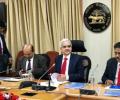
'Overall, domestic demand has moderated significantly. 'The weakening of private consumption, which for long has been the bedrock of aggregate demand, in particular, is a matter of concern,' RBI Governor Shaktikanta Das said in the MPC meetings, in October.
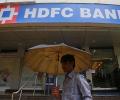
The mobile banking app of the largest private sector lender HDFC Bank, which has been under the regulatory lens for network outages, was down for an hour on Tuesday due to unspecified issues. The city headquartered bank said the issues were faced for an hour late in the morning on Tuesday and the same was resolved in an hour. It urged customers to use the net banking alternative to transact in the interim.

Equities went into a tailspin on Wednesday after the Reserve Bank surprised the market with a mid-cycle rate hike in a bid to tame soaring inflation.
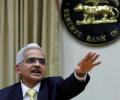
Chances of a rate cut in April improve if core inflation continues to ease, growth falling below the projected 7.2% for FY19 and if the global trade slowdown exacerbates.
This is not for the first time that the customers of the bank have faced service outage. In fact, the bank has been penalised by the Reserve bank of India (RBI) for two major outages in the past. In December, the RBI temporarily barred HDFC Bank from launching new digital banking initiatives and issuing new credit cards after taking a serious view of service outages at the lender over the last two years.

Stating that growth impulses and the fast-moving indicators are strong, Reserve Bank Governor Shaktikanta Das on Wednesday exuded confidence of the economy clipping at the projected 9.5 per cent this fiscal. Giving all the credit for the faster-than-expected recovery of the economy to the government, Das said the central bank has only been supporting the government in reviving the economy ravaged by the pandemic. Citing a slew of measures the government has taken since the pandemic struck in March 2020, the governor specifically mentioned tax cuts on fuels, tax resolution for the telecom sector, annulling of the retro tax legislation, sale of Air India, plans to sell some of the public sector banks and PLI scheme as the major reforms and growth-drivers bearing fruits now.
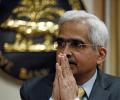
Reserve Bank Governor Shaktikanta Das on Wednesday ruled out upside risks to the 5.3 per cent inflation forecast for the current fiscal, saying the recent cut in excise duty on diesel and petrol as well as better management of supply-side issues on the food front have contained inflationary expectations. These measures are significantly positive for inflation management, he said. After months of calls for reducing taxes on fuels, the government, last week, cut the excise duty on diesel and petrol by Rs 10 and Rs 5 per litre, respectively.

While the collapse of a large financial intermediary can wreak havoc on the system because of the interconnectivity, a large business conglomerate too can play spoilsport if the banks have too much exposure to the entity, explains Tamal Bandyopadhyay.
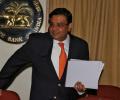
Fitch said the full implications of Patel's resignation will only become clearer once there is some indication of the RBI's policy approach under his replacement, Shaktikanta Das

Members of the Monetary Policy Committee (MPC) felt that though the Indian economy was resilient in the third wave, it, however, lost some momentum and with inflation likely to soften, there is room to continue with the accommodative stance and support revival, the minutes of the MPC meeting released on Thursday revealed. The six-member MPC voted to keep the policy rate unchanged and continued with the accommodative stance at its meeting on February 10. However, external member Jayanth Verma voted against the stance because he felt a switch to neutral was long overdue and the current stance has become counterproductive and deflects focus away from addressing recessionary trends that date back to at least 2019.

All the bank notes in the denomination of Rs 20 issued by the RBI in the earlier series will continue to be legal tender, it clarified.

The Reserve Bank of India (RBI) on Wednesday announced to increase the policy repo rate by 50 basis points to 4.9 per cent, the second hike in five weeks aimed at quelling the inflation. The MPC vote was unanimous and has decided to keep stance withdrawal from accommodative, RBI Governor Shaktikanta Das said in a press conference on Wednesday. The decision was taken during a three-day meeting of the RBI's Monetary Policy Committee (MPC) to review the interest rates in the country. The MPC voted unanimously to increase the policy repo rate by 50 bps to 4.90 per cent," Das said.

The Reserve Bank on Wednesday retained the GDP growth forecast at 9.5 per cent for the current fiscal but cautioned that the economic recovery is not yet strong enough to be self-sustaining and durable.
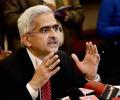
Reserve Bank Governor Shaktikanta Das on Monday said despite the latest headwinds arising from the Jackson Hole summit leading to extreme volatility, our banking system and financial markets are strong enough to withstand such pressures. Taking the markets by surprise, US Fed chair Jerome Powell had told the annual Jackson Hole summit of central bankers and economists last week that he would have to keep raising federal fund rates to tame inflation, which remains the biggest challenge to the world's largest economy. He also warned of the pains that such monetary policy actions would create on growth and jobs.

Amid concerns over misleading claims of huge returns on cryptocurrency investment, Prime Minister Narendra Modi on Saturday chaired a meeting on the way forward on the issue, with government sources asserting that such unregulated markets cannot be allowed to become avenues for "money laundering and terror financing".

Tata Steel was the top gainer in the Sensex pack, rising around 4 per cent, followed by Infosys, Bajaj Finance, TCS, HCL Tech, ICICI Bank and Tech Mahindra. On the other hand, Bharti Airtel, M&M, L&T and Axis Bank were among the laggards.
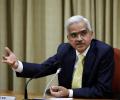
The Reserve Bank of India (RBI) on Friday decided to leave the benchmark interest rate unchanged at 4 per cent but maintained an accommodative stance, implying rate cuts in the future if need arises to support the economy hit by the Covid-19 pandemic.
Experts disagree with the idea and the Reserve Bank of India (RBI), which has the sole right to print money, is not comfortable with it as well.
Battling a sharp surge in inflation, the Reserve Bank is all for a smooth monetary policy response and the desire to have smaller hikes led it to tighten the policy in an off-schedule meet, a source said on Thursday. Inflation has been massively impacted by Russia's invasion of Ukraine and will in due course also reflect the dent caused by Indonesia banning palm oil exports, the source aware of central bank thinking said, indicating that there was no other option but to respond. "The idea is to have a smooth policy response, not to put in large cold turkey responses," the source said, making it clear that the preference is for smaller magnitude responses and not larger ones.
Reserve Bank of India (RBI) Governor Shaktikanta Das on Sunday said he has tested positive for coronavirus and will work from isolation while the central bank will continue to function normally. Das said he is asymptomatic and has alerted those who came in contact with him in recent days.
 © 2026 Rediff.com - Investor Information - Advertise with us - Disclaimer - Privacy Policy - Sitemap - Feedback - About us - Terms of use - Grievances