
US President Donald Trump's announcement of 25 per cent tariff on all goods coming from India starting August 1, plus an unspecified penalty, is expected to impact Apple's plans to expand iPhone manufacturing in India as well as export of other electronics to the US. The move comes at a time when Indian electronics production is reeling under pressure due to restrictions imposed by China on supply of several critical components, capital goods and even skilled technology professionals.
Essential and strategic items such as pharmaceuticals, semiconductors, copper, and energy products like oil, gas, coal and LNG are exempted from the 27 per cent import duty announced by the US on Wednesday, according to think tank GTRI.
'I think that kind of change is coming. We should stay prepared for that change, whichever industry or sector we are in, we must be prepared.'

Strategic affairs experts express concern over US President Donald Trump's tariffs on India, his 'bullying tactics,' and increasing attempts to hyphenate New Delhi with Islamabad, signaling a potential shift in the bilateral relationship.

A Rs 23,000-crore production-linked incentive (PLI) scheme for electronic components may boost margins and enable a broader product mix.

From labelling India the 'Tariff King' to slapping sweeping import duties, US President Donald Trump has steadily hardened his trade stance on India. These announcements are being seen as a pressure tactic to get New Delhi to agree to demands made by the US in the proposed Bilateral Trade Agreement (BTA).

The government will undertake a detailed evaluation of applications it has received in response to the mega semiconductor scheme and expects to complete the entire process and sign agreements with companies in next 8-10 months, according to Union Minister for Electronics and IT Ashwini Vaishnaw. Vaishnaw said he is happy with the response that came in within a short period of time, when the ministry invited applications under the Rs 76,000 crore semiconductor programme. The government is confident of seeing one of the big global players in semiconductor industry coming in the next round, Vaishnaw told PTI in an interview. He asserted that many other players too are "seriously evaluating" India's semiconductor programme, and that the ministry is in discussions with several companies.
In trade negotiations, as in chess, sometimes you need to accept a temporary disadvantage to secure a better long-term position, points out Sonal Varma, chief economist (India and Asia ex-Japan) at Nomura.

Prime Minister Narendra Modi held a series of bilateral meetings with his global counterparts on the margins of the G7 Summit in Kananaskis, with discussions focusing on a range of issues such as trade, investment, counter-terrorism and global challenges.
United States President Donald Trump has said India is 'very close' to China in terms of its purchases of Russian oil and will pay tariffs of 50 per cent as he indicated that 'you are going to see so much secondary sanctions'.

'India did not surrender. That was why he wanted to pressurise India by this 25% tariffs.'
For India, the challenge is to strike a balance between tactical necessity and economic priorities, point out Pravin Krishna and Monil Sharma.

In his media statement following talks with his Croatian counterpart Andrej Plenkovic, Modi said both leaders agree that "terrorism is an enemy of humanity" and is inimical to forces that believe in democracy.
The semiconductor chip supply for the electric two-wheeler industry has normalised but the prices are up by nearly 50 per cent compared to pre-pandemic period, said Eric Vas, president, Urbanite, the electric vehicle (EV) business of Bajaj Auto. "It (the supply) has improved greatly. It has pretty much normalised. The problem is the cost. "The costs remain very high. Hopefully, the costs will start correcting themselves over this fiscal year," he said in an interview with Business Standard.
In the hottest sector of AI, where most global VC funding is going currently, the country's record has not been anything to write home about.

Any industrial policy is only as good as how it is applied and the other reforms that support it. This was as true 40 years ago as it is now, points out Debashis Basu.

The government on Tuesday notified the Rs 22,919 crore scheme to promote domestic manufacturing of electronics components, display and camera modules, non-surface mount devices, multi-layer printed circuit boards and lithium-ion cells for digital applications, among others. The scheme is likely to be operationalised in the next 2-3 weeks.

Artificial Intelligence, innovation and next-generation technologies figured prominently during the high-stakes discussion between Prime Minister Narendra Modi and US President Donald Trump at the White House, as the two sides announced transformative measures, including the US-India TRUST initiative, roadmap on accelerating AI infrastructure and INDUS Innovation, to boost tech ties.
Inventories of rare earth magnets used in critical automotive components - particularly electric vehicle (EV) traction motors and power steering systems - could run dry by mid-July this year, according to rating agency Icra.

Commerce and Industry Minister Piyush Goyal on Thursday asked the Indian startup community to shift their focus from grocery delivery and ice cream making to to high tech sector like semiconductor, machine learning, robotics, and artificial intelligence. He also said there is a need for more Indian investors into the startup ecosystem.
Due to the prevailing geopolitical situation, like-minded countries are collaborating with India to make it a major semiconductor manufacturing destination, a top Electronics and IT ministry official said on Sunday. In an interview with PTI, Ministry of Electronics and IT Secretary S Krishnan said pilot facilities of US storage semiconductor maker Micron and Tata Electronics have already rolled out chips, and their main plants in Gujarat will begin to produce made-in-India chips from the later part of 2025.
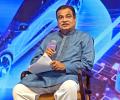
'I am not an aspiration-oriented politician.' 'This is the time to redefine politics.' 'Politics of power is not real politics.'

Apple will source the majority of the iPhone sold in the US from India in the June quarter while China will produce the vast majority of the devices for other markets amid uncertainty over tax tariffs, a top official said on Friday.

Their favourite alternatives: Malaysia, Vietnam and the Philippines. Note, India is missing from that list. And this is despite an attractive financial incentive scheme for OSAT players. The reason, said a senior executive of a US chip company who had a meeting in Taiwan just a few weeks ago, is that "they want more predictability in government policy because they plan to put in big money."

Tata Group will create 5 lakh manufacturing jobs in the next five years across sectors such as semiconductor, electric vehicles, battery and related industries, its Chairman N Chandrasekaran said on Tuesday.

'If you align your ambition with India's rise, the peak of your careers will unfold alongside the peak of India's power.'
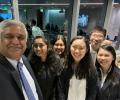
Prof Anantha Chandrakasan has been named Massachusetts Institute of Technology's new provost, the first Indian-American to serve in this leadership role.

The Uttar Pradesh government and iPhone maker Foxconn have started discussions to set up an electronics manufacturing unit in the state, sources aware of the development said. The investment pitch was made by Invest UP to Foxconn at the time of the final land allocation for the HCL-Foxconn chip joint venture Vama Sundari.

'Whoever owns the best chip industry will be the Saudi Arabia of the era of data,' predicts Rajeev Srinivasan.
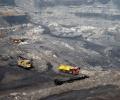
The 17 rare earth elements that are at the centre of the current crisis are critical components of everyday products -- from cars to jet engines to electronics like smartphones and flat-screen TVs.

In a double-dose bid to boost growth and employment prospects, the Union Cabinet on Tuesday approved a Rs 2.07 trillion outlay for a research development and innovation (RDI) Scheme to fund private sector innovations, and an employment-linked incentive (ELI) to create over 35 million new jobs over the next two years.

India expects partners to understand its policy of 'zero tolerance' against terrorism, and it will never countenance 'perpetrators of evil' being put on par with its victims, External Affairs Minister S Jaishankar said on Saturday during extensive talks with his British counterpart David Lammy.
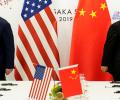
The call lasted approximately one and a half hours, and resulted in a very positive conclusion for both countries.

iPhone maker Apple has met its replenishment target for freshwater withdrawals for corporate operations in India in 2023, the company said in its environmental progress report released on Wednesday. Globally, Apple has set a goal to replenish 100 per cent of corporate freshwater withdrawals in high-stress locations by 2030.

'Despite being a software powerhouse, we're not producing proportionate original IP, frameworks, or global tech products originating in India.'

DeepSeek is a case in point on how economic interdependence between nations are utilised for geopolitical ambitions and global domination efforts, observes China expert Srikanth Kondapalli.

India and the United States will be signing a new defence framework during Prime Minister Narendra Modi's ongoing visit to the US, which will give a further fillip to the partnership between the two countries, a senior White House administration official said on Thursday.
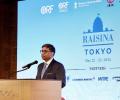
India's Foreign Secretary Vikram Misri has underscored the importance of not equating the victims and perpetrators of terror attacks, highlighting the need for global unity in combating terrorism. Speaking at Raisina Tokyo 2025, Misri expressed appreciation for Japan's support following the recent terror attack in Pahalgam, India. He also cautioned against the trend of some Western countries hyphenating India and Pakistan in the context of their recent military confrontation. Misri further outlined India's economic aspirations and its commitment to becoming a factor of stability in a turbulent world.

Tata Electronics on Saturday began the construction of its Rs 27,000-crore chip assembly plant in Assam, which is expected to become operational next year and create 27,000 jobs initially. The plant will produce 4.83 crore chips per day using indigenously-developed technologies. The plant's Bhumi Pujan (foundation stone laying) ceremony was held at the project site at Jagiroad in Morigaon district in the presence of Assam Chief Minister Himanta Biswa Sarma and Tata Sons Chairman N Chandrasekaran.

US Vice President J D Vance and National Security Adviser Michael Waltz are scheduled to visit India on April 21, reflecting Washington's focus on strengthening its relationship with India amidst global concerns over President Donald Trump's tariff policy. Vance's visit is likely to be more of a private trip, while Waltz's visit will be a business trip with discussions on security in the Indo-Pacific region, high technology, critical minerals, and export controls. Both are expected to meet Prime Minister Narendra Modi before his trip to Saudi Arabia. The visits come in the wake of Trump's recent pause on tariffs on all countries except China, following widespread economic concerns.
