Prime Minister Narendra Modi on Sunday said the Bharatiya Janata Party-led central government is taking steps to reduce imports of crude oil and gas, focusing more on exploration of fossil fuels and green energy.

These are 'hidden champions' of strategic research and innovation. They are worthy of emulation within Indian industry, and maybe even a Padma!, notes R Gopalakrishnan.

Speaking at the 'Samudra se Samruddhi' event, where he inaugurated and laid foundation stones of projects worth Rs 34,200 crore, Modi said all the problems of India have only one solution, and that is self-reliance.

Trump made the announcement in response to what he described as China taking "an extraordinarily aggressive position on trade" by sending "an extremely hostile letter to the world."

Corporate India is starting to step up its capital expenditure plans amid government incentives and signs of rising demand, company executives and analysts have indicated. This coincides with the Reserve Bank of India (RBI) recently citing a double-digit growth in private capital expenditure. Healthy balance sheets of banks and corporates, along with increasing capacity utilisation and improving business sentiment, are contributing to a favourable environment for sustained growth in private sector investments, the RBI said in its policy last week.

Mehli Mistry is backed by three other trustees -- Pramit Jhaveri, Darius Khambata and Jehangir HC Jehangir -- against Tata Trusts Chairman Noel Tata and the two vice-chairmen, Venu Srinivasan and Vijay Singh.

...compared with 153,000 in all of 2024.
The Union Cabinet on Wednesday approved a Rs 76,000 crore policy boost for semiconductor and display manufacturing ecosystem in the country in an bid to position India as a global hub for hi-tech production. Announcing the decision of the Cabinet, IT and Telecom Minister Ashwini Vaishnaw observed that electronics plays an important role in everyday life, and semiconductor chips forms a crucial part of electronics. Outlining the details of the scheme, he said the Rs 76,000 crore programme has been approved for the development of semiconductors and display manufacturing ecosystem.

SP Group chairman Shapoorji Pallonji Mistry on Friday reiterated calls for public listing of Tata Sons to bring transparency, amid infighting among trustees of Tata Trusts which controls a 66 per cent stake in the holding company of the salt-to-software conglomerate. Shapoorji Pallonji family is the single largest minority shareholder with about 18.37 per cent in Tata Sons.

The PM's speech from the ramparts of the Red Fort today was " stale, hypocritical, insipid, and troubling", the Congress general secretary said.
Showcasing India as an attractive investment destination, Modi said the country has political and economic stability as well as transparency and predictability in policy decisions.

2025 has seen a sharp rise in lawsuits targeting IT services and consulting companies, which now increasingly offer proprietary digital platforms and cloud services.

After months of discord, the Tata Trusts appear to be moving towards reconciliation, with recent reappointments and open exchanges signalling a return to cooperative governance.
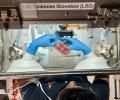
The $1.2 billion in-space manufacturing market is expected to grow and be worth more than $20 billion by 2033.

Let's work flat out and create a policy framework that fosters the growth of Indian non-family business VC and private equity firms. This will allow our Indian startups' dreams to flourish, explains Ajit Balakrishnan.
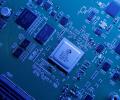
A joint venture of the Indian conglomerate Vedanta and Taiwanese electronics manufacturing giant Foxconn signed a memorandum of understanding with the Gujarat government on Tuesday to set up a semiconductor and display manufacturing unit in the state.

Two modules published by the NCERT, Swadeshi: Vocal for Local (for middle stage) and Swadeshi: For a Self-Reliant India (for secondary stage), carry excerpts from the prime minister's Independence Day address in which he stressed that self-reliance would drive India's journey towards a Viksit Bharat.

'A price of $6,600/oz is now a reasonable target for gold.'
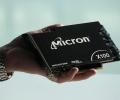
Computer storage chip maker Micron will set up a semiconductor assembly and test plant in Gujarat entailing a total investment of $2.75 billion (around Rs 22,540 crore), the company said on Thursday. Micron will invest up to $825 million in setting up the plant in two phases. Micron's plant has been approved under the government's "Modified Assembly, Testing, Marking and Packaging (ATMP) Scheme,".

'The scale and depth of talent here plays a central role in core software product engineering for some of the biggest brands in tech.'

Here's what Indian investors diversifying into equities, ETFs, and real estate abroad to manage risk, returns, and currency exposure must watch out for.

Prime Minister Narendra Modi is likely to visit the United Kingdom by the end of this month, with the India-UK free trade deal expected to be formally signed. Discussions on expanding bilateral ties in defence and security are also anticipated.
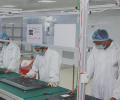
Dixon Technologies has received approval from the Indian government to form a joint venture (JV) with Chinese peer Longcheer, according to a regulatory filing. The JV will be formed between Dixon and Longcheer's Singapore-based subsidiary.
Indian conglomerate Vedanta on Monday said it has signed a pact with electronics manufacturing services giant Foxconn to form a joint venture (JV) for manufacturing semiconductors in India. Vedanta is the first company to make the announcement to invest in semiconductor manufacturing after the government announced a Rs 76,000-crore programme to boost electronic chip and display ecosystem in the country. This is also the second attempt of Vedanta to enter the semiconductor space after its earlier plans to set up a display unit with about Rs 60,000 crore investment could not take off.

China has expressed surprise over India's clarification regarding its stance on Taiwan, following reported comments by External Affairs Minister S Jaishankar. Beijing claims India's position is inconsistent with facts and undermines China's sovereignty.

Qualcomm has partnered with eyewear brand Lenskart to build glasses using its Snapdragon XR chipsets, which allow for on-device AI processing and spatial computing.
Corporate India is embarking on an ambitious investment drive, with capital expenditure (capex) expected to double to $850 billion over the next five years, according to a report by S&P Global Ratings. Indian power & transmission, airlines, and green hydrogen sectors would spearhead the spending, the report said.

Japanese automaker Suzuki Motor Corporation will invest Rs 70,000 crore in the next five to six years in India to strengthen its operations in the country, its representative director and president Toshihiro Suzuki said on Tuesday. Prime Minister Narendra Modi on Tuesday kicked off exports of Maruti Suzuki India's first electric vehicle e VITARA to 100 countries and also inaugurated the production of lithium-ion battery cells for strong hybrid electric vehicles at its facility in Gujarat.

Union telecom minister Jyotiraditya Scindia on Tuesday said investment in India at present makes economic sense for every original equipment manufacturer, as he cited the example of US smart devices major Apple's decision to source majority of the iPhones sold in the US from the country. While speaking at the Bharat Telecom event, Scindia said the investment in India at present is not just an act of goodwill alone but it makes economic sense for every OEM (original equipment manufacturer).

India took another leap in space infrastructure with the foundation stone laid for a new launch pad at the country's second rocket port in Kulasekarapattinam.

The government will undertake a detailed evaluation of applications it has received in response to the mega semiconductor scheme and expects to complete the entire process and sign agreements with companies in next 8-10 months, according to Union Minister for Electronics and IT Ashwini Vaishnaw. Vaishnaw said he is happy with the response that came in within a short period of time, when the ministry invited applications under the Rs 76,000 crore semiconductor programme. The government is confident of seeing one of the big global players in semiconductor industry coming in the next round, Vaishnaw told PTI in an interview. He asserted that many other players too are "seriously evaluating" India's semiconductor programme, and that the ministry is in discussions with several companies.

Gor underlined that President Trump has a "deep friendship" with Prime Minister Narendra Modi, and that is something that is unique.

The United States action of levying 25 per cent additional tariff on Indian goods is 'unfair, unjustified and unreasonable', India said on Wednesday in a firm reaction, signalling increasing tensions between the two strategic partners over New Delhi's energy ties with Moscow.
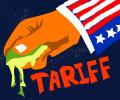
US President Donald Trump on Wednesday slapped an additional 25 per cent tariff on goods coming from India as penalty for New Delhi's continued buying of Russian oil.

With inflation comfortably below the Reserve Bank of India's (RBI's) 4 per cent median target and likely to undershoot its 3.7 per cent projection for 2025-26 (FY26), there is room for the monetary policy easing cycle to be sustained, the Finance Ministry said on Monday. The comments, featured in the ministry's Monthly Economic Review for June 2025, assume significance ahead of the Monetary Policy Committee (MPC) meeting of the Reserve Bank of India (RBI) scheduled to begin from August 5.
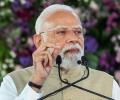
A day before US President Donald Trump's additional 25 per cent tariff kicks in, Prime Minister Narendra Modi on Tuesday made a vehement pitch for swadeshi and Make in India that should help create jobs in the country.

Who else will take on the might of Microsoft, Google, and Amazon if not the Adanis, Ambanis, Birlas, or Tatas?, asks R Jagannathan.

Essential and strategic items such as pharmaceuticals, semiconductors, copper, and energy products like oil, gas, coal and LNG are exempted from the 27 per cent import duty announced by the US on Wednesday, according to think tank GTRI.
The semiconductor chip supply for the electric two-wheeler industry has normalised but the prices are up by nearly 50 per cent compared to pre-pandemic period, said Eric Vas, president, Urbanite, the electric vehicle (EV) business of Bajaj Auto. "It (the supply) has improved greatly. It has pretty much normalised. The problem is the cost. "The costs remain very high. Hopefully, the costs will start correcting themselves over this fiscal year," he said in an interview with Business Standard.

'While the President has been critical of India, he has gone out of his way to compliment PM Modi. They have an incredible relationship.'
