
Netaji Subhas Chandra Bose's daughter, Anita B Pfaff, has approached the Supreme Court seeking directions for the return of her father's "ashes" from Tokyo's Renkoji temple. The apex court has issued a notice to the Centre, seeking its response on the plea. This follows a previous plea by Netaji's grand-nephew which was withdrawn after the court indicated that Bose's heir should be the one to petition.

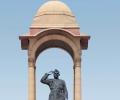
The Renkoji Temple is a lot smaller than other grand Buddhist shrines in Japan. In front of the gate, in a very serene setting, is the bust of Netaji. Aseem Chhabra reports from Tokyo.
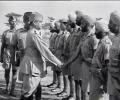
Descendants of Netaji Subhas Chandra Bose claim they have documentary evidence to prove that the Renkoji temple authorities in Japan have always been willing to hand over the 'ashes' believed to be his, refuting perceptions of roadblocks to their repatriation. They assert that successive Indian governments have shown little interest in retrieving the remains and conducting DNA tests, despite numerous appeals from the family. The article highlights the conflicting reports and controversies surrounding Netaji's death and the ongoing mystery surrounding his remains.
Armed with this note, Mission Netaji's Anuj Dhar and Chandrachur Ghosh approached the MEA and Prime Minister's Office last September and asked them to state the facts vis-a-vis the note under Right to Information Act.
"As Netaji's only child I feel obliged to ensure that his dearest wish, to return to his country in freedom, will at last be fulfilled in this form and that the appropriate ceremonies to honour him will be performed," Pfaff said.

Pfaff said resolving the mystery shrouding Bose's life and bringing back the ashes to India would be a true tribute to the revolutionary as the country celebrates its 75th anniversary of Independence.
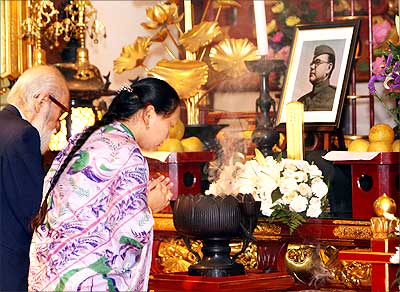
'The extended Bose family is insisting that the Japanese government must release all the information they have on Bose's ashes. It cannot be forgotten that Bose was in Japanese care when his 'death' occurred. Ultimately, it is the Japanese who hold the secret about what happened to him.'

Five things we learnt from the trove of data released on Saturday by the Narendra Modi government

The P V Narasimha Rao government in the 1990s had been on the verge of bringing to India the ashes, believed to be the mortal remains of Subhas Chandra Bose now kept at the Renkoji Temple in Japan, but was dissuaded from doing so due to an intelligence report.
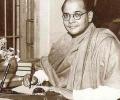
Laid to Rest: The controversy over Subhas Chandra Bose's death, a book published by Bose's great nephew Ashis Ray, reveals how we've always known the truth, notes Karan Thapar.

The controversy was triggered by a reply from the ministry of home affairs to an RTI filed by a Kolkata resident.
As two recently declassified Intelligence Bureau reveal that the Jawaharlal Nehru government had spied on the family of Subhas Chandra Bose for nearly two decades, one of India's political mysteries takes centrestage. Rediff.com reproduces this 2006 report in which Sumit Bhattacharya reported that a website claims that Netaji, in fact, did not die in an air crash, as was being believed, and that Netaji had escaped to Russia.
'The evidence about a plane crash that killed Netaji as stated in the Shahnawaz Committee report, is quite strong.' 'None of the files that I read bear any evidence that it was Nehru who ordered this kind of intrusive surveillance.' 'The government's excuse that declassifying some files may affect India's relations with friendly foreign countries is not a credible one.' Subhas Chandra Bose's grand-nephew and Trinamool Congress MP Sugata Bose on reports that his family was under surveillance for 20 years and the rumours over Nataji's death.
