
The output of eight core sectors grew 8.9 per cent in June, mainly due to a low base effect and uptick in production of natural gas, steel, coal and electricity, official data showed on Friday. The eight infrastructure sectors of coal, crude oil, natural gas, refinery products, fertilisers, steel, cement and electricity had contracted by 12.4 per cent in June 2020 due to the lockdown restrictions imposed to control the spread of coronavirus infections. In May this year, these key sectors had recorded a growth of 16.3 per cent, while it was 60.9 per cent in April.

India may see a structural shift in supplies of crude oil with Russia emerging as a key source of fuels, a development that reduces New Delhi's dependence on West Asian oil, gives Indian refiners better bargaining power with price-setter Saudi Arabia, and improves overall energy security. The unexpected surge in supplies of Russian crude in the last few months, unthinkable until the war in Ukraine, may also deliver other unforeseen gains such as boosting exports of refined fuels to Europe, which historically has counted on Russian shipments. India has jumped on to the bandwagon of opportunistic buying of Russian crude but if calibrated carefully, Urals crude can be a long-term asset for India refiners.

The output of eight core sectors declined by 4.6 per cent in February, the steepest contraction in the last six months which experts said could drag the overall industrial production in the month into the negative territory. All the key segments, including coal, crude oil, natural gas, and refinery products, witnessed a decline in production, according to the official data released on Wednesday. The growth rate of the eight infrastructure sectors -- coal, crude oil, natural gas, refinery products, fertilisers, steel, cement and electricity -- stood at 6.4 per cent in February 2020. Last time in August 2020, the sectors had recorded a negative growth of 6.9 per cent.

Business conglomerate Adani Group's chairman Gautam Adani is now the world's second-richest person after overtaking Louis Vuitton's Bernard Arnault, according to Forbes' Real-Time Billionaires List. At the time of writing this report, Gautam Adani's net worth was $153.9 billion, compared to Arnault's net worth of $153.7 billion. Adani is now just behind business magnate Elon Musk, according to Forbes' data.

Why does the world's fastest-growing major consumer of energy fail to attract investments in oil and gas? This is a question worth pondering after private sector conglomerate Reliance Industries Ltd (RIL) failed to close a $15-billion downstream asset deal with Saudi Arabia's national oil company, Aramco. It's understandable if multi-billion dollar investments in oil and gas projects or deals involving state companies that need to traverse a complex bureaucracy at state and federal levels and the corridors of ministries unravel. However, Mukesh Ambani-run RIL, India's most successful energy company, is not typically known to fumble on closing deals (Ambani closed deals worth around Rs 2 trillion early last year in telecom and retail with blue chip investors).

India's economic image is not affected due to Adani Group's recent decision to pull out Rs 20,000 crore FPO (follow-on public offers) amid allegations of financial wrongdoings, Finance Minister Nirmala Sitharaman said on Saturday.

Many CEOs said they plan to give special leave to women employees so as to encourage their participation in the workforce.
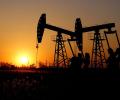
India plans to release about 5 million barrels of crude oil from its emergency stockpile in tandem with the US, Japan and other major economies to cool prices, a top government official said on Tuesday. India stores about 38 million barrels of crude oil in underground caverns at three locations on the east and west coast. Of this, about 5 million barrels will be released, starting as early as 7-10 days, the official, who wished not to be named said.

Barring fertiliser, all seven sectors -- coal, crude oil, natural gas, refinery products, steel, cement and electricity -- recorded negative growth in July.

The apex body of petroleum workers in Assam on Thursday said it has stopped transportation of fuel to Meghalaya, following reports of attacks on vehicles from Assam in the backdrop of violence along the inter-state border that left six people dead.

Barring fertiliser, all seven sectors - coal, crude oil, natural gas, refinery products, steel, cement, and electricity - had recorded negative growth in May.

Saddening glimpses of the impact of the Russian invasion on Ukraine's children.

Benchmark indices settled lower on Friday, with the Sensex declining 111 points on the back of a sharp fall in index heavyweight Reliance Industries. The BSE benchmark went lower by 111.01 points or 0.21 per cent to settle at 52,907.93. During the day, it tanked 924.69 points or 1.74 per cent to 52,094.25. The NSE Nifty dipped 28.20 points or 0.18 per cent to close at 15,752.05.
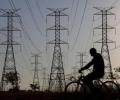
The production of coal, refinery products and electricity grew by 8 per cent, 1.9 per cent and 2.8 per cent, respectively.
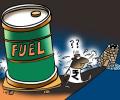
India's climate change goals are turning combustible. On the one hand, a protracted dispute between the government and manufacturers over subsidies threatens to slow the pace of electric vehicle (EV) sales. On the other hand, repeated assertions by different arms of the government over banning sales of new fossil fuel-fired vehicles have queered the pitch for energy investments. Before we address the issue of the recommended diesel vehicle ban in the recent report on energy transition, issued months before the next round of global climate talks begin in Dubai in November, let's look at what's at stake.

Contracting for the ninth consecutive month, the output of eight core infrastructure sectors dropped by 2.6 per cent in November, mainly due to decline in production of natural gas, refinery products, steel and cement. The production of eight core sectors had recorded a growth of 0.7 per cent in November 2019, data released by the commerce and industry ministry showed on Thursday. Barring coal, fertiliser and electricity, all sectors -- crude oil, natural gas, refinery products, steel and cement -- recorded negative growth in November 2020.

IOC has been forced to shut down its Digboi refinery in Assam and is operating Guwahati unit at minimal throughput, while OIL has been forced to shut LPG production and its crude oil production has dropped by 15-20%. Sources said the agitation has blocked the movement of tankers and trucks, which are mostly used to supply petrol, diesel and LPG from the refineries to different parts of the North East.

A strong performance by sectors including banking raised the profits of Indian companies by 28 per cent in the three months ended March 2022. The rate of growth is, however, lower than the 30 per cent seen in December. Growth in net sales was also lower than what was seen in the December quarter for the sample under consideration.
Notwithstanding the windfall tax placing a cap on profits, oil and gas producers like Oil India (OIL) and Oil and Natural Gas Corporation (ONGC) have done well in the October-December quarter (third quarter, or Q3) of 2022-23 (FY23). ONGC faces the drag of poor results from its subsidiary Hindustan Petroleum Corporation, and in comparative terms, OIL is better off. Standalone net sales in Q3FY23 stood at Rs 5,900 crore - up 57 per cent year-on-year (YoY), up 2 per cent quarter-on-quarter (QoQ).

Banks and companies in India are taking a cautious approach towards Sri Lanka, which, reeling from a financial crisis, has sought a $1-billion loan from the country to import essential commodities. A senior State Bank of India (SBI) executive said the bank was committed (to Sri Lanka) for the long term. "As far as exposures (are concerned), the bank will be cautious on its dollar exposure to Sri Lankan entities till the situation improves," he said.

Saudi Aramco had right from the beginning resisted the price tag Reliance had put for the 20 per cent stake in O2C business, which comprises the company's twin refineries at Jamnagar in Gujarat, petrochemical plants and 51 per cent in fuel retailing venture.

There is the problem of regions in the North East being theatre for power-play by nations with borders and influences converging in those parts, which in turn requires a sizable presence of the armed forces, notes Shyam G Menon.

With the privatisation of BPCL appearing inevitable, there are worries that the new promoter would soon move to lower wages.

State-owned oil firms such as ONGC and IOC will invest over Rs 1.11 lakh crore in the next fiscal year starting April as they supplement the government's massive spending programme to spur economic growth. Oil and Natural Gas Corporation (ONGC), Indian Oil Corporation (IOC), GAIL (India) Ltd, Bharat Petroleum Corporation Ltd (BPCL), Hindustan Petroleum Corporation Ltd (HPCL) and Oil India Ltd (OIL) will together make a 7.4 per cent higher capital expenditure in the 2022-23 fiscal (FY23). The capex spending of Rs 1.11 lakh crore in 2022-23 compares with a revised estimate of Rs 1.04 lakh crore for the current fiscal year that ends in March, according to Union budget documents.

Benchmark BSE Sensex rallied nearly 630 points while Nifty closed above the 16,500 mark on Wednesday after sharp gains in IT and energy shares amid positive global market trends. Buying in index majors Reliance Industries, Infosys and Tata Consultancy Services and FII inflows bolstered the sentiment. Shares of firms related to oil exploration and refineries were in heavy demand, with Reliance Industries rallying 2.47 per cent and ONGC by 4 per cent, as the government slashed windfall tax on petrol, diesel, jet fuel and crude oil.

Eight core sector industries recorded a growth of 5.5 per cent in February, the highest in 11 months, mainly due to healthy expansion in output of coal, refinery products and electricity, according to a government data released on Tuesday. The eight core sector industries -- coal, crude oil, natural gas, refinery products, fertiliser, steel, cement and electricity -- had expanded by 2.2 per cent in February last year.

India's appetite for imported crude oil may wane in fiscal year (FY) 2023 from record levels in pre-pandemic 2019-20 fiscal as higher oil prices, a spillover from the conflict in Ukraine, and increasing use of biofuels affect domestic demand for petroleum products. Brent crude surged to a nine-year high, shy of a July 2008 record $147.50 a barrel, before declining to around $100 a barrel - but the volatility in commodity rates will slow global economic growth and use of fuels. Demand for all oil products may grow at only 2-3 per cent in FY23, slower than the current fiscal and nearly half the 5.5 per cent growth estimated by the petroleum ministry, according to industry officials.

Glimpses of the Ukrainian grit and determination in the face of Russian attacks.

'When you are travelling in Mumbai when the air quality is bad, you feel suffocated.' 'You may feel uncomfortable breathing Delhi air, but the level of discomfort is higher in Mumbai.'
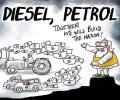
The Centre has garnered around Rs 2,500-3,000 crore in the first five weeks after it imposed a windfall tax on oil and gas companies for the export of fuel, Business Standard has learnt. It is likely that the government will continue with the one-time tax till the Indian crude basket is above $80 a barrel, sources said. The next review of the windfall tax on oil companies is early next week.

The government on Thursday permitted 100 per cent foreign investment under the automatic route in oil and gas PSUs which have received in-principle approval for strategic divestment. The move would facilitate privatisation of India's second biggest oil refiner Bharat Petroleum Corp Ltd (BPCL). The government is privatising BPCL and selling its entire 52.98 per cent stake in the company.

After missing two self-imposed deadlines, billionaire Mukesh Ambani's Reliance Industries Ltd on Friday announced recalibration of a proposed $15 billion deal to sell 20 per cent stake in its oil refinery and petrochemical business to Saudi Aramco, saying the two firms have agreed to re-evaluate the proposed investment in light of the Indian firm's new energy forays. The stake sale talks, which were first officially revealed in August 2019, are being reset in light of Reliance making forays into new energy business in recent months by investing $10 billion in alternative energy over three years. To pivot to green energy, it has already bought a German maker of photovoltaic solar wafers and signed a deal with a Danish company to manufacture hydrogen electrolysers in India.
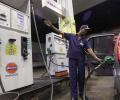
Six non-BJP ruled states -- West Bengal, Tamil Nadu, Andhra Pradesh, Telengana, Kerala and Jharkhand -- have not reduced the VAT on petroleum products, leading to higher prices of petrol and diesel there, Petroleum Minister Hardeep Singh Puri said on Thursday. Puri said in Lok Sabha that the central government has reduced excise duty on petroleum products and some other states, following cues, reduced their Value Added Tax (VAT). Six states -- West Bengal, Tamil Nadu, Andhra Pradesh, Telengana, Kerala and Jharkhand -- have not reduced the VAT, he said amidst vocal protests by the opposition members.
Led by healthy growth in coal, crude oil, fertilisers, cement and electricity production, output of eight core industries grew to a 13-month high of 18.1 per cent in May this year, according to official data released on Thursday. The growth of core infrastructure sectors expanded by 16.4 per cent in the year-ago period and 9.3 per cent in April this year. The last high growth was recorded in April 2021 when it was 62.6 per cent.

The government may take a fresh look at BPCL privatisation, including revising the terms of sale, an official said. "We need to go back to the drawing board on BPCL. "There are issues in terms of consortium formation, geopolitical situation and energy transition aspects," an official said. The government is selling its entire 52.98 per cent stake in BPCL for which three expressions of interest (EoIs), including one from billionaire Anil Agarwal-led Vedanta Group, have been received.

According to sources, Russian energy giant Rosneft or its affiliates, Saudi Aramco and Reliance Industries are in race for BPCL's three refineries - Mumbai, Kochi in Kerala and Bina in Madhya Pradesh - 16,309 petrol pumps, 6,113 LPG distributor agencies and more than a fifth of 256 aviation fuel stations in the country.

Dominic Xavier wants Prime Minister Modi to know that India needs Oxygen NOW! and can't wait for hospitals to be set up.

Despite deregulation of petrol prices and a hike in retail prices of other regulated fuels in June 2010, oil marketing companies continue to incur.
A fall in crude oil price and Aramco's $75 billion annual dividend commitment may have delayed Saudi company picking a stake in Reliance Industries Ltd's oil-to-chemical unit (O2C), research firm Jefferies said. Richest Indian Mukesh Ambani had in August 2019 announced talks for the sale of a 20 per cent stake in the O2C business, which comprises its twin oil refineries at Jamnagar in Gujarat and petrochemical assets, to the world's largest oil exporter. The deal was to conclude by March 2020 but has been delayed for reasons not disclosed by either company.

Sectors which recorded positive growth were coal, refinery products and fertiliser.
