
In an eventful week ahead, stock markets may face volatile trends before the RBI's interest rate decision and the US inflation data announcements, as investors continue to assess the broader implications of US tariffs on global economy and inflation, analysts said. Investors fear that a full-blown trade war will impact global trade and economic growth, according to market experts.

The RBI under new Governor Sanjay Malhotra on Friday cut interest rate for the first time in nearly five years as the central bank pivoted the policy stance to support a shuttering economy. The 25 basis points rate cut to 6.25 per cent comes after last rate reduction in May 2020. The last revision of rates happened in February 2023 when the policy rate was hiked by 25 basis points to 6.5 per cent.


Benchmark policy rate unchanged at 6.75 per cent.

The RBI has cut key rates to boost the economy.
The central bank kept cash reserve ratio unchanged at 4 per cent.

Titan, Nestle, Hindustan Unilever, State Bank of India, Larsen & Toubro, ITC, Zomato and Bajaj Finserv were also among the laggards. Adani Ports, IndusInd Bank, Tata Motors and HDFC Bank were among the major gainers.

Short-term lending rate unchanged at 7.75 pc.

Short-term lending (Repo) rate is unchanged at 8 per cent.

Next bi-monthly policy statement on September 30.
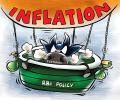
Retail inflation slipped to seven-month low of 3.61 per cent in February mainly due to easing prices of vegetables, eggs, and other protein-rich items, creating space for the RBI to go for another cut in interest rate next month.

Highlights of RBI's third quarter review of monetary policy.

'We never waste a crisis. There will be learning and the supervisory tools will get better with each episode.'

Reducing policy rates is not enough. The key is to ensure banks lend to credit-constrained borrowers.

Trading sentiment in the equity market this week will be guided by global trends, foreign fund movement, macroeconomic data announcements and RBI's interest rate decision, analysts said. The monthly auto sales data announcement would also be tracked by investors this week.

The central bank raised statutory liquidity ratio, the portion of deposits that banks are required to keep in government securities, by 100 basis points to 25 per cent. Other key rates were unchanged.

Benchmark Sensex advanced 110 points in a choppy trade on Wednesday, extending its gains to the fourth day in a row helped by buying in HDFC Bank, ICICI Bank and fresh foreign fund inflows. The 30-share barometer rose by 110.58 points or 0.14 per cent to settle at 80,956.33 with 14 of its constituents ending with gains and 16 stocks with losses. During the day, it jumped 399.64 points or 0.49 per cent to 81,245.39 and dipped to a low of 80,630.53.

Baby steps are pleasing to see, but when it comes to policy-making, one has to see where they go. Policy statements rarely provide the specific rationale for the proposed "baby steps". Economists, who see "baby steps" as "interest rate smoothening", infer a rationale for such actions in a variety of ways, as for example from the minutes of the policy meetings where they are made available.

Subbarao's annual statement will be of unusual interest this year

Reserve Bank of India Governor D Subbarao on Friday increased mandatory cash reserve of banks held by RI by 75 basis points (0.75 per cent) in a bid to suck excess liquidity to combat rising inflation.

Amid expectations that the Reserve Bank may keep its monetary stance unchanged, the central bank will come out with its second quarter review of the credit policy for the current fiscal on October 27.

Net NPAs increased to Rs 36,260 crore in the December quarter from Rs 34,843 crore in September and Rs 33,116 crore in December 2023, observes Tamal Bandyopadhyay.

The RBI has set up a panel to review ATM charges, and fees levied by banks.

Among the Sensex firms, ITC, Kotak Mahindra Bank, ICICI Bank, Nestle, Axis Bank, IndusInd Bank, UltraTech Cement, Bajaj Finance, Maruti and HDFC Bank were the major laggards.

The Reserve Bank of India's (RBI's) interest rate decision, West Asia conflict and trading activity of foreign investors are the key factors that will dictate investors' sentiment in the market this week, analysts said. Moreover, quarterly earnings from IT bellwether TCS, domestic macroeconomic data and movement in global oil benchmark Brent crude would also guide trends in the market. Worsening tensions in the Middle East and foreign fund outflows were the major culprits behind the equity markets sharp fall last week.
RBI interest rate decision, macroeconomic data and global trends would guide markets' movement this week, analysts said. Besides, trading activity of foreign investors and the last batch of Q1 earnings announcements would also guide trends in equities. HSBC PMI (Purchasing Managers' Index) for the services sector is scheduled to be announced on Monday.

Highlights of the RBI monetary policy.

'Challenge is basically near-term growth as the outlook has turned a bit adverse.'

The central bank was widely expected to maintain status quo.

However, since the banking system is facing tight cash conditions due to payment for spectrum for high speed telecom and broadband services and advance tax outgo, some experts are also of the view that RBI would wait for liquidity to ease before going for rate hikes.

Investor wealth eroded by Rs 4.46 lakh crore in a single day on Friday with the benchmark BSE Sensex tanking more than 1 per cent in line with global stocks rout. The 30-share BSE Sensex plunged 885.60 points or 1.08 per cent to close at 80,981.95 with 25 of its components declining and five ending with gains. During the day, it nosedived 998.64 points or 1.21 per cent to hit an intra-day low of 80,868.91.

Faced with the challenging task of balancing growth and inflation, the Reserve Bank of India will take measures in its quarterly review later this month to perk up the economy and to control inflation, which rose to 0.83 per cent for the third week of September.
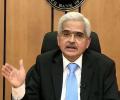
Reserve Bank of India (RBI) Governor Shaktikanta Das has said the decision on interest rate moderation will be based on long-term inflation trajectory and not monthly data. The Monetary Policy Committee (MPC) headed by the RBI Governor is scheduled to meet between October 7 and 9 and take call on interest rate. The RBI kept the repo rate unchanged at 6.5 per cent for the ninth time in a row amid risks from higher food inflation.

The rupee tumbled 3 per cent against the US dollar in 2024 as concerns over slower economic growth and a stronger greenback in global markets weighed, but it was among the least volatile currencies in the world and the headwinds may be less intense in the coming year.

From the 30 Sensex pack, State Bank of India, Mahindra & Mahindra, Bharti Airtel, Titan, HDFC Bank, IndusInd Bank, Axis Bank and Bajaj Finance were the biggest laggards. JSW Steel, Tech Mahindra, Larsen & Toubro, Hindustan Unilever, HCL Technologies and Reliance Industries were among the gainers from the pack.

Union Finance Minister Nirmala Sitharaman on Monday said people are finding current interest rates "very stressful" and urged banks to make them affordable. Speaking at an event organised by State Bank of India, the finance minister said that at present, India requires industry to ramp up and invest in new facilities, and added that lowering lending rates can help achieve the "Viksit Bharat" aspiration.

The Survey is authored by Chief Economic Advisor V Anantha Nageswaran and his team.

Experts said a future rate cut would depend on the inflation.

The RBI under former governor Shaktikanta Das resisted pressures to cut interest rates through 2024 as it kept its 'Arjuna's eye' trained on inflation, but the central bank under a new detail-oriented head will soon have to take a call if it can continue sacrificing growth. Das, a career bureaucrat who in 2016 oversaw Prime Minister Narendra Modi's highly disruptive demonetisation move, left a lasting legacy as he demitted office towards the end of 2024 after expertly navigating monetary policy for six years, the highlight of which was steering India's recovery through the pandemic.

Perhaps because the Modi government had some differences of opinion with two of the economist governors (one of whom was appointed by the Manmohan Singh government), there is a view that its political leadership prefers a civil servant to head the RBI, notes A K Bhattacharya.
 © 2026 Rediff.com - Advertise with us - Disclaimer - Privacy Policy - Sitemap - Feedback - About us - Terms of use - Grievances