
The markets breadth was negative - out of 2,717 stocks traded, 1,804 declined, 842 advanced and 71 were unchanged on Thursday. The index moved in a range of 207 points between 15,052 (low) and 15,259 (high). The NSE Nifty ended with a loss of 78 points at 4,504.

Singh says Japanese pharma giant's allegations false.
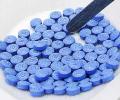
Says former Ranbaxy owners concealed critical information on probe by US agencies.
They seek to profit from big-selling drugs going off-patent this year in the lucrative market.

Post Ranbaxy episode, domestic pharma companies may face frequent inspections and deeper scrutiny.

SSTL is the second operator after Vodafone that has approached FIPB for raising FDI limit.

After decades of hunt for fortune abroad, India's pharmaceutical companies now plan to strike gold in their own backyard. Large players from Ranbaxy to Dr Reddy's and Piramal Healthcare are all headed to rural India to boost their revenues.
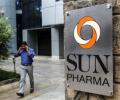
But splitting management bandwidth by investing in non-core businesses will not be appreciated by the market in the long run.
Minority shareholders of Hyderabad-based Zenotech Laboratories, a biotech company in which Ranbaxy owns 46.8 per cent, are up in arms against Ranbaxy's new owner Daiichi Sankyo for allegedly failing to buy additional shares at the price offered by the former promoters of Ranbaxy.
The NSE Nifty closed at 2786, up 23 points. The market breadth was marginally negative - out of 2,448 stocks traded, 1,339 declined, 1,016 advanced and the rest were unchanged on Thursday.
Import alert on Ranbaxy's Mohali unit; Strides' injectible arm gets warning letter
The US Food and Drug Administration has issued two warning letters to Ranbaxy claiming procedural violations at its plants in Dewas and Paonta Sahib in India. Giuliani, a high-profile Republican leader and former US attorney in Manhattan, would provide advice and review compliance issues. Ranbaxy has been accused of selling generic drugs which did not meet FDA standards.
Commenting on the closure of the deal, Ranbaxy CEO Malvinder Mohan Singh said, "The deal has been closed successfully. This puts us well on the path to creating a hybrid business model that will unlock the strengths of both companies to bring unprecedented value to all stakeholders." In June, Japanese firm Daiichi Sankyo had entered into an agreement to buy out the promoters' stake of 34.8 per cent and subsequently made open offer for a 20 per cent stake at Rs 737 per share.
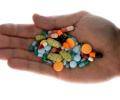
The FDA has been tightening its monitoring of Indian pharma majors over compliance issues. Surprise plant inspections and import alerts have been frequent outcomes
The NSE Nifty ended at 3,513, down 93 points. The market breadth was extremely negative - out of 2,652 stocks traded, 2,164 declined, 442 advanced and the rest were unchanged on Wednesday.
The market breadth was fairly negative - out of 2,728 stocks traded, 1,626 declined, 1,011 advanced and the rest were unchanged on Friday. Selling was seen across-the-board with big losses in realty, technology, financial and metal stocks.
Singh said they will focus on Fortis Healthcare and Religare Financial Services after the acquisition.
The market breadth was negative - out of 2,692 stocks traded, 1,801 declined, 812 advanced and 79 were unchanged on Wednesday. The NSE Nifty slipped 44 points to end at 3,817. The index dropped to a fresh yearly low of 12,514 - down 421 points from the day's high. The Sensex finally ended with a loss of 100 at 12,576.

Dilip Shanghvi has never tried to be everything to everybody.
Fresh buying in banking stocks helped the index rebound into the positive zone. The index touched a high of 17,497 - up 182 points from day's low. The Sensex finally ended with a gain of 81 points at 17,435. The NSE Nifty moved up 42 points to close at 5,158.
Following yesterday's late selling, the Sensex opened with a negative gap of 121 points at 19,580
Heavy short-covering, on account of July derivatives expiry, towards the end of the day saw the index rebound into the postive zone and shoot up over 100 points before settling with a gain of 77 points at 15,776.

The Zee saga will see a long-drawn-out court battle before shareholders get any chance to vote on any proposal by the management or Invesco, says Prosenjit Datta.
Ranbaxy chief Malvinder Singh and Max Healthcare chairman Analjit Singh on Monday said they have reached a settlement on the will of Ranbaxy founder Bhai Mohan Singh and decided to withdraw all cases against each other.
The challenge of merging Ranbaxy into the company has not been factored in.
The NSE Nifty ended at 4,583, down 54 points. The market breadth was extremely negative - out of 2,774 stocks traded, 2,020 declined while 706 advanced. The rest were unchanged.

In a surprise announcement in April, Sun and Ranbaxy -- at that time owned by Japan's Daiichi -- declared an all-stock deal to create India's largest and world's fifth-largest drugmaker in an over $4 billion deal.
Data also show that several other leading domestic pharma companies have recalled their products from the US

Brian Tempest is among the four directors of cash-strapped healthcare chain whose removals were sought by two institutional investors. Three directors -- Harpal Singh, Sabina Vaisoha and Tejinder Singh Shergill -- had already resigned before the EGM.
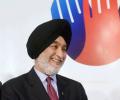
Over the years, Mr Singh has got in and out of innumerable businesses, cutting across sectors. He is one businessman who I have always found to be in a start-up mode, says Bhupesh Bhandari.
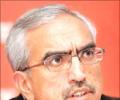
'It might take 10 years before medicines of decent quality and price reach right down to the last village of India. Ranbaxy, with its India focus, intends to get there in five years.'

India has capped the prices of 36 drugs, including those used to treat infections and diabetes, in its latest move to make essential medicines more affordable, a senior official of the country's drug pricing authority told Reuters on Friday.
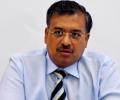
Sun Pharma's Dilip Shanghvi is India's richest person.
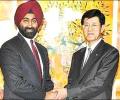
As he uses the Ranbaxy money to expand his other businesses, in India and abroad, this young scion is clear about one thing -- he's not going to fight battles he can't win.
In October 2007, Ranbaxy Laboratories picked up a 38 per cent additional stake in the company, taking its shareholding in the Hyderabad-based firm to 45 per cent. However, Ranbaxy had made it clear that it is not interested in taking over the company.
The shareholders want Daiichi to offer the same price (Rs 160) that was offered by Ranbaxy while acquiring a 45 per cent stake in Zenotech a year ago. Daiichi has to make an open offer as it has indirectly become the major shareholder of Zenotech by virtue of the Ranbaxy acquisition.
Two US Congress members have expressed doubts over the quality of inspections conducted by the US Food and Drugs Administration (FDA) on Indian drug manufacturing facilities.
The company also said it would suffer a one-time loss of $3.8 billion on consolidated basis for its investments in Ranbaxy Laboratories. Daiichi Sankyo has based its estimates for the one-time write-down of goodwill on its investment in Ranbaxy to fully reflect the impact of the current turmoil in global equities, the company said.

And when an inspector asked about the contents of unlabelled vials in the laboratory glassware washing area, a plant worker dumped them down a sink and said the contents could not be determined, according to a July 18 letter from the US Food and Drug Administration to Wockhardt, which makes sterile injectable drugs and various forms of insulin.
Amid reports of a US Congress probe against India's largest drug maker Ranbaxy Laboratories, data show that many leading multinational companies such as Pfizer, GlaxoSmithKline, Novartis and Merck are also under the scanner of the US drug regulator, for more or less similar violations as Ranbaxy is alleged to have committed.
