
Stocks of electronics manufacturing services companies have been major outperformers, with four of the top eight listed majors by market capitalisation doubling their value over the past 12 months. The biggest gainer in this space has been the market leader, Dixon Technologies (India), which is up nearly threefold.

India's largest cable and wire manufacturer Polycab India ended financial year 2024-25 (FY25) on a high, delivering another strong quarter of double-digit growth and market share gains. This coupled with margin expansion, operating breakeven for its fast-moving electrical goods (FMEG) business, and steady exports outlook for FY26 is expected to support the stock, which is up 18 per cent over the past month. The stock is currently trading at Rs 5,765 a share.

The gap between credit and deposit growth in the banking system is expected to decline sharply to 80 basis points (bps) in the next financial year from an average of 386 bps over the FY22-Q3FY25 period, according to rating agency India Ratings. This would be against the backdrop of sharp moderation in the incremental loan deposit ratio (LDR) of the Indian banking system to 85 per cent in February 2025 from 117-118 per cent in the same month of 2024.

In a step towards diversifying its resource base and securing green energy minerals, India is poised to launch its first-ever offshore mineral auction in the first quarter of 2024, announced Union Minister of Mines Pralhad Joshi during the launch event of the National Geoscience Data Repository portal. The government plans to hold auctions in March, offering 10-15 blocks for bidding. Meanwhile, the ministry of mines is currently developing rules and regulations for offshore mining.
The news of Dixon Technologies (India)'s tie-up with HP in addition to its existing Lenovo and Acer partnerships has led to a 5 per cent stock uptick since the start of the week. Dixon can target roughly 60 per cent of India's addressable IT hardware market with these contracts. Dixon targets Rs 48,000 crore in revenue from IT hardware under the PLI scheme over the next six years.

India's economic growth slowed to a 15-month low of 6.7 per cent in April-June 2024-25, mainly due to poor performance of the agriculture and services sectors, government data showed on Friday. The gross domestic product (GDP) expanded by 8.2 per cent in the April-June quarter of 2022-23. India, however, remained the fastest-growing major economy, as China posted a 4.7 per cent growth in April-June 2024.

The IT giant has reported a decline in headcount for six consecutive quarters.

Shriram Finance's (SHFL's) profit after tax (PAT) rose 10 per cent year-on-year (Y-o-Y) to Rs 2,140 crore in the fourth quarter of the financial year 2024-25 (Q4FY25).

Early-bird results for the January-March 2025 quarter (Q4FY25) suggest a slowdown in earning growth for India Inc, despite a benign cost environment that has led to an improvement in margins. The combined net profit (adjusted for exceptional gains and losses) of 175 early-reporting companies rose by 3.8 per cent year-on-year (Y-o-Y) in Q4FY25, marking the slowest growth in 17 quarters.

Shares of Avenue Supermarts (DMart) have gained about 5 per cent over the past week on better than expected June quarter (Q1FY25) performance, hopes of a recovery in discretionary demand, and margin gains going ahead. The key takeaway from the results was the robust gross margin performance. Riding on improving mix, DMart posted a 34 basis point year-on-year (Y-o-Y) improvement in gross margins to 14.9 per cent.

Fear of a recession in the US due to rising unemployment has added to the concerns of India's IT services sector, which was seeing some growth returning after Q1FY25 results. The Nifty IT closed 3.26 per cent down, as major IT services companies' stock value fell. Tata Consultancy Services (TCS), India's largest IT services firm, saw its stock price fall 4 per cent during intraday trading.
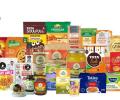
'We've maintained that India is a high-penetration game. It's not only a premiumisation game.'

Fresh order wins for capital goods and industrial companies may have seen a major slump due to Lok Sabha polls in the first quarter of the current financial year (Q1FY25). At the same time, revenue and profit growth trajectory is expected to have stayed the course, according to brokerage firms. Elara Capital, Motilal Oswal, and InCred Equities expect this sector universe to report a 12- 21 per cent growth in revenue, 21 -36 per cent growth in Ebitda and 24-38 per cent growth in profit on a year-on-year (Y-oY) basis.

Net profit of 19 listed banks is likely to decline by 4 per cent year-on-year (Y-o-Y) for the quarter ended March (Q4FY25) mainly due to pressure on net interest margins (NIM) as a result of rate cut by the Reserve Bank of India (RBI), according to analysts' estimates. Additionally, loan growth is expected to further slowdown amid low demand in certain secured products, stress in the unsecured segment, and a high cost to deposit (CD) ratio across the system.

At least 13 candidates are in the race for the position of managing director and chief executive officer (MD & CEO) of Punjab National Bank (PNB), the second-largest public sector bank (PSB), according to multiple sources familiar with the matter. "Among the candidates, some are executive directors (EDs) and managing directors in major PSBs. "Financial Services Institutions Bureau (FSIB) will conduct the interviews next month," said a source.

Trends in the global energy markets are crucial if India's growth outlook is to remain healthy. Prices for the Indian crude basket were averaging around $86.2 per barrel through Q1FY25 and then moderated to $84 in July and to $78-79 in August (so far). But global crude supply may outpace weak global demand in the short term.

While Paytm (One97 Communications) is not completely past regulatory hurdles, its share price has gained in the last month or two. The Paytm handle migration is complete along with FDI clearance necessary for the Payment Aggregator (PA) license. UPI consumer data indicates stable market share, and expansion in partner networks in financial distribution. All this implies Paytm could be set to meet guidance of turning Adjusted Ebitda breakeven by Q4FY25 (ex of UPI-incentives).

Equity markets will take cues from the US tariff related developments, global trends and trading activity of foreign investors this week, analysts said.

Coal India's (CIL's) revenue for the first quarter of 2024-25 (Q1FY25) came in at Rs 36,500 crore, up 1 per cent year-on-year (Y-o-Y) and down 3 per cent sequentially, which was in line with consensus. The blended average selling price was Rs 1,687/tonne, down 5 per cent Y-o-Y and down 1 per cent Q-o-Q, which was below estimates. The adjusted operating profit (excluding overburden removal or OBR costs) stood at Rs 11,500 crore up 3 per cent Y-o-Y and up 17 per cent Q-o-Q, which beat the street. This was due to lower operating expenses.

Private banks' net profit grew 26.3 per cent year-on-year (Y-o-Y) to Rs 48,982 crore in the first quarter ended June 2024 (Q1FY25) owing to healthy growth in credit and other income. The gross non-performing assets (GNPAs) increased with the end of dispensation granted during the pandemic, according to the data compiled by BS Research Bureau for listed 18 private banks.
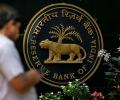
The Reserve Bank of India (RBI) has sought granular data from select non-banking financial companies (NBFCs) on their loan book growth. The details sought are on the outstanding product-wise portfolio and the annualised interest charged on them. The annualised interest slabs mentioned are as follows: less than 10 per cent, 10-20 per cent, 20-30 per cent, 30-40 per cent, 40-50 per cent, and above 50 per cent.

Apollo Hospitals Enterprise (APH) delivered an in-line performance for the April-June quarter of the financial year 2024-2025 (Q1FY25)with growth in the number of patients. AHLL (Apollo Health & Lifestyle), a subsidiary, posted sales growth and profitability. APH also reduced operational costs at Healthco.

IndiGo share price today: IndiGo share price fell as much as 4.8 per cent to a low of Rs 4,275 per share on the BSE in Monday's intraday trade as investors booked profit in the stock post a its April-June quarter (Q1) results for financial year 2024-25 (FY25). The stock ended 1.36 per cent lower at Rs 4,430 as against a 23-points gain in the benchmark BSE Sensex. The selling also got exacerbated as the management commentary, post Q1FY25 results, highlighted that inflationary pressure could likely dent July-September (Q2FY25) performance.

Households may be feeling the pinch of higher inflation but corporate India is enjoying record high margins and profits. The combined quarterly net profit of listed companies scaled a new high in the April-June 2023 quarter owing to a sharp rise in operating and net profit. The expansion in margins more than compensated for the slowdown in revenue growth, which slipped into single digits in Q1FY24 after a gap of nine quarters.

India's corporate sector, including public sector enterprises (PSEs), continues to go slow on investments and capital expenditure (capex). According to data from Motilal Oswal Financial Services (MOFSL), corporate investments declined for the second consecutive quarter in the April-June period (first quarter, or Q1) of 2023-24 (FY24). After a contraction of 0.5 per cent year-on-year (Y-o-Y) in the 2022-23 (FY23) January-March quarter, corporate investments likely fell 6.2 per cent Y-o-Y in Q1FY24, write Nikhil Gupta and Tanisha Ladhaa of MOFSL in their recent report on corporate investments.

For food aggregator platform Swiggy, quick commerce (qcom) is proving to be a better growth opportunity than food delivery. Its qcom arm Instamart is rapidly outpacing its core food delivery vertical across several key financial metrics, the company's recently filed draft red herring prospectus (DRHP) shows.

The Nifty IT Index, the gauge for the performance of information technology (IT) stocks, was the worst performer on the stock exchanges on July 29, a day after Infosys posted lower-than-expected earnings growth for the June quarter and sharply cut its revenue growth guidance for 2023-24 (FY24). The IT index was down 4.1 per cent, its biggest one-day fall in three months. The decline was led by Infosys, with its shares plunging nearly 8 per cent, followed by HCLTech (-3.2 per cent), Wipro (-3.0 per cent), and TCS (-2.7 per cent).

Shares of Tata Consultancy Services (TCS), the country's largest IT services provider, continue to remain under pressure, hitting a new eight-month low of Rs 3,624.90 intraday on Tuesday before closing at Rs 3,631, down 1.19 per cent. In the past two trading sessions, the stock price has declined 4 per cent on fears of a slowing US economy.

Banks reported muted treasury gains during April-June of FY25 (Q1FY25) following Reserve Bank of India's (RBI's) revised norms on investment portfolio effective from April 1, 2024, despite softening of government bond yields. "Banks have reported muted treasury gains during Q1 of FY25 despite softening of yields across the curve. "The main reason was change in the investment valuation and classification guidelines by the RBI.

Once declared a dud stock, Suzlon has generated stellar returns for investors thus far this calendar year. On a year-to-date (YTD) basis, Suzlon's share price has doubled investor wealth by soaring 109.35 per cent on the bourses. By comparison, the benchmark BSE Sensex has gained just 11.2 per cent.

Voltas saw strong growth in both UCP (Unitary Cooling product) and EMPS (electro mechanical projects) segments.

The recent blip in housing sales on a quarter-on-quarter (Q-o-Q) basis should not worry investors as the long-term prospects of real estate stocks remain on a strong foundation, according to analysts. In the first half of the calendar year 2024 (H1CY24), realty stocks surged up to 104 per cent. This sharp run should be used to book partial profit in related stocks, suggested Deepak Jasani, head of retail research at HDFC Securities.

There has been a sharp slowdown in revenue and profit growth in the cement sector in recent quarters but it is yet to show in the share prices of cement companies. On the contrary, there has been a rally in cement stocks and a re-rating of their equity valuation in the past three years despite an earnings contraction during the period.

'Primary buyers are commercial taxi and fleet operators and small businessmen.' 'CNG prices have been remarkably stable unlike petrol.'
After several years of consolidation and price weakness, the cement industry may be moving towards a more stable phase. Pan-Indian, average cement prices have risen through the past three months consecutively.

Over the past year, the National Stock Exchange Nifty FMCG Index, which tracks the market capitalisation of the top 15 companies in the fast-moving consumer goods (FMCG) sector, has surged by 17.3 per cent. In contrast, the Nifty50, a broader market index, has witnessed an 8.8 per cent increase during the same period. The FMCG stocks have also been rally leaders in the current calendar year.

Brokerages expect Nifty50 companies to have cumulatively witnessed strong double-digit growth in their earnings in the first quarter of FY24 (Q1FY24). This growth in the combined earnings is expected to have been driven by banks, automakers, and oil & gas companies. Other sectors may report muted profit growth.

Ola Electric share price strategy: The meteoric rise of Ola Electric share price has left analysts and investors bewildered. Yet, they suggest investors hold on to the stock as it remains a pure "momentum" play. Since its listing on August 9, the stock has surged 92 per cent (till August 19) over its issue price of Rs 76, taking its market capitalisation to a little over Rs 63,000 crore.

Share prices of Nestle India, Asian Paints, Bandhan Bank, Tata Technologies, AU Small Finance Bank and Avenue Supermarts, all a part of the BSE 500 index, have hit their respective 52-week lows on the BSE in Thursday's intra-day trade after a sharp correction in the equity markets.

TVS Motor Company met expectations in terms of revenue and posted a strong margin performance in Q1FY25. The key drivers were material cost savings and a better mix. The domestic demand outlook looks good with a rural rebound but geopolitical uncertainties in key export markets may dent overall growth.
 © 2026 Rediff.com - Advertise with us - Disclaimer - Privacy Policy - Sitemap - Feedback - About us - Terms of use - Grievances