
Non-banking financial company (NBFC) Tata Capital is set to launch its much-anticipated $2 billion (Rs 17,200 crore) initial public offering (IPO) in the week beginning September 22, market sources familiar with the matter said on Sunday. The issue is expected to value the company around $11 billion, they added. Tata Capital is likely to make its stock market debut by September 30.

The 50 per cent US tariff on Indian goods pose a downside risk to growth but the impact is expected to be short-lived for the economy, and consumption demand could see an uptick after the new goods and service tax (GST) rates are implemented which could even offset the external uncertainty, Chief Economic Advisor (CEA) V Anantha Nageswaran reckoned on Friday.

'The essence of RMG is that users participate in skill-based games for financial reward, so this law would directly affect this operating model for both users and gaming companies.'
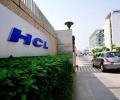
HCLTech on Monday reported a 9.7 per cent decline in consolidated net profit for the April-June quarter of this fiscal year at Rs 3,843 crore as the IT services firm and pegged the revenue growth guidance at 3-5 per cent for FY26. HCLTech had logged a net profit (attributable to owners of the company) of Rs 4,257 crore in the year-ago period, according to a regulatory filing.

After a subdued first quarter of 2025-26 (Q1FY26), banks are now betting big on the festive season, rolling out attractive loan offers to boost credit growth in the second half of the current financial year (H2FY26) - a trend likely to be further accentuated by the second-order effects of the good services tax (GST) cuts.

Indian economy grew by 7.8 per cent in April-June -- the highest in five quarters -- before the disruptive US tariffs were imposed.

Equity markets this week will turn their focus on the RBI's interest rate decision, Q1 earnings from several blue-chip firms and tariff-related news for further cues, analysts said. Moreover, trading activity of foreign investors and trends in global equity markets will also drive investors' sentiment.

'While we expand into other areas, banca remains our primary channel, and we continue to be a banca-led organisation.'
Stock markets are in for an event-heavy week ahead with a raft of Q1 earnings from blue-chips, the US Fed interest rate decision and foreign investors trading activity driving investors' sentiment, analysts said. Macroeconomic data announcements, monthly auto sales numbers and global market trends would also guide movement in the domestic equities, they said.

India's top information- technology (IT) services companies, all cash-rich, have been tightfisted about ploughing back their earnings in new projects or acquisitions and the bulk of the profits have been distributed to shareholders through dividend and share buybacks. In the past 10 years (that is, excluding the current one), the firms have reinvested in growth and expansion only around 13.5 per cent of the cash flow generated from their operations.

India Inc, which is sitting on cash balances of 13.5 trillion, is using the funds to meet capital expenditure as well as brownfield expansion, resulting in 'anaemic' demand for bank loans, State Bank of India (SBI) chairman CS Setty said at an event on Monday. He added that a slowdown in corporate credit is mainly due to lack of demand.

Reliance Jio, India's biggest telecom operator, is planning to launch an initial public offering (IPO) and listing on bourses in the first half of 2026, billionaire Mukesh Ambani said on Friday. Jio is currently a unit of Reliance Industries Ltd, India's most valuable company.

India Inc has reported a muted start to the financial year 2024-25, with a decline in net earnings and a modest single-digit uptick in revenues. An analysis of 488 companies that have released their results for the June 2024 quarter reveals a 1.6 per cent year-on-year (Y-o-Y) drop in combined net profit -- the weakest performance in the past seven quarters. In stark contrast, the combined net profit of these companies experienced a 13.6 per cent Y-o-Y increase in the previous quarter (Q4FY24) and a 65.2 per cent Y-o-Y rise in Q1FY24.

Against the Reserve Bank of India's (RBI's) projection of 7.1 per cent, India's first quarter (Q1) 2024-25 (FY25) gross domestic product (GDP) growth came in at 6.7 per cent. This is in line with market expectations and significantly lower than the 7.8 per cent recorded in the fourth quarter (Q4) 2023-24 (FY24) and 8.2 per cent in Q1FY24. The quarter witnessed decreased government consumption and investment spending due to the parliamentary election.

'Advanced skills is such a broad spectrum that a simple prompt engineer to a critical upper end LLM developer are clubbed under one.' 'In addition, some include their non-technical employees who can use AI tools under this talent base.'

The mutual fund industry's QAAUM (Quarterly Average Assets Under Management) was up 37 per cent year-on-year (Y-o-Y) (9 per cent Q-o-Q) to hit Rs 59 trillion (end Q1FY25). The equity segment grew 55 per cent Y-o-Y and equity formed 56 per cent of total AUM, up 49 per cent in Q1FY24. Sequentially, AUM grew by Rs 5 trillion.

India's industrial production growth slowed to a nine-month low of 1.2 per cent in May 2025 due to poor performance of manufacturing, mining and power sectors caused by the early onset of monsoon, according to official data released on mMonday. The factory output, measured in terms of the Index of Industrial Production (IIP), had expanded by 6.3 per cent in May 2024.

India's consumer price index (CPI)-based retail inflation rate is likely to have cooled further in June, thus remaining below the 4 per cent target of the Reserve Bank of India (RBI) for a fifth consecutive month, giving the central bank wiggle room to focus on growth. Economists reckon that the decline is on account of easing prices in various categories of goods, especially food items, and a favourable base effect.
'The kind of reach it has with so many bank branches even in the remotest part of the country, it is one channel which will play a very important role in vision of insurance for all.'

From the Sensex pack, Bharti Airtel, Asian Paints, Infosys, Bharat Electronics, Tech Mahindra and Eternal were major laggards. However, Maruti, Tata Steel, Bajaj Finance, Bajaj Finserv, Trent and Tata Consultancy Services were among the gainers.

TCS kicked-off the Q1FY17 earnings season for information technology companies on Thursday.

The early-bird results for the April-June quarter of 2024 (Q1FY25) hint at a slowdown in corporate revenues and profits in FY25. Corporate profits might face headwinds from a continued revenue growth slowdown and a reversal in margin gains from lower commodity and energy prices in FY24. The combined net profit (adjusted for exceptional gains and losses) of the 210 companies that have declared their Q1FY25 results so far is down 4.2 per cent from the year-ago period - their worst showing in seven quarters.

IDFC First Bank delivered good results in the first quarter of this financial year (Q1FY24), but some analysts are concerned the bank is fully-valued. So, there has been profit-booking after a price rise. Growth went side-by-side with a focus on cutting interest costs and exposure to high non-performing infrastructure loans. The mortgage book is 28 per cent, of which 24 per cent is home loans and loans against property.

FMCG major Hindustan Unilever Ltd (HUL) on Thursday reported a 5.97 per cent rise in its consolidated net profit to Rs 2,768 crore for the June quarter of FY26, helped by gains from a re-estimation of taxes paid in the previous year. The company had logged a net profit of Rs 2,612 crore in the April-June quarter a year ago, according to a regulatory filing from HUL, the maker of popular brands as Dove, Lifebuoy, Lux, Lakm, and Sunsilk.

India Inc continued to grapple with muted revenue growth in the September 2024 quarter (Q2FY25) and witnessed a decline in margins and profits. The headwinds were especially severe for non-financial companies, while banking, financial services, and insurance (BFSI) firms significantly outpaced the rest of the corporate sector. The total profit of 1,353 listed companies that have released their Q2FY25 results thus far dropped by 0.6 per cent year-on-year (Y-o-Y) - the first cumulative earnings decline in eight quarters.

India posted a current account surplus of $13.5 billion or 1.3 per cent of GDP in March quarter 2024-25 as compared with $4.6 billion in the year-ago period mainly on account of surge in services exports and higher remittances, according to RBI data released on Friday.

The country's current account deficit widened marginally to $9.7 billion or 1.1 per cent of GDP in April-June 2024, as against $8.9 billion or 1 per cent in the year-ago period, Reserve Bank of India said on Monday. The crucial number representing the country's external sector strength has come on the heels of a surplus of $4.6 billion or 0.5 per cent of GDP recorded in the preceding January-March quarter. The Reserve Bank attributed the year-on-year widening in current account deficit to a rise in merchandise trade gap which was recorded at $65.1 billion in Q1 FY25 as compared to $56.7 billion in the year-ago period.

Hindalco's India business, including Utkal Alumina, reported good results for the January-March quarter of the financial year 2024-25 (FY25) and consolidated earnings before interest, taxes, depreciation, and amortisation (Ebitda) also rose. Earnings growth was driven by favourable pricing, lower input costs and lower tax outgo for Novelis.

The market responded positively to the Q1 results of oil marketing companies (OMCs), Bharat Petroleum Corporation (BPCL) and Hindustan Petroleum Corporation (HPCL) despite numbers being weaker than consensus. BPCL's reported gross refining margin (GRM) was in line at $7.9 per barrel (bbl) in Q1FY25, which implies marketing margin stood at Rs 4.8 per litre. Standalone profit after tax or PAT at Rs 3,000 crore was down versus consensus due to under-recoveries in LPG business.

Cholamandalam Investment and Finance's (Chola) share has yielded one of the best returns in the last month. The company has sustained assets under management (AUM) growth at 7 per cent quarter-on-quarter (Q-o-Q), and 35 per cent year-on-year (Y-o-Y) in Q1FY25. Scaling up of new businesses now contributes to 13 per cent of loans (vs 10 per cent in Q1FY24).

The filing of Swiggy's DRHP has led to direct comparisons with Zomato, which is a direct competitor in food delivery and the fast-growing quick-commerce segment where Blinkit (owned by Zomato) faces off against Instamart (and Zepto). In Q-commerce, Flipkart, Amazon, Reliance and Big Basket are all entering the space. All of them have deep pockets, hence competitive intensity will rise going forward.

Cement manufacturers have hiked prices after a challenging Q1FY25, and Q2FY25 (so far) when general elections and seasonal factors cut down on construction activity. The August prices are currently around 3-6 per cent above July 2024 but may not be sustainable in the face of weak demand. H2FY25 may see realisation growth which, if it happens, would drive average operating profit/tonne improvements in H2FY25 over a muted H1FY25.

While TCS cited evolving business needs and future readiness as reasons, industry experts say the action is a cost-cutting measure aimed at improving operating margins that have remained below the firm's aspirational range despite multiple efforts.

Road awards were muted in Q1FY25. But the pace will accelerate with a bidding pipeline of Rs 1.1 trillion (September 2024), mostly dominated by HAM (Hybrid Annuity Model) projects, which contribute 47 per cent and engineering procurement and construction or EPC projects, which have about 36 per cent share. Hence, infrastructure companies mostly reported revenue decline on a year-on-year (Y-o-Y) basis in Q1FY25.

Employment in urban areas in the first quarter of 2024-25 (FY25) improved over the previous one. The unemployment rate in April-June (Q1) declined to 6.6 per cent from a four-quarter high of 6.7 per cent in January-March FY24 owing to the fall in the male unemployment rate, according to the quarterly Periodic Labour Force Survey (PLFS) data, released by the National Statistical Office (NSO) on Friday.

Despite state-owned Life Insurance Corporation (LIC) reporting an improvement in value of new business (VNB) margin in Q1FY25, analysts believe the growth has not been satisfactory in the context of the insurer's medium-term targets on margins. VNB margin is a measure of profitability of life insurance companies. LIC's VNB margin improved by 20 basis points (bps) to 13.9 per cent in Q1FY25 over the same period last year due to a change in the business mix of the insurer.

Gross Value Added (GVA) growth in agriculture and allied activities in the first quarter of the 2024-25 financial year (Q1FY25) dipped to 2.7 per cent at constant prices from 4.2 per cent in Q1FY24 due to a drop in output of some crops following heatwave in the main growing months. Low post-monsoon rains, which dried most of the reservoirs in several states across the country, also impacted the production of many crops. At current prices, the growth was estimated at 8.5 per cent as against 4.1 per cent in Q1FY24 due to a spike in food inflation during the April to June months of FY25.

The hospitality industry has around 212,000 rooms, with an industry size of about Rs 82,000 crore. The industry could grow at an annual rate of 10.5 per cent for the next three financial years, despite a quiet Q1FY25. The demand will be driven by domestic travellers, who will contribute roughly 50 per cent of the growth, while foreign tourists will account for 30 per cent.

The net credit card additions in the banking sector nearly halved to 2 million in the first quarter of the current financial year (Q1FY25) from the previous quarter due to seasonal and regulatory factors. According to the Reserve Bank of India (RBI) data, the net credit card additions during the April-June quarter of FY25 stood at 2 million, 48 per cent lower than 3.9 million in the December-March quarter of FY24.

India's largest cable and wire manufacturer Polycab India ended financial year 2024-25 (FY25) on a high, delivering another strong quarter of double-digit growth and market share gains. This coupled with margin expansion, operating breakeven for its fast-moving electrical goods (FMEG) business, and steady exports outlook for FY26 is expected to support the stock, which is up 18 per cent over the past month. The stock is currently trading at Rs 5,765 a share.
 © 2026 Rediff.com - Advertise with us - Disclaimer - Privacy Policy - Sitemap - Feedback - About us - Terms of use - Grievances