
The talk of governance reforms at public-sector banks seems to remain on paper, as a majority of them continue to be working with just a handful board members. Half of the board seat at these banks have been vacant. Ten of the 12 public-sector banks, even large ones like Punjab National Bank, Canara Bank and Union Bank of India - all except State Bank of India (SBI) and Bank of Baroda - don't even have a chairman. In 2014, while splitting the post of chairman & managing director (CMD), the government had decided to appoint non-executive chairmen at these banks. SBI, which has an executive chairman and four managing directors, was an exception.
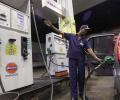
Six non-BJP ruled states -- West Bengal, Tamil Nadu, Andhra Pradesh, Telengana, Kerala and Jharkhand -- have not reduced the VAT on petroleum products, leading to higher prices of petrol and diesel there, Petroleum Minister Hardeep Singh Puri said on Thursday. Puri said in Lok Sabha that the central government has reduced excise duty on petroleum products and some other states, following cues, reduced their Value Added Tax (VAT). Six states -- West Bengal, Tamil Nadu, Andhra Pradesh, Telengana, Kerala and Jharkhand -- have not reduced the VAT, he said amidst vocal protests by the opposition members.

The finance ministry has finalised the framework to issue sovereign green bonds in line with global standards, according to sources. The government intends to mobilise Rs 16,000 crore from the issuance of green bonds during the second half of the current financial year. It is a part of the borrowing programme for the second half of this fiscal. The framework is ready and it would be approved soon, the sources said.
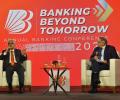
Bank of Baroda (BoB) has made prudential provision of Rs 500 crore for exposure to Go First, which has sought bankruptcy protection after the National Company Law Tribunal (NCLT) admitted its plea for voluntary insolvency. Sanjiv Chadha, managing director and chief executive officer of BoB, said the bank identifies issues in advance and makes provisions if required. The Mumbai-based public sector lender has an exposure of Rs 1,300 crore to the troubled airline.

Defence Minister Rajnath Singh on Saturday approved a proposal to reserve 10 per cent of the job vacancies in the defence ministry for 'Agniveers' who meet requisite eligibility criteria.

The Cabinet on Wednesday empowered boards of state-owned companies to decide on the closure and divestment of units/subsidiaries. Presently, the Board of Directors of holding or parent public sector enterprises have been delegated certain powers to make equity investments to establish financial joint ventures and wholly-owned subsidiaries and undertake mergers/acquisitions, subject to certain ceilings of net worth. However, the Boards do not have powers for disinvestment or closure of their subsidiaries or units or stake in JVs, except for some limited powers given to Maharatna PSEs for minority stake disinvestment in their subsidiaries.

The government is set to earn an equity dividend of nearly Rs 13,800 crore from the listed public-sector banks (PSBs), all 12 of them, for FY23, up 50 per cent from Rs 9,210 crore in FY22. This will be the highest ever dividend for the government from PSBs. The 12 PSBs in our sample are paying an equity dividend of nearly Rs 21,000 crore for FY23, up 53 per cent from Rs 13,710 crore for FY22.

Investors are showing some interest in the downstream energy cycle. Refiners and marketers, especially the public sector (PSU) oil marketing companies (OMCs) could see a revival of marketing margins. Lower crude oil and gas prices may also improve margins in industries like paints, logistics, synthetic fabrics, plastics, and fertilisers. In the medium-term, however, there could be a supply overhang affecting OMCs as new refining capacities are scheduled to be commissioned, especially in China, and this may lead to a drop in the refining margins as capacity would be surplus to demand until and unless there's a pick-up in global growth.

Adani Group stocks have taken a beating on the bourses after Hindenburg Research made a litany of allegations in its report, including fraudulent transactions and share price manipulation at the Gautam Adani-led group.

Market concentration in the country's telecom sector continues to scale new heights despite government bailouts of public-sector Bharat Sanchar Nigam Ltd (BSNL) and Mahanagar Telephone Nigam Ltd (MTNL), and private-sector Vodafone Idea. The combined revenue (or net sales) share of the country's top two telecom operators - Bharti Airtel and Reliance Jio - in the sector's total reached an all-time high of nearly 72 per cent in FY23 from 70.4 per cent in FY22 and around 60 per cent in FY20. The net sales of Reliance Jio and Bharti Airtel India were Rs 1.67 trillion in FY23, up 18.6 per cent from the Rs 1.4 trillion a year earlier.

A five-judge Constitution bench headed by Justice Sanjay Kishan Kaul, in a unanimous verdict, ruled that its 2014 verdict, which had struck down a provision of the Delhi Special Police Establishment (DSPE) Act, 1946 providing immunity to such officers in graft cases, will have retrospective effect.

Employees of public sector banks (PSBs) on Thursday went on two-day strike against the move to privatise public sector banks impacting normal banking operation across the country. Many branches across different parts of the country were shut as the United Forum of Bank Union (UFBU), an umbrella body of nine bank unions including All India Bank Officers' Confederation (AIBOC), All India Bank Employees Association (AIBEA) and National Organisation of Bank Workers (NOBW) had given two day strike call. As a result, services such as deposits and withdrawal at branches, cheque clearance and loan approvals might be affected due to the strike. But ATMs are expected to function as usual.

The RBI was not party to the decision to demonetize 500 and 1,000-rupee notes, which was taken at the highest level of India's political leadership.

After Reliance Industries Ltd and its partner bp plc of the UK, Nayara Energy - the nation's largest private fuel retailer - has started selling petrol and diesel at Re 1 less than the fuel sold by state-owned retailers, officials said. While state-owned Indian Oil Corporation (IOC), Bharat Petroleum Corporation Ltd (BPCL) and Hindustan Petroleum Corporation Ltd (HPCL) continue to hold prices despite a drop in international rates, private fuel retailers have started passing on the benefit to consumers. "To further stimulate domestic consumption and cater to local customers better, we have introduced a Re 1 discount in our retail outlets until the end of June 2023," a spokesperson for Nayara Energy said.
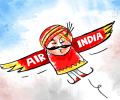
With the new owner shelling out Rs 18,000 crore for the buyout of 'Maharaja' this would be the highest ever amount garnered through privatisation or even the cumulative sum garnered through strategic sale in 1999-00 to 2003-04. The government had garnered roughly over Rs 5,000 crore during that five-year period by privatising 10 CPSEs.
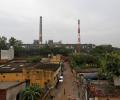
There's a straightforward relationship between economic activity and power consumption. If economic activity increases, so does power consumption. Since the latest GDP (gross domestic product) data indicates India's growth rates exceeded expectations in the second half if the 2022-23 financial year (H2FY23) and GDP estimates of FY24 are strong, we would expect power consumption to rise as indeed it has. There is also a direct relationship between power consumption and National Thermal Power Corporation or NTPC's results since the public sector undertaking (PSU) is the largest power generator in India.

The entire operation was meant to have a chilling effect on independent journalists, those not completely subservient to the regime, the small section still doing what the Fourth Estate should do -- raising questions to those in power.

'India is an equity market with a breadth and depth of companies to invest in.'

Employees of public sector general insurance (PSGI) companies are observing nationwide one-day strike on Wednesday to protest against intended privatisation of state-owned insurers. The Joint Front of Trade Unions in PSGI companies met on Monday and decided to protest against the decision of the government to privatise PSGI companies. The unions have given a call for one-day strike against the passage of the General Insurance Business (Nationalisation) Amendment Bill 2021 in the Lok Sabha, General Insurance Employees All India Association general secretary K Govindan said. Employees of all four PSGI companies are participating in the day-long strike, he said.
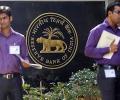
The Reserve Bank of India (RBI) has sought details about lenders' exposures to the Adani Group, banking sources said, a day after the conglomerate withdrew the Rs 20,000-crore follow on public offer (FPO) of its flagship firm Adani Enterprises amid the steep fall in its stock prices. On Wednesday, Swiss lender Credit Suisse stopped accepting bonds by Adani group companies as collaterals for margin lending. The going has been tough for the diversified conglomerate over the past week ever since US-based short seller Hindenburg Research levelled a slew of allegations about the group's operations, calling it the biggest corporate con ever.

the defence ministry told Parliament on Monday that foreign procurement in defence has risen to Rs 50,061 crore (Rs 500.61 billion) in 2021-2022 from Rs 37,030 crore (Rs 370.30 billion) in 2017-2018.

Since 2014, the public sector banks' branch network in rural and semi urban has grown by a mere 4,000 while for private sector banks, it doubled from 9,673 to 18,437.

'The impact of CEO transition is fairly even for stocks, with about half (53 per cent) of the events not producing any change in the relative performance of the stock.'

The minister further said the Sri Lankan government is holding continuous interactions with the Tamil diaspora and people and leaders living in different parts of the world.

Why did the company zero in on RBL Bank to understand the business of banking? While the M&M investors heaved a sigh of relief, one gentleman must have been all smiles after this, RBL Bank MD and CEO R Subramaniakumar, notes Tamal Bandyopadhyay.

The surprise decision of OPEC and its allies, including Russia, to cut oil output may cause an immediate rise in prices, delaying revision in fuel prices in India, industry sources said. The grouping of Organisation of Petroleum Exporting Countries (OPEC) and its allies, called OPEC+, on Sunday decided to further cut oil output by around 1.16 million barrels. The move led to Brent rising by almost 6 per cent to $84.58 per barrel on Monday.
Fund managers are withdrawing after a two-year long run in public sector bank (PSB) stocks. Domestic mutual funds (MFs) were net sellers of PSB stocks for the first time in nine quarters, offloading shares worth Rs 1,800 crore in the March quarter, said a report by ICICI Securities. In the previous eight quarters, fund houses had invested more than Rs 10,000 in PSBs amid deep discounts in valuation vis--vis their private sector peers.

'Geopolitical risks and their impact on oil prices, if any, are another concern for global markets, particularly for India.'

E-commerce players may soon rent out drones, so you can use them the way you book a cab on an app, and test viable use-cases for last-mile delivery.

'For a responsible person like him to utter such nonsense is shameful.' 'He is not fit to be a director on the RBI central board.'

The ownership by domestic investors, individual as well as institutional, in companies listed on the National Stock Exchange (NSE) has breached the 25 per cent mark for the first time. The share stood at 25.72 per cent at the end of the March 2023 quarter, up from 24.44 per cent in the previous quarter, according to data from Prime Database. The share of foreign portfolio investors (FPIs), meanwhile, rose slightly to 20.56 per cent from 20.24 per cent as on December 31, 2022.

Merely bringing down the government stake below 51% may not find any taker for the PSBs. The government must bring down its holding to at least 26%, recommends Tamal Bandyopadhyay.

The gap between the highs and the lows in April for the benchmark S&P BSE Sensex was just 4.1 per cent - the narrowest since July 2021 and nearly half its three-year average. The absence of major positive triggers, sectoral rotation, and cautiousness due to earnings and economic uncertainty have kept a tight leash on the markets, observe experts. Remarkably enough, during the 17 trading sessions in April, the Sensex didn't even log an advance or a decline of more than 1 per cent.

'We still need a certain number of large public sector banks for financial inclusion and stability purposes.'

The SEBI and the RBI will look into it. Let their reports come in, BJP MP Mahesh Jethmalani said.

While the fiscal year has just begun, any windfall surplus will be welcomed by the government as it bids to meet the fiscal deficit target of 5.9 per cent of GDP, amidst lack of clarity on exactly to what extent will recession in the West impact India's trade and tax collections.
In FY23, the State Bank of India (SBI) reported a 57.4 per cent jump in its net profit to Rs 55,684.17 crore. But the chairman of the country's largest bank, Dinesh Khara's annual pay for this creditable performance was just Rs 37 lakh (his peers at state-run banks are no better off). Look at his private bank rivals - most pocketed in excess of Rs 7 crore annually - plus stock options.

The four public sector general insurance companies -- New India Assurance, United India Insurance, Oriental Insurance, and National Insurance Company -- have lost 800 basis points (bps) in market share in last five years to their private counterparts, the data from the Insurance Regulatory and Development Authority (Irdai) revealed. In 2018-19, the four had a cumulative market share of 40.04 per cent, with New India Assurance having a market share of 14 per cent and United India Insurance with a market share of 9.63 per cent. But, gradually in the past five years, these state-backed firms have lost their market share to private sector players, due to the declining health of their business.

'The skilling gap is a serious issue.' 'We partner with the government on skilling, but as a company we have several skilling programmes, and we work closely with the partner ecosystem.
Highly-rated finance firms and housing finance companies are expected to benefit from the absence of Housing Development Finance Corp (HDFC) from the bond market once it merges with the HDFC Bank in early FY24. Post merger, the bond market is expected to become less crowded, which will ease fund raising conditions for other players in the field. It may perhaps also compress the spread for debt instruments floated by housing finance companies (HFCs) over 10-year government bonds, subject to demand and supply conditions.
 © 2026 Rediff.com - Advertise with us - Disclaimer - Privacy Policy - Sitemap - Feedback - About us - Terms of use - Grievances