
Forty-five specialists will soon be joining key posts of joint secretaries, directors and deputy secretaries in different central ministries as part of the Modi government's ambitious plan to infuse fresh talent to further improve ease of governance.

The biggest bounce is in the realty sector, where the industry index jumped 80%. There's been a turnaround also in automobiles and ancillaries (up 45%). The pharma and health care indices have a welcome return of roughly 35%.

All eyes will be on whether Sitharaman provides the much-expected tax relief for the middle class, leaving more money in their hands, as there is tax buoyancy
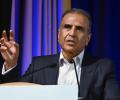
Bharti Global, the international investment arm of Bharti Enterprises, has decided to buy 24.5 per cent equity in BT Group - a move that will make the Indian conglomerate the biggest shareholder in the UK's second-largest telecom company both in terms of market value and subscriber count. The shares are being purchased from billionaire Patrick Drahi's Altice UK through a combination of cash and debt .

The opposition parties on Sunday slammed the move to hire public servants through lateral entry, claiming it will snatch reservations from SCs, STs and OBCs, but the Bharatiya Janata Party hit back stating the National Democratic Alliance government was bringing transparency to this mode of recruitment started by the Congress-led United Progressive Alliance.

Why did the political system in the country react to these two decisions of the Modi government in a diametrically opposite manner? asks A K Bhattacharya.

While the CEO of a public sector bank earns an average of Rs 18 lakh per annum, his counterpart in the private sector earns an average of Rs 3.5 crore.
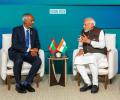
President Mohamed Muizzu, known for his pro-China stance, has thanked India for enabling the resumption of medical evacuation services with civilian aviation personnel from India.

Notwithstanding the recent sharp decline in the stocks of public sector companies, analysts at Jefferies remain bullish on this segment. State Bank of India, Coal India, and NTPC are their top picks in this space, they said in a recent note. The public sector undertaking (PSU) or state-owned enterprise (SOE) index, with a 70-percentage-point outperformance versus the National Stock Exchange Nifty50 over the past 12 months, comes after a decade of underperformance before 2020.

The Reserve Bank on Wednesday approved a Rs 2.11 lakh crore dividend payout to the central government for 2023-24, more than double the amount it paid for the previous 2022-23 financial year. The decision was taken at the 608th meeting of the Central Board of Directors of the Reserve Bank of India held under the chairmanship of Governor Shaktikanta Das.

Overall market reaction to the Budget was neutral. Investors absorbed the changes to the tax rates (positive for salaried class) and capital gains taxes (CGTs, negative due to the removal of indexation and increases. Other proposals largely pertain to supporting rural development, buybacks taxed as dividends, Custom duty changes that impact multiple sectors, higher outlays for clean energy, etc. There's some moderation in the growth of capex outlay across defence, fer

'It's a debatable topic, and we will submit our comments to the RBI by June 15.'

The government can issue recapitalisation bonds, or the RBI's huge reserves of over $127 can also be dipped into to help the state-owned bank's recapitalisation needs.

The preferred format would be for the top BJP leadership in the government to reach out to the alliance leaders on a case-to-case basis.

'Those betting against PSUs will likely be punished in this upswing.'

The April-June quarter (Q1) of the current financial year (FY25) may be soft for banks with loan growth moderation, net interest margin (NIM) pressures, and higher staff and credit costs inching up, according to analysts. Credit growth could ease due to the lagged impact of the Reserve Bank of India (RBI) tightening and deposit growth has weakened, and the current account and savings account (CASA) ratio has declined 10-370 basis points (bps) quarter-on-quarter (Q-o-Q) for many banks.

BPCL is a high revenue-earning public-sector undertaking (PSU) and plans to privatise it are completely off the table, Petroleum and Natural Gas Minister Hardeep Singh Puri said on Tuesday after assuming charge of the ministry for the second time. "Why would we divest ourselves of highly successful Maharatnas like BPCL," Puri said, arguing the Centre was not in favour of divesting its stake in oil PSUs.

The June quarter is usually considered as a seasonally strong period for the IT sector.

'The FSIB will conduct interviews for the SBI chairman position on May 21-22 as the tenure of the current chairman Dinesh Kumar Khara is scheduled to end by August.'

The size of Reserve Bank's balance sheet increased by 11.08 per cent to Rs 70.47 lakh crore as on March 2024, leading to the highest-ever dividend payout to the government, according to the central bank's annual report. In actual terms, the increase was Rs 7,02,946.97 crore over Rs 63.45 lakh crore as on March 2023.

Union Finance Minister Nirmala Sitharaman, along with her team of bureaucrats, delved into the fine print of the 2024-25 Budget documents in a press conference, detailing the government's road map on bringing down the debt-to-GDP ratio and bold tax measures.

Domestic institutional investors pumped Rs 2.3 trillion into equities during H1 CY24. Of this, mutual funds contributed 80%.
Stocks of public sector undertakings (PSUs) have been on fire in the past year as investors cheered an improvement in key operating metrics and embraced counters of these state-owned enterprises, analysts suggest. The S&P BSE PSU Index has gained over 90 per cent in the past year, rising much higher than the S&P BSE Sensex, which has rose nearly 19 per cent during this period, according to ACE Equity data. The BSE PSU Index, reports show, has delivered a compound annual growth rate (CAGR) of 28 per cent (including dividends reinvestments) over five years and risen by almost 60 per cent in the past year.

'In the new coalition government, India's reform agenda may prioritise job creation and factor market reforms.'

Recovering from an order dry-up and change in market conditions, Gurgaon-based Rites is looking to bid aggressively in global export and consultancy tenders and run with a volume-led approach, its chairman and managing director (CMD) Rahul Mithal said. Rites is a railway consultancy public sector undertaking (PSU) under the aegis of the Ministry of Railways. "We started the year with two huge challenges - the export order book, where no new orders had happened, and the opening up of Indian Railways quality assurance works to four players.

The Bharatiya Janata Party regime will have to make good on this election slogan to restore state-owned banks to health, says Rajiv Lall.

India SME Forum, an organisation for small and medium businesses, has called for creating a dedicated fund of Rs 5000 crore for the export capacity development, promotion, and marketing of Micro, Small & Medium Enterprises (MSMEs) in its Budget recommendation. The forum for MSMEs with over 98,000 members said that to enhance India's global competitiveness and increase its market share in global exports, it was "crucial to increase the number of active exporters and enable at least 3-4 lakh first-time micro, small, and medium exporters while supporting them in promoting Indian products globally."

While some equity analysts have raised target prices for public sector banks, others remain cautious

In May, MFs were the net sellers in several PSUs, as they deployed Rs 47,600 crore in equities during the month.

'You will see him frequently asking customers -- especially retail -- about service experience, pain points, areas of improvement and suggestions.'

With general elections on the horizon, the government's privatisation bandwagon has almost but stalled as a government wary of being accused of selling family silver opts for minority stake sales on stock exchanges over outright privatisation. The result -- the divestment target for current fiscal year is again likely to be missed. Big ticket privatisation plans such as that of Bharat Petroleum Corporation Ltd (BPCL), Shipping Corporation of India (SCI) and CONCOR are already on the backburner and analysts feel meaningful privatisation can happen only after April/May general elections.

Industrial disputes dropped 89.3 per cent to 34 in 2022 compared to 318 a decade ago, shows central and state data.

The Reserve Bank of India on Friday raised the GDP growth projection for the current fiscal to 7 per cent from 6.5 per cent earlier on buoyant domestic demand and higher capacity utilisation in the manufacturing sector. Announcing the bi-monthly monetary policy, RBI Governor Shaktikanta Das, however, flagged protracted geopolitical turmoil and global economic fragmentation as risks to the growth outlook. The RBI kept interest rates unchanged at 6.5 per cent in Friday's monetary policy statement.

Bharti Airtel may end up cumulatively bidding for more spectrum than market leader Reliance Jio in the upcoming auctions. This is owing to its need for spectrum renewal, and a requirement for 900 MHz in a few circles, analysts have said. Despite the muted bidding expected in the upcoming auctions, Airtel may end up making more bids than Jio, they added.

'Probably revised guidelines will come, and then the real picture will emerge.'

The total allocation to the defence sector is 12.9 per cent of the total budget of the government of India for the financial year 2024-25.

India is planning to soon sign new and updated mineral pacts with about a dozen countries in Africa. The Ministry of Mines is in discussions with Cte d'Ivoire, Democratic Republic of the Congo (DRC), Madagascar, Malawi, Mali, Morocco, Mozambique, South Africa, Tanzania, Zambia and Zimbabwe, Business Standard has learnt. Negotiations are ongoing with around a dozen countries, and more will be added to the list soon.

'Right to apprenticeship means that anyone below the age of 25 years with a diploma or other qualifications can demand an apprenticeship with a private, a public sector company or a government organisation. And when he/she demands this, it is the obligation of the government to provide it.'
Moody's said the asset quality of the banks will remain under pressure.

Operating margins have been the primary driver of corporate earnings in India in recent quarters, despite revenue growth suffering from weak consumer demand. Companies across sectors have reported a sharp improvement in earnings before interest, tax, depreciation, and amortisation (Ebitda) margins over the past two years, benefiting from lower commodity and energy prices. Higher margins more than compensated for slower revenue growth, resulting in double-digit growth in net profit for five consecutive quarters.
 © 2026 Rediff.com - Advertise with us - Disclaimer - Privacy Policy - Sitemap - Feedback - About us - Terms of use - Grievances