
Star Indian sprinter Hima Das has donated her one month's salary to the Assam government to help the state combat the dreaded COVID-19 pandemic. Das, an Asian Games gold-medallist besides being an under-20 World champion in 400m, is employed with PSU major Indian Oil as an HR officer in Guwahati.

Sanjib Jha, CEO, Coverfox Insurance Broking, answers your health and auto insurance related queries.

The new guidelines restrict bankers not just from advising private sector companies in the 'same line of business' on public issues.

The Central Bureau has summoned Trinamool Congress's member of Parliament Abhishek Banerjee's brother-in-law in connection with a case of alleged illegal coalmining from the mines of the Eastern Coalfields Limited (ECL) in West Bengal's Asansol, involving the "kingpin" of the racket, Anup Manjhi, officials said on Friday.

Public sector lenders Canara Bank, Corporation Bank and Allahabad Bank have decided to lower interest rates on housing loans, preferring to keep their prime lending rates (PLRs) unchanged. ICICI Bank Managing Director and Chief Executive Officer K V Kamath has indicated that the country's second largest bank would review interest rates only in 2008-09.

Prabhat Kumar from Kishtwar, Jammu and Kashmir explains how his wife Ranjana supported him and kept his family together in difficult times.

Through anchor allotment, a firm can demonstrate the demand for shares by getting marquee investors on board.

Titan was the top loser in the Sensex pack, shedding over 1 per cent, followed by TCS, HCL Tech, Reliance Industries, UltraTech Cement and Bharti Airtel. NSE Nifty settled 45.65 points down at 15,814.70.
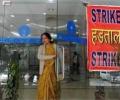
The staff of public sector banks had gone on a nationwide strike for two days beginning February 10 after discussions with the IBA failed.

With recruitment numbers having dropped off sharply since the liberalisation process got under way in 1991, large-scale retirements of people hired during the 1970s and 1980s will leave large gaps in the organisational structures of these banks.
Officers of public sector oil companies have threatened to go on an indefinite strike from August 21 if their demand for higher salaries was not met.

As oil marketing companies (OMCs) stare at huge under-recoveries, India is facing fuel shortage across the country with states like Rajasthan, Madhya Pradesh, Karnataka Uttarakhand, Gujarat and Haryana being the worst hit. The under-recoveries suffered by OMCs are around Rs 20-25 a litre for diesel and Rs 14-18 a litre for petrol, said sources. Government and state-run companies denied reports of any crisis or supply-side issues on the availability of fuel.

Meghalaya Chief Minister Conrad Sangma on Thursday said Union Home Minister Amit Shah has given firm assurances at a meeting held in Delhi of acting on his request for a Central Bureau of Investigation (CBI) probe into the 'firing by Assam Police' along the states' border.

The nation-wide strike call has been given by United Forum of Bank Unions, consisting of nine national level unions, including AIBEA, NCBE, BEFI, INBEF, NOBW and AIBOC.
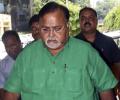
The Central Bureau of Investigation (CBI) on Friday issued summons to Trinamool Congress secretary general and senior West Bengal minister Partha Chatterjee in connection with the I-core ponzi scam, sources in the agency said.

To address the shortage of COVID-19 jabs in the country, the government is exploring the possibility of boosting production of vaccines, including identifying manufacturing sites for indigenously developed Covaxin outside India, sources said.

Omkeshwar Singh, Head, Rank MF, a mutual fund investment platform, answers your queries.
The UPA-II may not talk about this, but it continues to implement its programme to revive ailing PSUs by investing fresh capital.

IndusInd Bank was the top loser in the Sensex pack, shedding over 3 per cent, followed by HUL, ONGC, ICICI Bank, Axis Bank, Kotak Bank, M&M and Tech Mahindra. NSE Nifty tumbled 154.25 points to 14,696.50.
The posts of Chairman and MD in the private sector are held separately.
Sources said the company had already applied for a licence to produce defence products.

Considering the scarcity of land for development projects in Kerala, there should be optimal use of the land being held by the public sector companies, experts said.
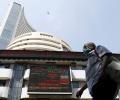
ITC was the top loser in the Sensex pack, shedding nearly 3 per cent, followed by Tech Mahindra, Axis Bank, Asian Paints, TCS, HCL Tech, HDFC and Kotak Bank.
Confronted with competition, state-run logistics companies are opting for joint ventures among themselves and with the private sector.
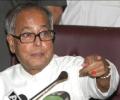
Finance Minister Pranab Mukherjee will meet chiefs of public sector banks here on Saturday, at a time when industrial growth has decelerated to a 13-month low of 7.1 per cent and interest rates have moved northward.

At present, 58 per cent of the population has bank account.
Public sector banks want to pass on the increasing cost of funds to borrowers across the board, but are unwilling to take the plunge right away.
The Securities and Exchange Board of India (Sebi)'s decision to require a minimum of 25 per cent public shareholding for government companies translates into around Rs 60,000 crore (Rs 600 billion) in divestments in the next three years.

Tata Sons stake in the group's listed companies is now worth Rs 9.28 trillion, up 34.4 per cent on a year-on-year (YoY) basis. In comparison, the Government of India's stake in listed central public sector undertakings (PSUs) is currently valued at Rs 9.24 trillion
Transcript of the weekly market chat on rediff on Tuesday.
Earlier opposing the government's decision to disinvest 10 per cent of its equity in Neyveli Lignite Corporation, the Dravida Munnetra Kazhagam had threatened to pull out of the UPA government.
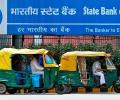
IBA has commissioned a study to evaluate the pros and cons of keeping banks shut on Saturdays.

Kotak Bank was the top gainer in the Sensex pack, rising around 3 per cent, followed by HDFC twins, ICICI Bank, Tech Mahindra, Bajaj Finance, Asian Paints and TCS. NSE Nifty surged 142.20 points to 15,098.40.
Officers of oil PSUs have threatened to go on an indefinite strike from May 31 if their demand for higher wages are not met.

Non-performing assets of banks have increased from Rs 2.75 lakh crore in March 2015 to Rs 7.33 lakh crore as on June 2017.

In Budget 2020-21, the Department of Space has been allocated Rs 13,949.09 crore, of which Rs 8,228.63 crore has been earmarked for capital expenditure.

The move towards indigenisation of defence procurement creates new opportunities for India's military industrial sector. The Government of India (GoI) has so far released five lists of items for positive indigenisation - these should be manufactured in India, rather than imported. Each item on these lists represents an opportunity for some local firm.

The department of investment and public asset management (Dipam) can also seek in-principle approval from the Cabinet Committee on Economic Affairs (CCEA) for strategic divestment of PSUs on a case-to-case basis considering investor appetite and sectoral trends.
