
The number of individuals reporting a gross total income of 100 crore or more in their income tax returns has quadrupled to 576 in Assessment Year 2025-26, up from 142 in AY 2021-22, according to data shared in Parliament.

The number of individuals who declared a gross income of Rs 100 crore or more in their income-tax returns had risen to 301 in 2022-23, moderated slightly to 284 in 2023-24, then climbed to 415 in 2024-25.

Global brokerage Bernstein has issued a cautionary note, stating that India risks 'under-delivering on its potential' unless it addresses key policy bottlenecks and structural risks, including employment challenges from AI, limited manufacturing gains, and rising welfare spending.

Ajinkya Rahane's captaincy and batting form are under scrutiny as Kolkata Knight Riders (KKR) struggle in the IPL. Critics question his suitability as captain and batter, citing his low boundary count and strike rate. With limited leadership alternatives, KKR faces a grim situation.

The key question is how much of the latest growth record represents recovery from the 2020-2021 downturn, and what is the sustainable growth rate now, asks T N Ninan.

The 50 per cent US tariff on Indian goods pose a downside risk to growth but the impact is expected to be short-lived for the economy, and consumption demand could see an uptick after the new goods and service tax (GST) rates are implemented which could even offset the external uncertainty, Chief Economic Advisor (CEA) V Anantha Nageswaran reckoned on Friday.

While FY25 attrition rates remained below pre-Covid levels, most companies experienced a 1 to 3 percentage point increase compared to FY24.

VFS Global expects visa applications from India to surpass pre-pandemic levels in 2024 with the easing of appointment availability. Vishal Jairath, head-South Asia, VFS Global, said during a media interaction that based on indications from the client governments in terms of appointment availability and the resources deployed by them, visa applications would surpass the pre-Covid levels by a healthy margin. "We have geared up. We have looked at our infrastructure and increased capacity in many locations," he added.

As Prime Minister Narendra Modi turned 75, wishes poured in from across the country, with sporting icons Gautam Gambhir, R Praggnanandhaa, and Olympic medallist shooter Manu Bhaker sending their heartfelt messages.

The hiring scenario is for the batch that passes out in 2024. These are graduates who will be impacted, given 2022 graduates are not fully absorbed and 2023 onboarding still incomplete.

HDFC Bank managing director Aditya Puri on Wednesday said the lender's business is returning to pre-COVID-19 levels and full normalcy is expected to be restored soon.

Concerned over inflationary pressures in the economy, the Reserve Bank of India (RBI) is bringing down surplus liquidity in the system rapidly. It has fallen to pre-Covid levels and almost 2 per cent of banks' net demand and time liabilities (NDTL). NDTL shows the difference between the sum of demand and time liabilities (deposits) of a bank (with the public or the other bank) and the deposits in the form of assets held by the other bank.

Generative AI is transforming workplaces but at a cost -- there are fewer jobs for young workers just entering the workforce, reveals a Goldman Sachs report.

In further easing of restrictions, the government on Wednesday permitted Indian airlines to increase the number of domestic passenger flights to 60 per cent of their pre-Covid services, according to an official order.

'Story-telling is at the core of everything I do.'

After adding 11.7 million workers in the October 2022-September 2023 period from the pandemic lows in April 2021-March 2022, total workers employed in the vast informal sector in India - at 109.6 million - still remains below the pre-pandemic period.

The retail industry's business is on the brink of full recovery as it achieved 93 per cent of the pre-COVID sales in February, according to a report. Segments such as consumer durables and quick service restaurants (QSR) have shown positive growth of 15 per cent and 18 per cent respectively in February 2021, the report from the Retailers Association of India (RAI) said. "The quantum of de-growth in retail sales has reduced as most segments in retail have started to show significant improvement," it said. Categories like footwear, beauty, wellness and personal care, sports goods and food and grocery are showing steady month-on-month recovery.

The two-wheeler segment is, however, still far from its H1FY19 peak of 9.7 million units

Lower income groups earning less than Rs 100,000 a year are yet to recover as are those earning between Rs 100,000 and Rs 200,000.

Under pressure from passengers over hike in fares, the Railways on Friday issued an order to discontinue the 'special' tag for mail and express trains and revert to pre-pandemic ticket prices with immediate effect.

India's fuel sales surged past pre-pandemic levels in March on twin impact of the economy rebounding from the lifting of pandemic-related restrictions and anticipation of price increases leading to stocking. In the first two weeks of March, dealers, as well as the public, topped up their tanks in anticipation of an increase in prices that had been on hold in the run-up to the elections in states like Uttar Pradesh. While daily price revisions restarted on March 22, the increases were calibrated.

After declining to a three-year low in FY24, the private sector investment is expected to fall further in the current financial year, India Ratings said in a research note.. The investments in the private sector are likely to plummet to below 11 per cent of the GDP in FY25, based on the trends from the latest national accounts data and company fillings, it noted.

India's economic growth slowed to 8.4 per cent in the second quarter of 2021-22, mainly due to waning low base effect, official data showed on Tuesday. The GDP growth in April-June quarter this fiscal stood at 20.1 per cent. The Indian economy had contracted by 24.4 per cent in April-June last year.

The travel and tourism sector's contribution to global gross domestic product will return to pre-pandemic levels by the end of 2024, according to a new report by the World Economic Forum (WEF) on Tuesday. This recovery is driven by a considerable increase in worldwide demand, coinciding with more available flights, better international openness, and increased interest and investment in natural and cultural attractions.

For the second straight year, the gems and jewellery industry is set for almost a washout of business on Akshaya Tritiya as only about 10 per cent of pre-Covid sales of 2019 are expected on Friday amid the raging pandemic sapping footfalls and purchasing power of people.

Backed by the China-plus-one policy, India's textile and apparel exports have seen a 53 per cent growth during the April-November period of the current fiscal year at around $26 billion. This compares to the figure of $17 billion during the same period in FY21. According to Wazir Textile Index, all major companies including Welspun, Vardhman, Trident, KPR Mills, Indo Count, RSWM, Filatex, Nahar Spg and Indorama have posted higher sales during the first half of the current fiscal year compared to the pre-pandemic year.
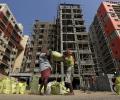
Housing demand has breached pre-COVID levels with 92 per cent year-on-year growth in sales during July-September period units across eight major cities, mainly on the back of stable prices, very low mortgage rates, property consultant Knight Frank India said on Monday. Releasing its India Real Estate Update for Q3 (July-September quarter) of the 2021 calendar year, the consultant reported that housing sales increased to 64,010 units from 33,404 units in the same period last year. In the previous April-June quarter, 27,453 residential units were sold. "The total residential sales of the top eight markets under review during Q3 2021, reached 104 per cent of 2019 quarterly average," the consultant said, adding that sales have breached pre-COVID levels.

'India has the potential to grow at more than 7%, with the monetary policy providing a supportive hand.'

Regaining the lost sheen, sales of gold jewellery and coins are set to touch pre-COVID levels in volume terms on the auspicious Dhanteras as easing pandemic concerns and pent up demand saw consumers flocking to stores to buy the precious metal. Increased footfall at stores and brisk sales online as well as relatively softer gold prices compared to record Rs 57,000 per 10 grams level in August spurred increased buying, especially light weight offerings, on Tuesday. Dhanteras is considered to be auspicious for buying precious metals and other valuable items.

The demand, which had fallen by as much as 70 per cent, has since recovered after lockdown restrictions were eased beginning early May.

In June IndiGo had implemented a mandatory leave without pay program for 1.5 days to 5 days. Subsequently, in July, IndiGo announced 5.5 additional days of LWP for its pilots, taking the effective number of LWP to 10 days. As cost cutting measure, the airline had also let go of 10 per cent of its employees and implemented a pay cut across the board.

South Indian filmmakers have kept their focus on the single-screen cinemagoer. They have kept their finger on the pulse of the single-screen cinema fan, who goes to movies once a month or more, to forget his weekly chores, explains Ambi Parameswaran.

Steel, cement, aluminum, fertilisers, tractors, two-wheelers, beverages and carbonated drinks, tyres and FMCG could see demand back to near normal levels by the third or the fourth quarter of the financial year, or even earlier.
'It is entering growth territory on a month-on-month basis.'

In terms of retail categories, beauty, wellness and personal care saw the steepest decline at 87 per cent, followed by footwear with a dip of 86 per cent last month as against May 2019.

In spite of a severe second wave of the coronavirus pandemic, and a widespread disruption in public life therefore, India's fast-moving consumer goods (FMGC) sector seems to have emerged as one of the most resilient segments of the economy. The early numbers and estimates for the April-June quarter indicate a steady recovery in FMCG players' business, which is now set to exceed the pre-pandemic level. Amid nationwide lockdowns because of the first Covid wave, FMCG revenues had been severely affected in mid-2020.

India's economic growth is likely to reach pre-COVID-19 levels by the end of the 2021-22 fiscal as the GDP contraction in this financial year is expected to be less than 8 per cent, Niti Aayog vice chairman Rajiv Kumar said on Sunday. The Reserve Bank of India (RBI) has also revised its forecast of economic growth for the current fiscal year (2020-21) to (-)7.5 per cent as against its earlier forecast of (-)9.5 per cent.

India's recruitment activity has been recovering steadily as the hiring rate in June 2021 was around 42 per cent above the pre-pandemic levels in 2019, says a report. According to LinkedIn India - Labour Market Update for June 2021, there was a deepening hiring dip in April 2021, corresponding to a second wave of COVID-19 cases in India. Since then, it has been recovering steadily, compared to the pre-COVID levels in 2019. Hiring rate was 35 per cent higher at the end of May 2021, and 42 per cent higher at the end of June 2021.

'This market for diesel starts at around Rs 6.3 lakh and goes up to Rs 7 lakh, and with Saathi we have our usual price set at Rs 6.5 lakh, so we are slightly on the lower side with a superior product.'

This is the first time that petrol sales in the world's third-largest oil importer have risen since the March 25 nationwide lockdown crippled economic activity and sent demand plummeting.
