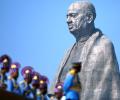
ONGC, Hindustan Petroleum, Bharat Petroleum, Indian Oil and Oil India listed the spending as part of their mandatory CSR commitment, but CAG noted that the Sardar Patel statue did not qualify for CSR funding.

At present, seven companies are planning to raise Rs 2,965 crore (Rs 29.65 billion) and have Sebi's approval. Another 12 firms, intending to mop-up Rs 5,362 crore (Rs 53.62 billion), have filed draft documents with the capital market watchdog and are awaiting approval, Prime Database managing director Pranav Haldea said.

'It is a worrying trend as we are not seeing too much fresh capital being raised for new projects, plants, expansion or diversification. It's just private equity or venture capital or promoters cashing out.'

Over 900 listed firms yet to comply with new Sebi requirement due in less than 90 days

There is polarisation among sectors with IT and healthcare receiving the lion's share of FPI money in the past two quarters.

Record equity divestment by the Reliance Group in its telecom and retail businesses garnering around $23 billion revved up the deal street in 2020, which otherwise would have gone down as one of the dullest on record, and dealmakers are seeing sunnier days in 2021 given the large scope for consolidation in a slew of sectors ravaged by the pandemic. With Jio Platforms alone garnering over $16 billion (Rs 1,18,318 crore) by selling 25.24 per cent stake and Reliance Retail notching up $6.4 billion (Rs 47,265 crore) by divesting around 9 per cent shareholding, the deal street signed off with $85 billion in the deal kitty across 1,270 transactions. This is higher by about 10 per cent over 2019. What is significant is that over a third of the total deal value came from Reliance transactions, say investment bankers.

Though stocks backed by private equity investirs are likely to have higher governance standards, investors should do their own due-diligence, experts tell Sanjay Kumar Singh
The trends remained sluggish in the primary stock market

Bonuses are typically commensurate with deal activity in any given year. Investment banks, on average, pocket 2-3 per cent as fees for managing an IPO and 1.5-2 per cent for handling QIPs.

Promoters of 517 companies have pledged nearly 46.35 per cent of their shares, the highest since the 2008 global financial crisis.
Share rises further to 73 per cent from 66 per cent last year; Some overseas i-banks seen scaling down operations

The National Stock Exchange's proposed IPO to raise Rs 10,000 crore this year is expected to see the largest ever PE exit, of around Rs 5,000 crore.

The Bombay Stock Exchange (BSE) has slapped fines on 530 listed companies for failing to meet a deadline to appoint a women director and boost gender diversity in their boardrooms.

US, China and Japan have no quotas for women and have had the lowest increase in female directors.
.jpg)
Government divestment reached record figures after the financial crisis, at the same time as promoters were required to bring down their stake in companies to 75 per cent or less.

Women from promoter families who have become directors since January this year include Sarala Birla (Century Textiles, Century Enka), Nawaz Gautam Singhania (Raymond Group), Bina Modi (Godfrey Phillips), Saroj Bhartia (Jindal Drilling & Industries) and Deepshikha Khaitan (Cera Sanitaryware).

Retail investors may burn their fingers investing in them, especially if the markets correct, experts tell Sanjay Kumar Singh

In spite of the high number of exits, Reliance group firms of both brothers continue to be darlings of small investors
Two weeks ahead of October 1 deadline, Sebi likely to relax certain conditions.

In September, Sebi had given a six-month extension to companies.

A recent survey done by indianboards.com suggests that around 283 directors will retire by October this year.
 © 2026 Rediff.com - Investor Information - Advertise with us - Disclaimer - Privacy Policy - Sitemap - Feedback - About us - Terms of use - Grievances