
Tata Motors was the biggest loser in the Sensex pack, skidding 1.77 per cent, followed by SBI, Power Grid, Tata Steel, Infosys, UltraTech Cement, Titan, Larsen & Toubro, Reliance Industries and Maruti. On the other hand, IndusInd Bank, Bharti Airtel, Asian Paints, NTPC, HCL Technologies, HDFC and Sun Pharma were the gainers.

South-east Asian countries are emerging as preferable destination for India's pharma companies to expand their business as they share similar patient population and disease profile and moreover, have a conducive environment for their operations like easy market approach without any regulatory uncertainty, the survey of Indian pharma firms highlighted.

RIL is grappling with other priorities -- sliding oil prices, shrinking refining margins and a battle with the Anil Ambani group over the supply of gas. The plan was to build an integrated pharma company in two to three years, on the lines of large domestic majors such as Ranbaxy's or Dr Reddy's Laboratories. Instead, the plan has been modified to being a start-up bulk drug manufacturing company that will launch six bulk drugs or active pharmaceutical ingredients by 2010.

The joint inspections is to ensure the safety, efficacy, and quality of drugs available in the country
Reduction in customs duty on certain bulk drugs used in making life saving drugs to 5% is a positive for companies having product pipeline catering to these segments.

Bajaj Finserv was the biggest gainer in the Sensex pack, rising 2.21 per cent, followed by Titan, ITC, Kotak Mahindra Bank, HDFC Bank, HDFC, Bajaj Finance, IndusInd Bank, ICICI Bank, HUL, Reliance Industries and Mahindra & Mahindra. Wipro, Tata Consultancy Services, Power Grid and Tech Mahindra were the laggards.
Swedish firm Astra Pharmaceutical will buy out the remaining less than 10 per cent stake in its local arm Astrazeneca Pharma India by next year following approval from the Foreign Investment Promotion Board.
Dr Reddy's Laboratories, Jubilant Organosys, Orchid Chemicals, Aurobindo Pharma and Shasun Chemicals and Drugs are among those who have borrowed either to expand locally or to acquire companies abroad, but are now struggling to repay the dues, analysts say. Some of the companies' debt now exceeds their market capitalisation, as local and global investors sold stocks on concerns over slowdown and falling revenues. A few drug makers may be forced to sell assets to repay debt.

Dinesh Thakur is famous for exposing Ranbaxy safety problems

Revenues and earnings to improve for companies with low forex liabilities and no forward cover.
The Promed group manufactures and delivers branded as well as generic pharmaceutical formulations to Russia, CIS, south-east Asian countries, the UK and EU.

Indian pharmaceutical companies, which always wanted a big share in the global copycat drug market, are betting high on the oral contraceptive (OC) market in America.
According to Amitabh Arora, chief representative, Think London, "The agency will help Indian companies enter business agreements with 100-odd biotech and pharma companies and about 50 contract research organisations based in London besides arranging private equity from London-based PE firms.

Acquisition to boost its generics business in developed markets.

Post Ranbaxy episode, domestic pharma companies may face frequent inspections and deeper scrutiny.
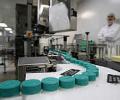
Industry must take strong collective action to protect the reputation it enjoys in global markets, says Kiran Mazumdar Shaw.

The top 300 pharmaceutical brands in the country will now bear a quick response (QR) code on their packaging to rein in spurious drugs and ensure better traceability.
Looking at the behavior of the Indian stock markets in the last one month, one gets a feeling that it has again proved to be the proverbial conundrum, something extremely difficult to predict in the short term.

The key risk factors would be anti-incumbency, small vote share swings causing large impact on outcomes and the 2004 example.
Multinational drug manufacturers such as Pfizer and DSM are increasingly getting into contract manufacturing alliances with emerging bulk drug makers in the country, bypassing established players such as Ranbaxy and Dr Reddy's.
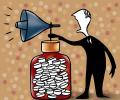
'Gift-giving' - from free dinners and drug samples to promotional merchandise - seems to be driving drugmakers' marketing - a marketing prescription deeply entrenched in the industry. This is a well-oiled racket that sees pharmaceutical (pharma) companies 'gifting' doctors to push their respective drugs under the guise of marketing. But is there a cure in sight to end this unhealthy alliance? The recent controversy following the income-tax raids on Bengaluru-based drugmaker Micro Labs, makers of popular paracetamol brand Dolo-650, has brought this to the fore, again.

The World Health Organisation on Friday said that it is in touch with the Uzbek authorities about the reported deaths of 18 children after consuming contaminated cough syrup made by Noida-based Marion Biotech.

Supreme Court will give its verdict on April 1 on whether Swiss giant Novartis AG's cancer treatment drug Glivec deserves a patent in the country not it doesn't.

'We suggest an equity strategy of 5% to 10% exposure to cash, 5% to Gold ETF, close to 50% to Sensex/Nifty/large mid-cap stocks.'

The commerce ministry has sought a review of foreign direct investment policy in the pharmaceutical sector, in the light of recent takeovers of domestic companies by multinationals.

Among the Sensex firms, IndusInd Bank jumped 5.08 per cent. The other winners were Tata Motors, Bajaj Finance, Bajaj Finserv, NTPC, HCL Technologies, Mahindra & Mahindra, Axis Bank, Maruti and Kotak Mahindra Bank. Value buying in index heavyweights Reliance, HDFC Bank and ICICI Bank added to the momentum. Sun Pharma, Larsen & Toubro and Nestle were the laggards.

According to industry estimates, the sector's revenue would increase eight-10 per cent in 2013-14, against 12 per cent in 2012-13.
Indian IT service providers are increasing their exposure in the healthcare and pharma segments. Multi-million dollar deals in this space by IT firms over the past three-four months only buttress this trend. Healthcare outsourcing has moved away from just undertaking medical transcription and business process outsourcing (BPO) work to core functions such as drug discovery, testing, research and development.

In 2012, employers looked most for professionals in IT or software services, FMCG industries and BPO or ITES, followed by real estate and pharmaceuticals or life sciences to fill mid or senior positions.

From the Sensex pack, Bharti Airtel fell 3.42 and Kotak Mahindra Bank declined 3.31 per cent. ICICI Bank, ITC, HDFC Bank, UltraTech Cement, HCL Technologies and Maruti were the other major laggards. Tata Motors, Hindustan Unilever, Asian Paints, Sun Pharma, Nestle, Tata Consultancy Services, Wipro, Bajaj Finance, Axis Bank and IndusInd Bank were among the gainers.
Among the Sensex stocks, Bajaj Finance, Bajaj Finserv, Sun Pharma, IndusInd Bank, Tata Motors, ICICI Bank, Tata Consultancy Services, Hindustan Unilever and Power Grid were the major gainers. NTPC, Axis Bank, Nestle, HCL Technologies and HDFC Bank were the major laggards.

BSE Healthcare index slumped by nearly 2% followed by counters like Consumer Durable, Banks, Oil & Gas and PSU shares, all falling down by 1% each.

Drugmaker Aurobindo Pharma on Monday said it has entered into licensing and supply agreements with London-based pharmaceutical giant AstraZeneca to supply several solid dosage and sterile products for emerging markets.
Regulator likely to probe possible violation of insider-trading norms.

Companies that are developing biosimilars (for regulated markets) or have portfolio of new chemical entities (NCEs) under development.
These two are now among India's most valuable business houses, ahead of older and more diversified groups, such as the Bajaj, OP Jindal, Anil Ambani, UB, Godrej and Hinduja.

The numbers are the highest ever in the history of domestic drug discovery initiatives triggered by companies such as Dr Reddy's and Ranbaxy over a decade ago.
 © 2026 Rediff.com - Investor Information - Advertise with us - Disclaimer - Privacy Policy - Sitemap - Feedback - About us - Terms of use - Grievances