
Rise in NRI deposits pushed up India's per capita external debt by 17.55 per cent to Rs 21,493 in one year period ending March 2014, government said in the Rajya Sabha.

India will need to grow at an average 7.8 per cent to become a high-income country by 2047, a World Bank report said on Friday. To achieve this goal India would require reforms in financial sector as well as in land and labour market, the World Bank said in its India Country Memorandum titled 'Becoming a High-Income Economy in a generation'.

India's monthly per capita income, the measure of standard of living, is likely to be at Rs 7,378.17.

India's per capita carbon dioxide emissions will increase by nearly three-fold to 3.5 tonnes by 2030, the Economic Survey 2009-10 said on Thursday.

It will be interesting to see what shifts have been recorded in the last decade-and-a-half -- from the effects of demonetisation and Covid's second wave to the drop in fertility and increase in farm workers -- but we will only know this if and when the Census is conducted, points out Aakar Patel.

India with a per capita GDP of $3,015 has one of the lowest ranks at 127, according to the IMF.

India's economic growth rate decelerated to 6.2 per cent in the October-December quarter this fiscal, mainly due to poor performance by mining, manufacturing and all other sectors, with the exception of agriculture. However, on a sequential basis, the economic growth rate in the third quarter showed improvement over 5.6 per cent recorded in the second quarter.

We have entered a new era in human history, asserts Aakar Patel.
India's per capita income is projected to grow by 17.3 per cent to Rs 54,527 in 2010-11 from Rs 46,492 in the year-ago period, according to the official data released on Monday.
India's per capita income is projected to soar by 10.4 per cent to Rs 74,920 in 2013-14 as the country becomes a $1.7 trillion economy.

Reflecting growing prosperity, India's per capita income grew by 15.6 per cent to Rs 53,331 per annum in 2010-11, crossing the half-a-lakh rupees mark for the first time, according to government data.
Reflecting growing prosperity, India's per capita income grew by 15.6 per cent to Rs 53,331 per annum in 2010-11, crossing the half-a-lakh rupees mark for the first time, according to government data.
Addressing economists, investors and academicians in Washington, Basu said the fundamentals of the Indian economy are strong enough in the medium and long term to sustain a healthy growth rate of over 8 per cent.

'If in our cities, all urban bus transport services are free, then the taxpayers are paying for it, or if electricity were to be made free, that's a huge cost to the rest of the people'

A new report, "India Justice Report 2025", highlights the stark gender disparity in India's police force, with less than 1,000 women holding senior positions like Director-Generals and Superintendents of Police. Despite growing awareness about the need for gender diversity in law enforcement, not a single state or Union Territory has met its target for women's representation in the police force. The report also emphasizes the significant challenges faced by the justice system as a whole, including infrastructural deficiencies, overcrowding in prisons, and inadequate staffing levels. The report calls for systemic reforms to address these issues and ensure a more equitable and accessible justice system for all.

There are challenges galore before him, and it is not going to be easy. In the next four years, he has to conjure a system that changes the optics about him and the BJP both nationally and internationally so that he can ride back on his own, claim the top slot, and not have to lean on a coalition, asserts Ramesh Menon as Modi 3.0 completes a year in power.
Population growth rate would be 1.5 per cent during the period 2007-12. "The next 10 years, India will register four major changes. The economic growth will accelerate, the technology will also grow and domestic industry will experience major liberalisation," Ahluwalia said after inaugurating the 22nd Indian Engineering Congress in Udaipur.
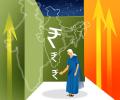
Indian economy to grow at 6.3-6.8 pc in FY26, against 6.4 pc in FY25
Also, incremental demand is expected to rise by 10 per ent over the next five years.

The Janata Dal (United), an ally of the ruling Bharatiya Janata Party (BJP), has sought an extension in the tenure of the Joint Parliamentary Committee (JPC) scrutinising the bills proposing simultaneous elections. The party argued that the committee, which has only met once, requires more time for extensive consultations. Meanwhile, the Lok Janshakti Party (Ram Vilas), another BJP ally, has demanded a "special industrial package" for Bihar, highlighting the state's low per capita income compared to the national average.

'Maharashtra is virtually in a debt trap.'
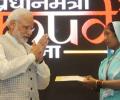
By democratising access to finance, empowering women and marginalised groups, and adapting to India's diverse regional landscapes, PMMY has helped fortify the country's grassroots growth engines, says Chief Economic Advisor to the Government of India, V Anantha Nageswaran.
There remains a debate on who said this: "When the facts change, I change my mind. What do you do, Sir?" Was it the British economist John Maynard Keynes or the American economist Paul Samuelson. Irrespective of who said it, this sentiment appears to have found resonance in ITC's boardroom in recent years.

It is time we buried the mantra of 'peaceful and stable Pakistan is in our interest'. It is not, simply because Pakistan's existence -- that is synonymous with its army -- means peace has no chance, asserts Colonel Anil A Athale (Retd). It is time we buried the mantra of 'peaceful and stable Pakistan is in our interest' asserts Colonel Anil A Athale (Retd).

Trump may temper his approach from time to time, but to think that he will change his basic philosophy is delusional, asserts T T Ram Mohan.

'It took us 75 years to reach a per capita income of $2,730.' 'According to IMF projections, it will take only five years to add another $2,000.'

Yadav further accused the BJP of "using distractions" to avoid addressing real issues such as rising unemployment, inflation, lack of investment in Uttar Pradesh, and failing healthcare facilities.
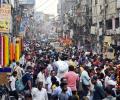
India will be the world's third-largest economy by 2028 as it becomes the world's most sought-after consumer market and gains share in global output, driven by macro stability influenced policy and better infrastructure, Morgan Stanley said. From a $3.5 trillion economy in 2023, the Indian economy is projected to expand to $4.7 trillion in 2026, which will make it the fourth largest in the world behind the US, China and Germany.
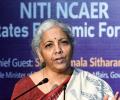
'Each state is unique, but when it comes to finance, the fundamentals cannot be different.'

There is a reason this 11 year phenomenon is a rule as much as it is an observation. It speaks to the nature of man and what humans are like, explains Aakar Patel.
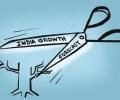
The GDP growth is expected to be about 6.3 per cent in the current fiscal year, a tad lower than the government's estimate of 6.4 per cent, owing to several factors such as weak demand, SBI research report said on Wednesday. According to the first advance estimates (FAE) of National Income for 2024-25 released by the National Statistics Office (NSO), released on Tuesday, India's economic growth rate is estimated to slip to a four-year low of 6.4 per cent in 2024-25, because of poor showing by the manufacturing and subdued investments.

The share of rent in consumption expenditure has risen to 6.58%, according to the Household Consumption Expenditure Survey 2023-2024. This is the highest it has been in surveys going back to the turn of the millennium.

'Spend, but create assets, spend but make sure that people benefit from it.' 'This has been a beautiful guiding principle. And I think as a finance minister I owe so much to the prime minister for keeping this path clear before us.'

Leaders who built and manage these incredible global companies cannot be tyrants, slave-drivers, or idiots. Essentially what they are saying falls under the definition of rallying the troops, inspirational talk, like the usual coach-speak with the team before a match, asserts Shekhar Gupta.

Edamame + truffle oil + basmati rice = an exquisite combo.

Haryana has done well in terms of economic growth over the last couple of decades. For it to continue to lead the growth ladder, the new government has to work hard on multiple dimensions, recommend Shishir Gupta and Rishita Sachdeva.

The push to develop Ayodhya as a tourism centre, accompanied by large-scale infrastructure projects, comes on the back of years of limited income growth and tourist inflows.

'I am optimistic about the Budget because of the fiscal discipline the government has committed to.'
 © 2026 Rediff.com - Advertise with us - Disclaimer - Privacy Policy - Sitemap - Feedback - About us - Terms of use - Grievances