The index had registered a growth of 2.8 per cent in January 2015.

'The policy focus of the government should have been on creating more good quality jobs but that was not their focus.'

Reliance Industries' eastern offshore KG-D6 gas field has seen output drop to 29 million units a day, against a planned 80 million units, causing acute shortage in power generation, Oil Minister S Jaipal Reddy said on Tuesday.
The positive numbers raises hopes of recovery.

India is expected to harvest 291.95 mt of foodgrain in 2019-20
The margins of tyre manufacturers could come under pressure given the rise in rubber prices and the moderating demand for tyres. In the past three quarters, the revenue growth for listed tyre companies has moderated from low to mid-single-digit on account of factors such as lower demand in replacement segments, weak export markets and the decline in the average selling prices to car makers (OEMs). Demand trends could remain muted in the near term, given the weak passenger vehicle replacement demand, assuming a typical replacement cycle of 3-5 years, and demand moderation in the OEM segment.
Indian growth in the rest of this fiscal year and next will be propelled by robust domestic consumption as consumer confidence improves, and by investment, including large increases in government capital expenditure, according to the Asian Development Outlook September 2023. "As slowing exports could foment headwinds for the economy, and erratic rainfall patterns are likely to undermine agricultural output, the growth forecast for FY2023 is revised down marginally to 6.3 per cent," ADB said.

'India needs many more job creators, both in manufacturing and services, to make it big.' 'For that, the red carpet must be rolled out fully and for all investors without holding back,' suggests Nivedita Mookerji.

India's annual industrial output growth slowed to 4.2 per cent in July compared with an upwardly revised 4.4 per cent growth a month ago, government data showed on Friday.
The new four-wheeler (4W) electric vehicle (EV) policy may spur the entry of global majors. The manufacturing policy cuts Customs duty to 15 per cent, given a minimum investment commitment. It calls for a minimum investment of Rs 4,150 crore (about $500 million) for making electric four wheelers (e-4Ws), with manufacturing to commence within three years of approval.

UN body Food and Agriculture Organisation (FAO) has revised upwards India's rice production to 100 million tonnes (MT) in the 2012-13 crop year on the back of revival of rains in August and September.

The projected output will come from satellite fields in the eastern offshore KG-D6 block as well as North East Coast block NEC-25, off the West Bengal coast.

Coal, crude oil, natural gas, cement, and electricity recorded a negative growth of 8.6 per cent, 5.4 per cent , 3.9 per cent, 4.9 per cent and 2.9 per cent, respectively, in August.
The worst drought in a century and its cascading effect has led to a sharp fall in India's foodgrain output by 30 million tonne to a seven-year low of 182.57 million tonne in 2002-03.
India's Oil and Natural Gas Corp expects crude output to rise 15 per cent to 600,000 barrels per day in 2006-07 but production from its ageing fields will fall rapidly in subsequent years, a company official said.\n\n\n\n
The government on Thursday said based on the current monsoon situation, India's foodgrains output may rise by 29 per cent to 115 million tonnes.
A moderate recovery in Indian factories, exports and investments were probably the main drivers for an increase in overall growth in the quarter through March.

The Reserve Bank of India's (RBI's) job to bring down inflation is not over, and any premature move on the policy front could undermine the success achieved so far on the price situation, according to RBI Governor Shaktikanta Das. RBI's rate setting panel, Monetary Policy Committee (MPC), had met for three days from February 6-8. The panel decided to leave the key policy rate unchanged at 6.5 per cent for the sixth time in row.

The newer gas finds will help turn the tide for ONGC, which has seen oil and gas output stagnating in recent times.

Industrial ouput, however, was seen falling 0.6 per cent in January
The headline HSBC India Purchasing Managers' Index -- a composite gauge designed to give a single-figure snapshot of manufacturing business conditions -- stood at 54.5 in December, up from 53.3 in the prior month.
Industrial production in May slowed to 2.7 per cent from 5.6 per cent a year ago, dragged down by manufacturing, strengthening the case for an RBI rate cut.
Given that India will get a huge part of its oil supplies from Iran through its government-owned oil PSUs, any unwelcome shocks in global crude rates could be absorbed well enough.
Capital goods production, a barometer for investments in the economy, contracted by 2 per cent in August.

Factory output in March, as measured in terms of the Index of Industrial Production released today, also witnessed lower growth of 7.3 per cent, compared to 15.5 per cent expansion in the same month a year ago.

The HSBC/Markit Purchasing Managers Index for the services industry inched up to 47.2 in November from 47.1 in October, the fifth sub-50.0 reading and indicated an output contraction across the Indian service economy.
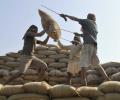
For many farmers, though, a bumper harvest isn't good news, as they have been forced to sell their produce, particularly pulses, dirt cheap.
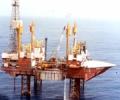
It plans to invest Rs 26,000 crore to develeop and manage fields.

India's steel production in the first six months of the current year stood at 35.636 million tonnes, almost one-tenth of neighbouring China's total output during the same period.

It's a sign that the economy may have turned a corner that strengthens the RBI's case against a rate cut.
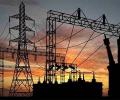
India's industrial production rose by 7.1 per cent in November 2022 after contracting in October, according to official data released on Thursday. The Index of Industrial Production (IIP) grew by 1 per cent in November 2021.
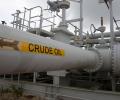
Indian imports of Russian oil plunged by a record in August month-on-month (M-o-M) as discounts on the fuel shrank in tandem with rising Brent oil prices. Higher crude prices will drive inflation or hurt earnings at oil companies and India's fiscal position if such spikes are not passed on to consumers. Indian purchases of Russian crude declined by around 24 per cent in August from July to the lowest level since January, with refiners expecting volumes to drop further amid rising rates of Russian benchmark Urals grade, substantial stocks at refiners, and planned maintenance at Indian refineries, according to ship tracking data and industry officials.

Reliance Industries' eastern offshore KG-D6 oil and gas fields have seen output further dipping to 44.5 million standard cubic metres per day this month.

'When manufacturing or even services cannot generate the kind of employment they are looking for, they prefer to be unemployed rather than under-employed.'

The industrial production, which crossed 15 per cent in July, dipped to 6.91 per cent in August and further to 4.4 per cent in September.
Reliance Industries will account for about 40 per cent of the country's energy production in the next 18 to 24 months, putting the company on track to earn a quarter of its profit from oil and gas production, from 5 per cent now.

The Reserve Bank on Friday said the agriculture growth will be muted this fiscal on account of the impact of poor monsoon on kharif crops.

Reliance Industries has said the natural gas output at its Krishna Godavari basin KG-D6 fields averaged 54.5 million cubic meters a day in the quarter ended December 31, 2010, down from 60 mmscmd achieved in April.

Production of eight infrastructure sectors expanded at a four-month high of 7.8 per cent in January 2023 on better show by coal, fertiliser, steel and electricity segments, according to official data released on Tuesday.

The Indian services sector expanded at the strongest rate in 12 years in February supported by favourable demand conditions and new business gains, a monthly survey said on Friday. The seasonally adjusted S&P Global India Services PMI Business Activity Index rose from 57.2 in January to 59.4 in February -- its highest level in 12 years. For the 19th straight month, the headline figure was above the neutral 50 threshold. In Purchasing Managers' Index (PMI) parlance, a print above 50 means expansion while a score below 50 denotes contraction.
