
A Niti Aayog report reveals that an estimated 8.7 crore Indian youth aged 15 to 29 are not engaged in education, employment, or training (NEET), underscoring the critical need for subsidised training programmes focused on self-employment and emerging sectors.

'Having analysed the break up of the hospital billing structure the committee believes that rationalising of room charges needs to be done on an emergent basis.'

Of the donations, 48% is in kind -- such as food, clothing, or other household goods -- followed by cash (44%) and volunteering (30%) with non-profits, religious institutions, or community groups.

India's main inflation measure, the Consumer Price Index (CPI), is set for another major update, even though it has been in its current form for only about 15 years.

The 2023-2024 figures showed that the size of the industry, excluding those having an annual turnover of Rs 20 crore, could be Rs 30,652 crore, assuming no tax evasion.

'They are totally disconnected with farm activities which their families have been involved in for years.'

Ayush refers to the six Indian systems of medicines, namely Ayurveda, Yoga and Naturopathy, Unani, Siddha, Sowa-Rigpa and Homeopathy are majorly prevalent in the country.

With the dissolution of former chief statistician Pronab Sen-led Standing Committee on Statistics (SCoS) by the Ministry of Statistics and Programme Implementation (MoSPI), the National Statistical Commission (NSC) has regained prominence as the primary statistical body to address issues regarding results, methodology and questionnaire, among others. A MoSPI official in an email informed the 16-member SCoS about the decision to dissolve it, citing that its work was "overlapping" with that of the Steering Committee for National Sample Surveys (NSS), which was set up in June this year.
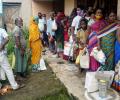
As the poverty rates in the country declined below 5 percent in 2024, a research study by State Bank of India also highlighted that the extreme poverty in the country has been reduced to minimal.

The unemployment rate for people aged 15 years and above in urban areas dipped to 6.4 per cent in the July-September quarter, according to the National Sample Survey Survey (NSSO). Joblessness, or unemployment rate, is defined as the percentage of unemployed people in the labour force. The unemployment rate in the September quarter of FY24 was 6.6 per cent.

While data can empower communities, it reinforces identities, making local politics more caste-centric, with decisions increasingly contested on the grounds of representation.
Such dynamics could lead to shifting alliances and, in the worst case, local governance getting paralysed as each group demands proportional power-sharing, explain Amitabh Kundu and Mehebub Rahaman.

Goa has the highest number of people who could 'search the Internet for information and can send or receive e-mails and can perform online banking transactions'.

At a time when the government is nudging the private sector to ramp up its capital expenditure (capex), the Ministry of Statistics and Programme Implementation (MoSPI) is poised to kick-start the first-of-its-kind annual survey on the status of private sector capex from next month. "The inaugural edition of the annual exercise will start in October and will be completed by December. "The results will be made public by February next year," said Geeta Singh Rathore, director general, National Sample Survey Office (NSSO), at a data users' conference on Thursday.

The number of people averse to the surveys by the National Statistical Office (NSO) has more than doubled over the last five years between the 75th National Sample Survey (NSS) round (July 2017- June 2018) and the 79th NSS round (July 2022-June 2023), the Ministry of Statistics and Programme Implementation MoSPI) said on Friday in a conference organised to discuss the issue of 'non- responsiveness' to its sample surveys. The ministry said that nearly 6.9 per cent people in urban areas surveyed by the NSO for the 79th NSS round did not participate in the exercise, while the number of people in rural India that refused to participate in these surveys stood at 3.9 per cent.

Unemployment rate for persons aged 15 years and above has remained unchanged at 3.2 per cent in July 2023 to June 2024, according to the labour force survey annual report released on Monday. The unemployment rate (UR) is defined as the percentage of persons unemployed among the persons in the labour force. The report stated that while the UR for male has shown a marginal decline from 3.3 per cent during July 2022 - June 2023 to 3.2 per per cent during July 2023 - June 2024, among female it has increased from 2.9 per cent to 3.2 per cent during the same time span.

The unemployment rate for people aged 15 years and above in urban areas declined to 6.7 per cent in the January-March period from 6.8 per cent a year ago, according to the National Sample Survey Survey (NSSO). Joblessness, or unemployment rate, is defined as the percentage of unemployed people in the labour force. The unemployment rate in the March quarter of FY23 was 6.8 per cent, while it was 6.6 per cent in April-June as well as in the third quarter (July-September 2023) of the previous fiscal.

After adding 11.7 million workers in the October 2022-September 2023 period from the pandemic lows in April 2021-March 2022, total workers employed in the vast informal sector in India - at 109.6 million - still remains below the pre-pandemic period.

Unemployment rate for persons aged 15 years or above declined to 3.1 per cent in 2023, the lowest in the last three years, as per a report of National Sample Survey Organisation under the statistics ministry. According to Periodic Labour Force Survey (PLFS) for calender year 2023, the unemployment rate came down to 3.1 per cent in 2023 from 3.6 per cent in 2022 and 4.2 per cent in 2021. Joblessness, or unemployment rate, is defined as the percentage of unemployed people in the labour force.

'Parents, students and coaching institutes will find alternatives to cater to the demand.'

With the reality of coalition politics staring the BJP in its face, this was inevitable, points out Ramesh Menon.

Employment in India saw a V-shaped recovery after being adversely impacted between April and June 2020 during the Covid lockdown and during April-June 2021, when the second wave struck, said Krishnamurthy V Subramanian, former chief economic advisor, in a paper released on Friday. Subramanian is now serving as executive director of the International Monetary Fund (IMF). From the official survey data of the National Sample Survey Organisation (NSSO), the paper titled 'Employment in India: Data Sources, Facts, and Trends' showed that both worker-population ratio (WPR) and labour force participation rate (LFPR) were higher, while the unemployment rate was lower during October-December 2022 when compared to the corresponding quarter in 2019.

India's unemployment rate fell to a six-year low of 3.2 per cent in the July-June 2022-23 period, down from 4.1 per cent in the same period the previous year, according to the latest annual Periodic Labour Force Survey (PLFS) report. The report, released by the National Statistical Office (NSO) on Monday, showed a decline in unemployment rates in both rural and urban areas during the 2022-23 period to 2.4 per cent and 5.4 per cent, respectively, from 3.2 per cent and 6.3 per cent in the 2021-22 period. The unemployment rate for rural women (1.8 per cent) was lower than that for rural men (2.7 per cent) in 2022-23; in urban areas, the rate was higher for females (7.5 per cent) compared to males (4.7 per cent).

India's unemployment rate for persons aged 15 years and above was recorded at a six-year low of 3.2 per cent during July 2022-June 2023, as per the Periodic Labour Force Survey Annual Report 2022-2023 released by the National Sample Survey Office. Joblessness or unemployment rate is defined as the percentage of unemployed persons in the labour force. Considering the importance of the availability of labour force data at more frequent time intervals, the NSSO launched the Periodic Labour Force Survey (PLFS) in April 2017.
India's urban unemployment rate declined in Q4FY23 to 6.8 per cent - the lowest in over four years -- after it stagnated at 7.2 per cent in the previous October-December quarter, reflecting improvement in the labour market, according to the Periodic Labour Force Survey (PLFS) released by the National Statistical Office (NSO) on Monday. The unemployment rate in current weekly status (CWS) terms for all ages in the March quarter was the lowest recorded in more than four years, from the time the NSO released India's first quarterly urban jobless rate for the December quarter in 2018. The jobless rate in urban areas had been on a continuous decline since the peak of 20.8 per cent in the April-June quarter of FY21.
'When manufacturing or even services cannot generate the kind of employment they are looking for, they prefer to be unemployed rather than under-employed.'

Rediff.com's data journalists have visualised the National Sample Survey Office (NSS 66th round, July 2009-June 2010 and 68th round, July 2011-June 2012) data into an interactive map.
Rediff.com's data journalists have visualised the National Sample Survey Office (NSS 68th round, July 2011-June 2012) data into a interactive map.
Rediff.com's data journalists have broken down the National Sample Survey Office 68 round (July 2011- June 2012) report data into a state-wise listing.

'The linking of Aadhaar to births and deaths will revive the debate around citizenship.'
'When you do some job for a few hours, you are hardly earning enough to survive.'

The map above shows the disparity in Monthly Consumer Expenditure as reported by the 68th round of National Sample Survey.

The National Sample Survey Organisation has found wide disparities in the monthly consumption pattern of rural and urban households during 2007-08, with the former spending just half of what their urban counterparts did.

NITI Aayog has not said what the reasons were for having achieved or not having achieved what was sought to be achieved, or what lessons can be learned for the future, points out Aakar Patel.

The best housing conditions in India. Where does your state stand?

India's unemployed, the report said, were mostly those with higher education degrees and the young.

As a well-wisher of the Indian Statistical System and part of the system for more than 37 years, Sunil K Sinha, former DG and CEO of NSSO, offers suggestions to improve data quality.

More than 70 per cent of Indian youth aged between 15 and 29 can't!

A private member resolution seeking that the government implement the recommendations of the Sachar Committee report and other reports that have discussed the educational and social backwardness of Muslims and enact a legislation for the prevention of atrocities against minorities was moved in the Rajya Sabha on Friday.

Unemployment rate for men is the highest in Lucknow among major cities.
