
Business confidence in India Inc rose to a five-quarter high in December quarter of FY26, amid further reform expectations and steady domestic demand, a survey by industry body Confederation of Indian Industry (CII) showed. The CII Business Confidence Index (BCI) rose for the third consecutive quarter to 66.5 in the December quarter from 66 in the preceding September quarter.
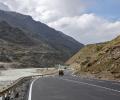
Roads, railways, and coal together are likely to account for 70 per cent of the government's takings from the upcoming second edition of the National Monetisation Pipeline (NMP), set to run from FY26 to FY30. In comparison, these three sectors are estimated to have contributed 66 per cent in the first edition of the NMP - FY22 to FY25.

India's economy is likely to grow by 6.5 per cent in the current and the next financial year, an EY report said, attributing lower than anticipated expansion in the September quarter to fall in private consumption expenditure and gross fixed capital formation. Real GDP growth eased to a seven-quarter low of 5.4 per cent in July-September -- the second quarter of the current 2024-25 fiscal year.

"The budget adopts following seven priorities -- inclusive development, reaching the last mile, infrastructure and investment, unleashing the potential, green growth, youth power and financial sector," she said.

An obscure US-based firm with just 19 employees, USD 15 million in revenue and hosting just a one-page website, wants to invest USD 500 billion in equity into India's National Infrastructure Pipeline (NIP).

During his first Union Budget in July 2014, former finance minister Arun Jaitley announced the setting up of an institution called 3P India, with an allocation of Rs 500 crore. The intention was to mainstream public-private partnerships (PPPs) in India. The plan was to bring together the capacities of the government and private sector to push PPP projects.

India's inclusion in JP Morgan's bond index can channel billions of dollars into India. How will the government securities market handle it?

The Department of Investment and Public Asset Management (Dipam) has asked ministries, government departments, and public sector undertakings (PSUs) to send a list of assets that can be monetised under the proposed National Monetisation Pipeline. The list will be used for creation of an asset monetisation dashboard, which will keep a track of such assets. The government, meanwhile, has asked CRISIL to prepare a road map for monetising assets of PSUs and government departments.
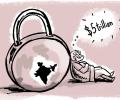
It would be a difficult task for the Indian economy to reach the $5-trillion mark a year before the International Monetary Fund (IMF) projection of 2026-27. Pankaj Chaudhary, minister of state for finance, said in the Rajya Sabha on Tuesday that the government is taking steps to make the country a $5-trillion economy at a date earlier than the IMF's projection. In that context, it would not be difficult to meet the projection in the third quarter of FY27.

Finance Minister Nirmala Sitharaman on Monday announced a Rs 6 lakh crore National Monetisation Pipeline (NMP) that will look to unlock value in infrastructure assets across sectors ranging from power to road and railways. She also said the asset monetisation does not involve selling of land and it is about monetising brownfield assets. Projects have been identified across sectors, with roads, railways and power being the top segments.

As spending on infrastructure has three times the desired impact, the government's Rs 111 trillion National Infrastructure Pipeline should be accelerated: Assocham president, Vineet Aggarwal

The Cabinet has cleared a Bill to set up a government-owned development finance institution (DFI) with initial paid-up capital of Rs 20,000 crore so that it can leverage around Rs 3 trillion from the markets in a few years to provide long-term funds to infrastructure projects as well as for development needs of the country. To put it in perspective, Rs 3 trillion constitutes slightly less than 3 per cent of the Rs 111 trillion to be spent on over 7,000 projects in the National Infrastructure Pipeline from 2019-20 to 2024-25. Besides, the government will give Rs 5,000 crore as grant to the institution, Finance Minister Nirmala Sitharaman on Tuesday told the media after the Cabinet meeting.

Finance Minister Nirmala Sitharaman on Tuesday highlighted "significant reforms" undertaken by the government including National Monetisation Pipeline (NMP) and National Infrastructure Pipeline (NIP) as she met institutional investors in Boston. Sitharaman arrived in the US on Monday for a week-long trip to attend the annual meet of the World Bank and IMF in Washingon as well as G20 Finance Ministers and Central Bank Governors (FMCBG) meeting. During the official visit to the US, Sitharaman is expected to meet US Treasury Secretary Janet Yellen.

The Centre's capital expenditure (capex) outlay for the April-June quarter (first quarter, or Q1) of 2022-23 (FY23) could be close to Rs 1.5 trillion, Business Standard has learnt. As a percentage of full-year capex Budget Estimates (BE) of Rs 7.5 trillion, this could be at similar levels to the trends in the past few fiscal years. It is in the July-September quarter (Q2) of FY23 that capex is expected to pick up, when a bulk of the long-term capex loans to states are expected to be expended.
The government has developed an asset monetisation dashboard for monitoring real-time progress of its ambitious Rs 2.5 trillion-plus pipeline, and providing visibility to investors. The portal has been prepared as the government tries to provide a one-stop shop to investors keen on taking over assets of government departments and ministries.

This includes an infrastructure push which may lead to the government spending more than its budgeted capital expenditure for 2020-21. There are also discussions on increasing the scope and quantum of direct cash transfers to the beneficiaries who need it the most.

Infrastructure funds, which bet on stocks closely linked with infrastructure development in the country, have emerged as one of the best-performing categories over the past year. They have generated an average return of 90.63 per cent - the third-best, after technology funds and small-cap funds. Of the 21 schemes in the category, seven have given a return of more than 100 per cent in a year.

Outlay for infra is also expected to see a significant increase in view of the government's Rs 111-trillion investment plan under the national infrastructure pipeline to develop social and economic infrastructure over five years.
In order to achieve $5 trillion GDP by FY'25, India needs to spend about $1.4 trillion over this period on infrastructure, according to the Economic Survey. During financial years 2008-17, India pumped in about $1.1 trillion on infrastructure. However, the challenge is to step up infrastructure investment substantially, the Economic Survey 2021-22 said.

Making a case for an optimal fiscal stance, the Economic Survey on Friday said growth leads to debt sustainability and not necessarily vice-versa. "This is because debt sustainability depends on the 'Interest Rate Growth Rate Differential' (IRGD) i.e. the difference between the interest rate and the growth rate in an economy. "With the Indian context of potential high growth, the interest rate on debt paid by the Indian government has been less than India's growth rate by norm, not by exception," it said.

The challenges before the coming Budget are more daunting than those in 2021, reveals A K Bhattacharya.

The government on Wednesday announced the appointment of veteran banker K V Kamath as chairperson of the newly set up Rs 20,000 crore development finance institution NaBFID to catalyse investment in the funds-starved infrastructure sector. Parliament had in March cleared the National Bank for Financing Infrastructure and Development (NaBFID) Bill 2021 to support the development of long-term non-recourse infrastructure financing in India, including the development of the bonds and derivatives markets necessary for infrastructure financing.

Ailing telecom operator Vodafone Idea has flagged the industry's "unsustainable financial duress" in its latest annual report and hoped that the government would provide the necessary support to address "all structural issues" faced by the sector. In the chairman's letter to shareholders, Himanshu Kapania cited persistent challenges in the operating environment, amid "unsustainable pricing" and "hyper-competition" during FY21. Kapania expressed hope that government will support efforts to generate reasonable returns on massive investments.

These could include strengthening the public-private partnership (PPP) dispute resolution mechanism, uniform PPP institutional framework, easier terms for infrastructure companies accessing bond markets, and tax sops, Business Standard has learnt. Investment in infrastructure projects with high multiplier effect has been the Centre's main plank to revive the economy, create employment and boost consumption.
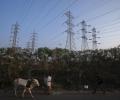
She said the projects identified are in sectors such as power, railways, urban irrigation, mobility, education and health.

As the FM said, this is a Budget that lays the foundation for the next 25 years, observes Kumar Mangalam Birla.

Referring to visible indicators of green shoots, the finance minister said the forex reserve is at an all time high and the stock market is upbeat.
Now that almost 10 infrastructure ministries have submitted a fresh list of their core infrastructure assets, the government has realised it stands to make much more money from asset monetisation than previously thought. Two persons in the government said it stood to garner over 30 per cent more than the earlier estimates of Rs 2.5 trillion over the next four years under the National Monetisation Pipeline (NMP). The NMP, which is being prepared by Niti Aayog, is in the advanced stages of finalisation and is expected to be unveiled in August.

Prime Minister Narendra Modi began his engagements in the US on Thursday by meeting with leading American CEOs from five different key sectors and highlighted the economic opportunities in India.
This month, advertisements for managing directors and the senior management team for the National Bank for Financing Infrastructure and Development or NaBFID, should be out, signalling the start of a financial institution (FI) like no other the country has ever had. For this and other reasons government managers associated with the NaBFID project are convinced it should remain a 100 per cent government-owned entity. This is somewhat different from what former economic affairs secretary Tarun Bajaj said when the NaBFID Bill was being tabled in Parliament earlier this year: "To begin with, it will be 100 per cent government owned.

India was among the top-five economies with the largest general government capital stock level, said, in 2015, an International Monetary Fund report called "Making Public Investment More Efficient". The report fuelled a debate on countries sitting on piles of cash that could be used better. India was believed to have public assets worth $4.5 trillion. The report urged countries to start asset recycling. Six years after the report, Australia's success in asset recycling has turned India into a believer; despite doing averagely in its previous efforts on roads, railways or meeting its divestment targets.
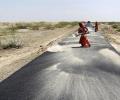
Accelerated development of highways will be taken up with 2,500 km access controlled highways and 9,000 km of economic corridor. In addition, there will be 2,000 km each of strategic highway projects and port connectivity projects, she said.

Finance Minister Nirmala Sitharaman on Tuesday said the upcoming Budget for 2021-22 will sustain the momentum of public spending on infrastructure and have a "vibrancy" to ensure the economic revival continues. She also said the pace of divestment, which has been hit by the COVID-19 pandemic, will pick up in the coming months. "We shall definitely sustain the momentum of public spending in infrastructure. Because that is the one way we assure that the multipliers will work and the economy's revival will be sustainable.... "I am conscious that the forthcoming Budget will have a vibrancy that is so required for the economy's revival, sustainable revival," she said at the Assocham Foundation Week. The Budget for the 2021-22 fiscal is expected to be tabled in Parliament on February 1.

'They are also sitting on huge public sector assets without many returns.'

Finance Minister Nirmala Sitharaman will present the much-awaited 2022-23 Union Budget on February 1. While there has been strong recovery in some sectors, touch services like hospitality, tourism and leisure continue to suffer after two Covid-19 waves. Household savings have been hit due to increased spending on health care. Consumption has still not reached pre-pandemic levels.

The regulator is more carefully scrutinising applications by infrastructure investment vehicles that have a limited number of investors. They have been asked to broaden their investor base before application approval, according to two people familiar with the matter. The Securities and Exchange Board of India is concerned about the structure being used for getting around tax requirements, according to one of the sources.

The government, under the Finance Act, 2020, had allowed tax exemption for SWFs and pension funds in the case of incomes from investment in 34 key infrastructure sectors, including hotels, cold chains, educational institutions, hospitals, and gas pipelines.

'The force of reforms. The force of investment. The force of formalisation. The force of digital and green technology. And the force of youth and entrepreneurship. I am convinced that these 5 forces will propel India's rise over the next several decades,' predicts Kumar Mangalam Birla, chairman, Aditya Birla group.

All banks are eligible for privatisation. A committee of secretaries will decide which banks will be privatised, says Financial Services Secretary Debasish Panda.

Finance Minister Nirmala Sitharaman had in May announced that there will be a maximum of four public sector companies in strategic sectors, and state-owned firms in other segments will eventually be privatised.
 © 2026 Rediff.com - Investor Information - Advertise with us - Disclaimer - Privacy Policy - Sitemap - Feedback - About us - Terms of use - Grievances