'We failed as a country because those who should have been there to say goodbye did not show up.'
Assam's longest border dispute is with Nagaland, which began since the creation of the state in 1963.

China has long coveted Arunachal Pradesh, which it calls Southern Tibet. But, as Venkataraghavan Subha Srinivasan explains, in 1947, the present state of Arunachal Pradesh constituted the North East Frontier Tract of Assam. When India adopted its Constitution on 26 January 1950, NEFT became 'a separate politico-administrative entity' although it was constitutionally still a part of Assam. Its administration was brought directly under the President of India with the Governor of Assam acting as his agent. A revealing excerpt from his book The Origin Story of India's States.

The present happenings in Manipur are the wages of continued neglect, and not so benign at that, of a vital region and its people. Had we lavished on the North East even a fraction of the care and resources we do on Kashmir, things would not have come to this pass, asserts Shreekant Sambrani.

'The Naga Hills region, Nagaland and Manipur, have had the most uncaring and corrupt state governments with little to show on the ground despite the nation's highest per capita development expenditure,' says Mohan Guruswamy.
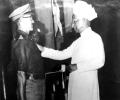
'Anglo-Indians have played a significant role at the forefront, meeting every challenge to the security of the motherland.' A fascinating excerpt from Barry O'Brien's The Anglo-Indians: A Portrait of a Community.

Each of Assam's border disputes has its own legacy of claims and counter-claims:

The NSCN-IM is no longer the force it used to be. Once the 'de facto government' of Magaland, it gradually reduced to an extortion racket. But missteps by the Centre could give it a new lease of life.
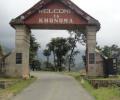
The locals of Khonoma, the village of legendary Naga leader Angami Zapo Phizo, hope the Naga peace accord satisfies the aspirations of the Naga people.

At least seven persons, including three women, were killed in a remote village in Assam's Karbi Anglong district on Friday during a clash between Karbi tribe militants and Rengma Naga who defied quit notice served on them by the Karbi ultras.

'There is a joke that is cracked in hushed tones sometimes in Manipur, what would many of the insurgent outfits do if AFSPA is indeed taken away? What would they fight against?'

'The Congress, all these decades, worked on a slow Hindi-isation and Indianisation of Arunachal tribes. The RSS wants rapid Hinduisation,' says Shekhar Gupta.

'In the first meeting of this new year, we took a joint new year resolution that we will complete it this year. At the time things were not very clear, but the mood was clear that yes, we must resolve it.' 'Yes, details have to come out, but there are some sensitivities, there are some stake-holders not yet on board, especially other Naga undergrounds etc, we would like them to come on board... So at a proper time it has to be revealed to the country, and to the legislature. Perhaps, we may have to wait for some more time.' 'With better understanding of the Indian system, many of them have learnt, realised, appreciated that Naga nationalist aspirations can be accommodated in the Indian system. The Indian system is pretty comprehensive and flexible.' 'A Naga has as much stake, claim over India as any other Indian. There is no distinction. This, Nagas have realised, that yes, Naga nationalist aspirations and Indian nationalism are not mutually exclusive.' Ravindra Narayan Ravi, the Government of India's Special Interlocutor for the Naga talks, explains how the Naga Peace Accord was reached in an exclusive interview to Saisuresh Sivaswamy/Rediff.com
 © 2026 Rediff.com - Investor Information - Advertise with us - Disclaimer - Privacy Policy - Sitemap - Feedback - About us - Terms of use - Grievances