
Haryana Congress MLAs will visit 'mandis' to assess and support farmers facing difficulties in wheat and mustard procurement, following a decision made at a Congress Legislature Party (CLP) meeting in Delhi.

Former Haryana deputy chief minister Dushyant Chautala has criticised the state government for failing to ensure proper crop procurement arrangements and timely compensation for farmers affected by unseasonal rain.

Former Haryana Chief Minister Bhupinder Singh Hooda has criticised the state government's crop procurement policies, alleging that new conditions are being imposed on farmers instead of procuring crops at MSP. Hooda plans to tour mandis to assess the problems faced by farmers.

Former Haryana Chief Minister Bhupinder Singh Hooda has accused the state government of imposing arbitrary conditions on crop purchases, alleging anti-farmer policies and demanding compensation for weather-related crop damage.
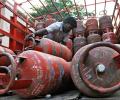
Former Haryana Chief Minister Bhupinder Singh Hooda criticises the state government over alleged LPG cylinder shortages and black marketing, urging immediate action to alleviate public hardship. He also addresses concerns regarding farmers' MSP and the SYL canal issue.

Haryana Chief Minister Nayab Singh Saini released over 2,115 crore directly into the bank accounts of beneficiaries under various welfare schemes, benefiting over 58 lakh eligible individuals.

Himachali cuisine is simple and hearty. It's seasonal and robust too, being deeply-rooted in mountain life and shaped by cold climate and slow-cooking traditions.
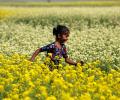
In MP, farmers say sales under new 'Sauda Patrak' method below MSP; Haryana mustard farmers wait for their turn to sell. The annual purchases of major rabi crops in North India largely wheat, mustard and also chana to some extent have been delayed as most cereal mandis were closed in the aftermath of the nationwide coronavirus lockdown.
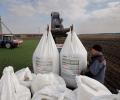
'China reduced its exports of urea to India gradually.' 'In 2020-2021 we imported 28 lakh tonnes of urea which reduced to 16 lakh tonnes in 2022-2023 and that has now reduced to 1 lakh tonnes in 2024-2025.'
In total, the Centre plans to purchase around 40.7 million tonnes of wheat from farmers this year, which is almost 19 per cent more than last year.

In the coming few weeks, agriculture markets in North and Central India will be full of wheat, mustard, and chana - the three main rabi crops grown in these parts. Not only will the price trajectory of these determine the course of food inflation in the months to come, but it could also have a wider impact on the rural economy in the main growing states for these crops. Wheat and chana are largely grown in Madhya Pradesh (MP).
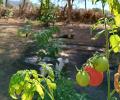
Green Tomato Days are here. Make the most of them.

The government will formulate a strategy to make India self-reliant in edible oils by boosting domestic output of oilseeds and launch a comprehensive programme to support dairy farmers, Finance Minister Nirmala Sitharaman announced on Thursday. India imports a large quantity of edible oils to meet the domestic demand. During the 2022-23 marketing year (November-October), the country imported nearly 165 lakh tonnes of cooking oils, valuing a whopping Rs 1.38 lakh crore.

The star ingredient of many a delicious preparation is, of course, cheese!
The decision to increase the MSPs (Minimum Support Prices) was taken at a meeting of the Cabinet Committee on Economic Affairs (CCEA) chaired by Prime Minister Narendra Modi. MSP is the rate at which the government buys the grain from farmers. Currently, the government fixes MSPs for 23 crops grown in both kharif and rabi seasons. Sowing of rabi (winter) crops begins from October immediately after the harvest of kharif (summer) crops.

The move came a day after Parliament approved two agriculture sector-reform bills which have been bitterly opposed by the opposition parties like Congress and TMC.
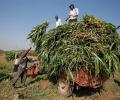
India achieved record foodgrains production this year but the withdrawal of three agri-reform laws and spike in cooking oil prices cast a shadow on the country's resilient agriculture sector that is on course for better harvest in 2022 despite pandemic blues. While soaring production of foodgrains that also helped the government provide free additional rations for COVID-hit poor families for many months together came as a relief, the passing year will be remembered for the long drawn farmers' protest at Delhi borders against the three laws and subsequent repeal of the legislations. The Indian agriculture sector, which was among the few segments that remained robust amid the pandemic gales, is expected to register a growth rate of 3.5 per cent in the current financial year ending March 2022.
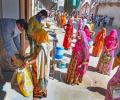
The government's food subsidy in the ongoing fiscal year is expected to be a little less than Rs 4 trillion.

While reforms may translate into new opportunities for firms like ITC, Adani Wilmar and Reliance Retail, farmers are unlikely to use it for fear of upsetting commission agents.

The minimum support price for the rabi season will not radically alter the falling trajectory of farm incomes
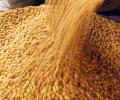
The sharp drop in prices couldn't have come at a more difficult time, particularly for the two big producing states of Madhya Pradesh and Rajasthan, and also neighbouring Chhattisgarh as the states go to polls in the next few months.

The National Agricultural Cooperative Marketing Federation of India Ltd has decided to actively trade in imported edible oils after failing to procure sufficient quantity of mustard seeds from the domestic market due to high price.

Battling a sharp surge in inflation, the Reserve Bank is all for a smooth monetary policy response and the desire to have smaller hikes led it to tighten the policy in an off-schedule meet, a source said on Thursday. Inflation has been massively impacted by Russia's invasion of Ukraine and will in due course also reflect the dent caused by Indonesia banning palm oil exports, the source aware of central bank thinking said, indicating that there was no other option but to respond. "The idea is to have a smooth policy response, not to put in large cold turkey responses," the source said, making it clear that the preference is for smaller magnitude responses and not larger ones.

In his monthly Mann ki Baat broadcast, Modi noted that the country was also faced with several natural disasters, including cyclones, landslide and earthquakes, during the pandemic, and said more lives were saved than the past with the Centre, states and local administration coming together to carry out relief and rescue operations.
The irony of this scheme to benefit farmers is that it could add to the problems for the government because the mechanism to procure and store crops like pulses, coarse cereals and oilseeds barely exists.

'We plan to touch Rs 1 trillion of Amul brand's turnover in the next five years.'
India is expected to harvest 291.95 mt of foodgrain in 2019-20
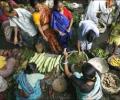
Parts of Uttar Pradesh, Haryana, and Punjab have also been impacted.

This year on Teacher's Day, we take a tongue-in-cheek look at the 10 invaluable lessons Bollywood has imparted.

Food Corporation of India will be the nodal agency.

Plant foods are rich in whole grains, fruits and vegetables, which provide many essential nutrients including fibre, says nutritionist Komal Jethmalani.
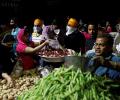
There have been several instances of traders dumping fruits and vegetables outside mandis. Or of farmers dumping produce outside their villages or feeding them to their animals.

In the second of a six-part series, Sanjay Jog of Business Standard walks across the streets of Indore to find out how it has been hit by demonetisation.

'There is a great scope for enhancing the use of organic fertilisers'.
