
Fall in crude prices has eased interest rate worries and that expectation of good Q2 is already factored in the prices.

Worries remain on earnings-valuations mismatch, global issues; resolution of the MAT row could be biggest positive trigger

Concerned over inflationary pressures in the economy, the Reserve Bank of India (RBI) is bringing down surplus liquidity in the system rapidly. It has fallen to pre-Covid levels and almost 2 per cent of banks' net demand and time liabilities (NDTL). NDTL shows the difference between the sum of demand and time liabilities (deposits) of a bank (with the public or the other bank) and the deposits in the form of assets held by the other bank.

The retail frenzy over initial public offers (IPOs) seen over the past few months is not without reason. Over the past two years, 61 companies have tapped the primary market and raised funds via IPOs. Of these, 24 companies (nearly 39 per cent companies) have more than doubled at the bourses with Happiest Minds, IndiaMart Intermesh, Indian Railway Catering and Tourism Corporation (IRCTC), Affle India and Route Mobile surging 468 per cent to 722 per cent since their listing date till now. Retail participation in the equity market, according to analysts, has just reached an inflection point due to the low interest rate regime amid lack of investment-worthy avenues that can generate a good return for investors.

However, experts caution that investors should not expect the big returns they got from the sector between March and September 2020.

With equity and commodity exchanges allowed to enter each other's areas from October, brokerages are pump-priming their businesses to allow their clients seamless trading in commodities and equities.

The early bird results for the January-March 2022 quarter (Q4FY22) hint at a slowdown in corporate sector growth in the upcoming quarters. The combined net sales of the 81 early bird companies in the Business Standard sample were up 15.1 per cent year-on-year in Q4FY22; this was less than the 15.9 per cent YoY jump reported in Q3FY22. The slowdown could be much stronger for the domestic market-focused companies, including those in the banking, finance, and insurance (BFSI) space.

TCS, Eicher Motors and Kotak Mahindra Bank have turned out be the fastest and most consistent wealth creators.

Better-than-expected financial results in Q3 due to higher revenue growth and margins in key markets fuel the rally

Zomato's initial public offer (IPO) is scheduled to open for subscription on July 14 and is priced between Rs 72 - 74 per share. At the upper end of the price band of the offering, the company aims to raise Rs 9,350 crore. Most analysts have given a 'subscribe' rating to the issue for listing gains.

Experts say, investors will be better off exiting them at higher levels and investing in stocks of fundamentally sound companies.

Analysts said the demand recovery in two-wheeler and car segments was skewed towards the semi-urban and rural markets.

Markets
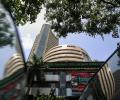
The combined profit before tax of 748 companies, which have declared their results for Q1FY21, is down 46 per cent YoY. Their net sales went down by a quarter as the Covid-19 lockdown led to a sharp fall in economic activity.
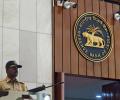
Move can also bring a huge change in the way business is done in India, where firms use multiple current accounts, often for even individual projects, making them difficult to monitor.

Analysts attribute the surge to a host of factors, particularly the interest shown by the retail investors in these two market segments.

Banking and telecom will see the highest impact of this transition.
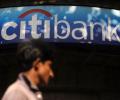
Axis Bank's acquisition of Citibank's consumer finance business for Rs 12,325 crore - the second biggest deal in the Indian banking sector - is seen as a good deal at a good price. The acquisition enables Axis Bank to close the gap with competition in some key segments such as credit cards. At the same time, there are some key issues that are crucial for the deal's success, apart from the fact that it will take some time for Axis to reap the full harvest of its investment.
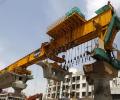
The combined net sales of 42 listed construction and capital goods companies that have declared their third-quarter results so far were down 2.3 per cent year-on-year in Q3FY21 while core operating profit was up just 4.9 per cent YoY during the quarter.

In the past two months alone, four companies have garnered a cumulative Rs 22,400 crore via this route.

'Spends are likely to increase from the current levels because recovery is yet to fully be over.'

Given the developments, analysts expect fiscal and monetary support from the government and RBI to revive sentiment. However, recovery, they say, from these levels will be slow and painful.

Titan accounted for 59.6 per cent of his disclosed portfolio at Rs 8,355 crore. This is more than 10 times the next biggest holding, Federal Bank, at Rs 619 crore.

The recent three-bank merger seems to be grossly negative for Vijaya Bank and Bank of Baroda in the short term, as the negative net worth of Dena Bank will have to be absorbed by the merged entity

The elections held in April-May 2019 will be an important determinant of future growth and investment.

Given the nature of the money stuck, investors are fast losing patience with the exchange.
The buyback price is at around 28 per cent premium to the current market price of Rs 67 on the Bombay Stock Exchange

Since last month, the realty (down 23%), auto (down 16%) and finance (down 14%) indices have underperformed the market by falling over 13%, as against 8% decline in the benchmark indices
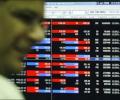
India VIX has been mirroring the CBOE Volatility Index.
.jpg)
Q1 results indicate more pain ahead, as slowdown has spread to more sectors, pricing power has come down and rising interest cost is eating into profits.
The combined weight of IT companies in the benchmark Nifty 50 index is now at a five-year high of 15 per cent as these companies continue to outperform the broader market.

There is a lot of optimism as regards the defence, railway and manufacturing sectors.

Market participants are impressed that Rajan has set the ball rolling on his first day at RBI with a series of announcements, raising expectations that more are in store.
.jpg)
Last fortnight, 206 companies from the BSE-500 hit 52-week lows as investors sold heavily in counters with dimmed prospects.
 © 2026 Rediff.com - Advertise with us - Disclaimer - Privacy Policy - Sitemap - Feedback - About us - Terms of use - Grievances