
Sri Lanka's newly elected president Mithripala Sirisena waves at media as he leaves the election commission in Colombo. Photograph: Dinuka Liyanawatte/ Reuters
Sri Lanka's PM has again said that the navy has the right to shoot anyone who intrudes into its territorial waters
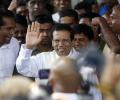
Maithripala Sirisena, who scored a stunning victory, was on Friday sworn-in as Sri Lankan president, bringing the curtains down on the 10-year rule of Mahinda Rajapaksa, marking a smooth transition of power.

Maithripala Sirisena, the Sri Lankan president-elect, will be sworn-in on Friday evening following his stunning victory in the tightest-ever presidential race that ended the 10-year-rule of Mahinda Rajapaksa.

Pope Francis on Tuesday called for respect of human rights and healing of racial and religious hatred as he arrived on a two-day visit to Sri Lanka, days after a new government assumed power in the country.
President Maithripala Sirisena's government in Colombo has clearly decided to restore some balance in its diplomatic outreach, which presents a great opportunity for India.

The country has a fiendishly complicated electoral system that is a combination of population-based proportional representation and party-based national lists, says Aditi Phadnis

Sri Lankans on Thursday voted in large numbers in the bitterly contested presidential election in which incumbent Mahinda Rajapaksa is seeking a record third term against his friend-turned-foe Maithripala Sirisena, with an unusually high voter turnout in Tamil and Muslim areas.
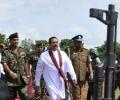
'Sri Lanka has a large military presence in the north and east, where it is very difficult for the war-affected civilian population to move forward.' 'Right now the military is doing jobs that should be for the civilians. I would like to see Sirisena consider demilitarisation.'
 © 2026 Rediff.com - Advertise with us - Disclaimer - Privacy Policy - Sitemap - Feedback - About us - Terms of use - Grievances