
"As the ISI tries to rein in those militant proxies that have slipped from Islamabad's grasp, it will likely try to regain their support by redirecting their attention away from Pakistan and toward India, an enemy on which both Islamabad and the militants can agree. As a result, it is likely India will come under attack again," Stratfor warned.
Terming the Mumbai attacks as a new kind of terrorism, a top United States military officer said it differed from other such incidents as a group of 10 terrorists brought the two nuclear armed neighbours on the brink of a war. The Joint Chief of US Staff, Admiral Mike Mullen, who had visited New Delhi soon after the Mumbai attacks, was addressing a conference in Washington on "Global Trends and Security" on Thursday, organised by the Princeton University.

Those who plotted the deadly attacks on the World Trade Centre on September 11, 2001, are still alive and planning to carry out more terror strikes, a top United States military general has said.
Observing that Pakistan is a "critical country" for the US in the long run, a top American General has said Washington wants to have a long-term partnership with Islamabad.
In a damning indictment, a top United States General has said the Inter Services Intelligence is fomenting 'chaotic activity' in Kashmir and Afghanistan and asked the Pakistani spy agency to change its 'strategic thrust'. The US is having 'discussions' with the Pakistani leadership on this issue, Admiral Mike Mullen, chairman of the Joint Chiefs of Staff, said. Elaborating, he said the ISI has been supporting militant groups in Kashmir and FATA in Afghanistan.
Describing the increasing Indo-US military cooperation as "positive", a top Pentagon official said the growing defence links reflects the continuing and emerging relationship between the two nations.
The US defence department chose to sidestep queries on whether it had the authority to carry out unilateral action against Taliban or al Qaeda leadership on Pakistani soil but pressed Islamabad to "move rapidly" against the militants in its restive tribal areas.
The United States has sent its top defence official to India to find out the culprit behind the Mumbai terror attacks that had claimed over 200 lives, including Americans, last week.Defence Secretary Robert Gates has confirmed that the Chairman of the Joint Chiefs of Staff Admiral Mike Mullen is on his way to India or already there."But the truth is most of the people who were killed were Indians. And so it's important that we find out who did it," he said.
Admiral Mike Mullen, chairman of the US Joint Chiefs of Staff, reiterated on Tuesday that the security of Pakistan's nuclear weapons is not under any threat in spite of the current political crisis in that country. Mullen added that President Pervez Musharraf's imposition of emergency didn't have any significant impact on the US-led global war on terror in Afghanistan.
Describing India as a strong partner, a top United States military officer has said that Washington has not asked New Delhi to do 'more' in war-ravaged Afghanistan. At a press conference, the Chairman of Joint Chiefs of Staff Admiral Mike Mullen said that US Defence Secretary Robert Gates had not conveyed to India to 'do more' during his recent visit.Gates had visited India in February and met Prime Minister Manmohan Singh and External Affairs Minister Pranab Mukherjee.
Describing the steps taken by Pakistan in the aftermath of the Mumbai terror attacks as great, a top Pentagon official has held that many more such steps would be taken by Islamabad.The Chairman of the Joint Chiefs of Staff Admiral Mike Mullen has said that there is a strong desire for justice on the part of the people of India and he is 'grateful for the restraint shown by the country'.
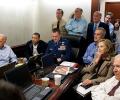
Barack Obama has said that he had ruled out involving Pakistan in the raid on Osama bin Laden's hideout because it was an "open secret" that certain elements inside Pakistan's military, and especially its intelligence services, maintained links to the Taliban and perhaps even al-Qaeda, sometimes using them as strategic assets against Afghanistan and India.
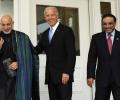
US-Pakistan relations are poised to touch a qualitatively new level under the Biden administration, notes Ambassador M K Bhadrakumar.
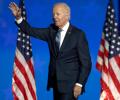
'The hardliners in Delhi are in for a big disappointment,' predicts Ambassador M K Bhadrakumar.

Voicing his frustration over the double game played by the Inter-Services Intelligence in the war against terror after 9/11, a former central intelligence agency chief has said that "duplicitous" is a gentler way to describe the notorious Pakistani spy agency, which has close links with terror groups.

'India's real concern is that cash-strapped Pakistan is keeping its military hardware well oiled on American money,' says Rajeev Sharma.

Former Inter-Services Intelligence chief Ahmed Shuja Pasha has admitted that the deadly Haqqani network was created by it and America's Central Intelligence Agency and claimed that the insurgent group's chief Jalaluddin Haqqani had "in fact been invited to the White House by President (Ronald) Reagan".
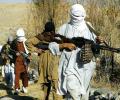
Pakistan National Security Advisor Sartaj Aziz brings to New Delhi a newfound Pakistani confidence, stemming from its leverage in Afghanistan, says Ajai Shukla

Pakistan, which has propped up the new Taliban leadership, would be keen to use its influence over the group to neutralise India's presence in the region.
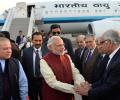
Some members of the Obama administration have worried that Pakistan's heightened anxieties about India might lead Islamabad to take reckless measures, so they have wanted New Delhi to pursue more diplomatic engagement with Islamabad.

'Pakistanis are very clever in manipulating us,' former Bush administration official tells US lawmakers.

'If there's one administration that would be likely to put the squeeze on Pakistan, it's the Trump administration.' 'This is an administration that views terrorists as a black and white issue (kill them all, no questions asked), and will have little patience for Pakistan's selective policy toward terrorism.'
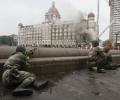
Through its early days to the 1980s, Pakistan sought to expand its sphere of Islamic influence through Afghanistan to Central Asia and got Pakistani citizens recruited in the Afghan government institutions in the 1990s when the Taliban were power. Now, it is looking eastward through India to Bangladesh and Myanmar to establish an imaginary caliphate.

'The clique that runs that country is treating us like suckers. We are very foolish, giving people money who involve themselves in activity that's harmful to America.' 'When you look at the cold hard facts, Pakistan is not an ally to the United States. They have facilitated, they have encouraged, they have been a protector of enemies.'
 © 2026 Rediff.com - Investor Information - Advertise with us - Disclaimer - Privacy Policy - Sitemap - Feedback - About us - Terms of use - Grievances