
It will introduce new cars across segments and also target rural India to push up sales.

Buying a car, particularly a diesel-powered one, is set to pinch the customers' pockets even more from the next financial year, as the second phase of Bharat Stage VI (BSVI) emission norms kicks in. The rules require cars to be compliant with real driving emission (RDE) norms, which measure pollutants emitted by cars while they are being driven on the road, unlike in a laboratory test. The norms may increase the cost of producing diesel vehicles by nearly Rs 75,000 to Rs 80,000, and petrol-powered ones by Rs 25,000 to Rs 30,000, analysts said.

Market benchmarks Sensex and Nifty tumbled 1 per cent on Wednesday amid continuous foreign fund outflows and a weak trend in index majors Reliance Industries and HDFC Bank. The 30-share BSE Sensex slumped 636.75 points or 1.04 per cent to settle at 60,657.45. During the day, it declined 700.64 points or 1.14 per cent to 60,593.56.

Prime Minister Narendra Modi on Wednesday said the world looks at India as an important pillar of stability, a trusted friend, an engine of growth in the global economy, a technology hub for finding solutions and a powerhouse of talented youth. He also said that in the rapidly changing world order, India is moving forward as 'vishwa mitra' (friend of the world). Speaking at the inauguration of the 10th edition of the Vibrant Gujarat Global Summit, which saw participation of state hea

Wipro was the biggest gainer in the Sensex pack, rising 4.34 per cent, followed by HCL Tech, UltraTech Cement, Tata Steel, Tech Mahindra, NTPC, Infosys, Power Grid, Tata Consultancy Services and State Bank of India. Mahindra & Mahindra, ITC, Axis Bank, Nestle, Kotak Mahindra Bank and Asian Paints were among the laggards.

Overseas shipments at auto firms expanded at a brisk pace year-on-year (YoY) in March, bumping up the overall annual exports for FY22 and taking it to a record level for some like Maruti Suzuki India and Bajaj Auto. Amid a semiconductor shortage, a depreciating rupee and a strong demand in various export destinations, passenger vehicle makers diverted capacity meant for the local market in favour of the more-lucrative export market. Among the passenger vehicle makers, market leader Maruti Suzuki led the rally with its overseas shipments touching a record level of 238,376 units in FY22 - the highest for the company in any financial year.

The stock of the country's largest passenger vehicle maker, Maruti Suzuki India (MSIL), has been hitting successive all-time highs over the past three trading sessions. The rally in the scrip has helped it notch over a 21 per cent gain since the start of February, outperforming the National Stock Exchange Nifty Auto Index. The gains for the leader of small passenger cars have been more recent, as the company still trails the Nifty Auto over one- and two-year periods.

Sales growth of entry-level cars or hatchbacks like WagonR and Alto have seen a decline during the past few years due to changing consumer preference. Maruti Suzuki chairman R C Bhargava had on October 28 said that he does not expect hatchback unit sales to grow in the fourth quarter (Q4FY23) or in the next fiscal year.
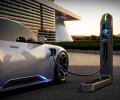
When it comes to electric cars, the electric dream is turning out to be a six-letter word starting with f, ending with y, and having antas in between, notes Suveen Sinha.
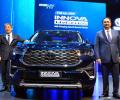
Hybrids have helped Maruti acquire leadership in SUVs, a segment that was never its forte. Toyota has also risen with the hybrid tide to clock its highest-ever annual sales in 2023.

Union Minister Nitin Gadkari on Tuesday launched the country's first crash testing programme Bharat NCAP aimed at improving road safety standards of motor vehicles up to 3.5 tonnes. Bharat New Car Assessment Programme (Bharat NCAP) is India's own crash testing programme and is cheaper than tests conducted abroad, Gadkari said, adding that the star ratings will help buyers understand the quality of the product and make an informed purchase decision. Bharat NCAP will be implemented from October 1, 2023.

Equity benchmark indices Sensex and Nifty on Friday reversed their six-session losing streak and rebounded more than 1 per cent on value buying in auto, IT, financial and energy stocks. Better than expected quarterly financial results of corporates also boosted investor sentiments even as uncertainties persisted over the escalating tensions in the Middle East, according to analysts. In a largely range-bound trade, the 30-share BSE Sensex rose 634.65 points or 1.01 per cent to settle at 63,782.80 points.

Tata Motors surpassed Maruti Suzuki (India) (MSIL) to become the most-valuable automobile company, in terms of market capitalisation (mcap), after a gap of seven years. With this, the company's stock hit a new high on the BSE on Tuesday (January 30). The combined mcap of Tata Motors (Rs 285.51 crore) and Tata Motors DVR (Rs 29,119 crore) stood at Rs 3.146 trillion.

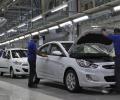
The country's largest carmaker Maruti Suzuki India will not "walk away" and fight to get back to 50 per cent market share in the domestic passenger vehicle segment, according to company Chairman R C Bhargava. The auto major, which is commemorating 40 years of operations, has seen its market share drop to 43.38 per cent in FY22 from a peak of 51.21 per cent in FY19. In order to get back its dominant leadership, the company plans to drive in models catering to both urban and smaller cities and rural areas.
Maruti Suzuki India (MSI) and Hyundai posted single-digit growth in domestic sales in June, even as the overall passenger vehicle segment crossed the 20 lakh units sales mark for the first time-ever in the first half this year. Toyota Kirloskar Motor reported a double-digit growth in dispatches to dealers, while Kia saw a dip in wholesales last month. MG Motor India also reported a double-digit increase in retail sales in June 2023 compared to the same month last year.

Domestic passenger vehicle dispatches witnessed a 13 per cent year-on-year rise in April as demand remained robust across segments, industry body Siam said on Friday. The total passenger vehicle dispatches from companies to dealers rose to 331,278 units last month compared to 293,303 units in April 2022. Market leader Maruti Suzuki India dispatched 137,320 units to dealers last month against 121,995 units in April last year.
The country's largest carmaker Maruti Suzuki India on Wednesday reported a 66 per cent decline in consolidated net profit at Rs 487 crore in the second quarter ended September 30, 2021, as production was affected by the ongoing semiconductor shortage. The rise in commodity prices also had an adverse impact on the company's earnings.

Operating margins have been the primary driver of corporate earnings in India in recent quarters, despite revenue growth suffering from weak consumer demand. Companies across sectors have reported a sharp improvement in earnings before interest, tax, depreciation, and amortisation (Ebitda) margins over the past two years, benefiting from lower commodity and energy prices. Higher margins more than compensated for slower revenue growth, resulting in double-digit growth in net profit for five consecutive quarters.

'Nearly all companies are extending festival offers for entry-level, sedan, and hatchback segments.'
Equity benchmarks Sensex and Nifty on Thursday gave up all early gains to settle lower as surging oil prices amid the ongoing conflict between Russia and Ukraine hit investor sentiment. The 30-share BSE Sensex started the trade on a higher note and jumped 527.72 points in morning deals to a high of 55,996.62. However, during the afternoon trade it surrendered all its early gains and finished at 55,102.68, lower by 366.22 points or 0.66 per cent.
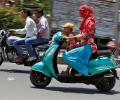
Two-wheeler exports from India have decreased by 20 per cent year-on-year (Y-o-Y) to 1.69 million units in the first half (H1) of 2023-24 (FY24) due to a challenging geopolitical situation and foreign exchange (forex) crises in key markets such as South Asia, industry body Society of Indian Automobile Manufacturers (Siam) said on Monday. On the other hand, passenger vehicle (PV) exports in H1FY24 increased by 5 per cent to 336,754 units because the key markets are much more diversified worldwide, Vinod Aggarwal, president, Siam, told reporters during a press conference. The Russia-Ukraine war, which started in February 2022, has brought significant instability to global fuel prices.

Equity benchmarks recovered most of their intra-day losses and ended marginally lower on Tuesday amid buying in index majors Reliance Industries and Tata Consultancy Services. Helped by last minute buying activity in some of the index heavyweights, the 30-share BSE benchmark Sensex managed to trim most of its early declines and ended lower by 103.90 points or 0.17 per cent at 61,702.29. During the day, it had tumbled 703.51 points or 1.13 per cent to 61,102.68.

The list clearly shows the dominance of Maruti and Hyundai in the Indian passenger vehicle market.

Corporate India is starting to step up its capital expenditure plans amid government incentives and signs of rising demand, company executives and analysts have indicated. This coincides with the Reserve Bank of India (RBI) recently citing a double-digit growth in private capital expenditure. Healthy balance sheets of banks and corporates, along with increasing capacity utilisation and improving business sentiment, are contributing to a favourable environment for sustained growth in private sector investments, the RBI said in its policy last week.
At the auto show, Maruti showcased some of its existing cars in a new avatar. Here are some of them...
Automakers Maruti Suzuki, Tata Motors, Mahindra & Mahindra and Kia reported robust growth in their vehicle dispatches in the domestic market for August buoyed by festive demand and easing of semiconductor shortage woes. Other manufacturers like Hyundai, Toyota and Skoda also reported growth in wholesales in August as compared with the same month last year. The country's largest automaker Maruti Suzuki India said its domestic passenger vehicle dispatches increased by 30 per cent to 134,166 units in August as compared with 103,187 units in the year-ago month.

Almost all of these companies either unveiled their new electric vehicle or alternative energy-powered models.

Seven years after it announced Nexa, there's no mistaking the seriousness with which Maruti wants the segment to grow, says Pavan Lall.

India is sceptical that Tesla might import into the country cars made in China. Tesla executives were in India last month and appear to have proposed a factory in the country. But do not be surprised if that does not happen in a hurry.

From the Sensex pack, Tata Steel plunged nearly 5 per cent. Other major laggards were Tata Motors, State Bank of India, Bajaj Finserv, Reliance Industries, Wipro, IndusInd Bank, Larsen & Toubro and Maruti Suzuki.

'We are going to have hybrid cars, which, as far as I know, none of our competition is working on, and this includes ethanol.'

Which entrepreneur would willingly part with her or his hard-earned money for grasping, self-serving politicians? asks Debashis Basu.

Titan, Maruti Suzuki India, Asian Paints, Mahindra & Mahindra and Hindustan Unilever Limited were the biggest drags on the Sensex, tumbling up to 5.05 per cent. In contrast, ITC, Dr Reddy's Laboratories, Tech Mahindra and UltraTech Cement were among the gainers.

'The decrease in the popularity of white cars and the rise in preference for darker colours like black, grey, and blue over the past three years reflect changing consumer attitudes.'

Maruti Suzuki, Hyundai and Tata Motors reported their highest-ever dispatches to dealers last fiscal, enabling the domestic passenger vehicle industry to log in best-ever performance to date. The country's largest carmaker Maruti Suzuki India reported its highest wholesales to date at 19,66,164 units, up 19 per cent from 16,52,653 units in 2021-22. Its domestic dispatches rose to 17,06,831 units in 2022-23, up 21 per cent from 14,14,277 units in 2021-22 fiscal.Hyundai Motor India said its overall wholesales last fiscal were the highest ever since commencing operations in the country.

Of the 15 car manufacturing companies in India, eight have a market share of below 2 per cent, raising questions about their long-term future in a competitive market that has already seen Ford Motors and General Motors slam the door on India.

Consumer goods firms and auto companies are witnessing an upturn in rural demand, which had been lagging for most of FY24. Expectations of a bumper rabi crop harvest have helped turn the tide. The Reserve Bank of India's (RBI's) Monetary Policy Committee kept the repo rate unchanged last week, noting that as rural demand catches up, consumption is expected to support economic growth in 2024-25.

The board of Maruti Suzuki India (MSIL) on Tuesday approved a proposal to issue shares worth Rs 12,841 crore to parent company Suzuki Motor Corporation (SMC) for acquiring Suzuki Motor Gujarat (SMG). The Gujarat manufacturing plant - with an annual capacity of 750,000 units - is owned by SMG, a wholly-owned subsidiary of SMC. The shares issued to SMC will raise its ownership in MSIL from 56.48 per cent to 58.19 per cent--India's largest carmaker stated in a notice to BSE.

Alto, the Maruti brand synonymous with small cars, introduced the new generation K10 on Thursday, aiming to consolidate its position further amid shrinking demand for hatchbacks. With prices starting at Rs 399,000 and going up to Rs 533,500 (for manual transmission), the new model claims fuel efficiency of 24.90 km per litre. The Japanese car maker, which has been selling 100 Altos every hour for the last 22 years, had discontinued the model in February 2020.

The driver told the police that he was not aware that the body was stuck under the car and attributed it to poor visibility caused by dense fog.
 © 2026 Rediff.com - Advertise with us - Disclaimer - Privacy Policy - Sitemap - Feedback - About us - Terms of use - Grievances