
At the same time, the UN said in a report, the performance of private investment remains a key macroeconomic concern.

ICICI Bank was the top gainer in the Sensex pack, rising over 3 per cent, followed by ITC, SBI, HCL Tech, Axis Bank, Bajaj Finserv and Tech Mahindra. NSE Nifty advanced 32 points to 15,856.05.

On the Sensex chart, IndusInd Bank, Tata Steel, ONGC, ICICI Bank and Kotak Bank were among the top losers.

Finance Minister Nirmala Sitharaman will present the much-awaited 2022-23 Union Budget on February 1. While there has been strong recovery in some sectors, touch services like hospitality, tourism and leisure continue to suffer after two Covid-19 waves. Household savings have been hit due to increased spending on health care. Consumption has still not reached pre-pandemic levels.

India's economy will do well once vaccination reaches a critical mass as pent up demand, global recovery and easy financial conditions will boost activities, RBI's Monetary Policy Committee (MPC) member Ashima Goyal said on Tuesday.

From the pandemic shocks to state polls to global trends, a raft of sentiment drivers are expected to steer the Indian stock market in 2022 after a historic year of massive investor returns and milestones. The Union Budget, which will be closely watched for further reform moves, and quarterly earnings of corporates will be among the developments on investors' radar amid global central banks moving towards tighter interest regime in the wake of inflationary pressures. The year 2021 was rewarding in a big way for equity investors.

Select the exact category by matching your investment horizon to the portfolio duration, suggests Sanjay Kumar Singh.

The cryptocurrency industry on Wednesday urged the government to take a nuanced approach towards regulating crypto assets in India and asked investors in the country to remain calm and not arrive at a rushed conclusion, a day after the government listed for introduction a Bill to ban all such cryptocurrencies, with some exceptions.
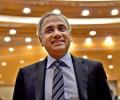
After posting double-digit growth for the fourth consecutive quarter, chief executive officer and managing director Salil Parekh tells Yuvraj Malik and Debasis Mohapatra that the firm is not facing any delay in ramping up of large deals.

Fitch Ratings has cut India's economic growth forecast to 8.7 per cent for the current fiscal but raised GDP growth projection for FY23 to 10 per cent, saying the second COVID-19 wave delayed rather than derail the economic recovery. In its APAC Sovereign Credit Overview, Fitch Ratings said India's 'BBB-/Negative' sovereign rating "balances a still-strong medium-term growth outlook and external resilience from solid foreign- reserve buffers, against high public debt, a weak financial sector and some lagging structural factors". The 'Negative' outlook, it said, reflects uncertainty over the debt trajectory following the sharp deterioration in India's public finances due to the pandemic shock.

The implication of a slowdown in the financial services sector are very different (eg, likely to affect fewer people directly, and even that affecting those at the top of the income distribution) from that of a slowdown in construction, one of the most employment intensive sectors in the Indian economy (that will affect aggregate demand much more).'

The net outward foreign direct investment went up from $9.1 billion in 2017-18 to $12.6 billion in 2018-19 and moved further north to $13 billion in 2019-20.

Moody's Investors Service on Wednesday slashed India's growth projection to 9.6 per cent for the 2021 calendar year, from its earlier estimate of 13.9 per cent, and said faster vaccination progress will be paramount in restricting economic losses to June quarter.

Investors pumped Rs 491 crore in gold exchange traded funds (ETFs) in February as they seem be taking advantage of the lower domestic prices caused due to declining international rates, appreciating rupee and reduction in custom duty. This came following a net investment of Rs 625 crore in January and Rs 431 crore in December. Prior to this, gold ETFs had seen an outflow of Rs 141 crore in November, data available with Association of Mutual Funds in India showed.

'The markets seem apprehensive and that explains why the markets have been feeling slightly uncomfortable ahead of the Budget.' 'After the event, when all the concerns are resolved and clarity emerges, markets will decide what to do next.'

This rise was spurred by record kharif sowing - after a good rabi season - that ensured high disposable incomes in rural India.

Although there is headroom for further monetary policy action, at this juncture it is important to keep our arsenal dry and use it judiciously: RBI's Das.
Gross bad loans of banks may rise from 6.9 per cent in September 2021 to 8.1-9.5 per cent by September 2022 if the Omicron variant strikes the economy hard, as per the financial stability report of the Reserve Bank released on Wednesday. The report also said that the rising stress level in the retail loan portfolio of banks -- the mainstay of bank credit for many years now -- was led by home loans, which grew in double-digits so far this fiscal. While asset quality improved, with gross non-performing assets (GNPA) and net NPA (NNPA) ratios declining to 6.9 and 2.3 per cent, respectively, in September 2021, the slippage ratio inched up during the same period as private sector banks showed a higher rate of deterioration in asset quality, as per the report.

The fiscal deficit, as per the survey, deteriorated to 5.8 per cent of the GDP as compared to 3.4 per cent for 2018-19 estimated in the interim Budget.

Amid fears of a third wave of coronavirus pandemic and hardening of retail inflation, the Reserve Bank is likely to maintain status quo on interest rate and watch the developing macroeconomic situation for some more time before taking any decisive action on monetary policy. The RBI is scheduled to announce its bi-monthly monetary policy review on August 6 at the end of the three-day meeting -- August 4-6 -- of the Monetary Policy Committee (MPC). The RBI Governor-headed six-member MPC decides on the key policy rates.

'Indian macro conditions have never been better, and many businesses will safely compound earnings over the next five years.'

By any economic theory or doctrine, this is no Budget that supports economic recovery, whether through supporting aggregate demand, or through expansionary stimulus, declares Rathin Roy.

GST mop-up likely to fall in May, June after touching record levels in April and March.
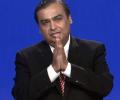
Billionaire Mukesh Ambani on Friday backed the proposed data privacy and cryptocurrency bills, saying India is putting in place the most forward-looking policies and regulations. Ambani, who has been a votary of Indians owning and controlling their own data and the nation drafting strict rules around how digital information is stored and shared, said nations have the right to build and protect strategic digital infrastructure. Stating that data is the 'new oil', he said every citizen's right to privacy has to be safeguarded. "India is putting in place the most forward-looking policies and regulations," he said at the Infinity Forum, hosted by International Financial Services Centres Authority (IFSCA).

E-way bill generation, which is related to paying Goods and Services Tax (GST) and a key high-frequency indicator of economic activity, may have fallen to a five-month low in April as more cities experience lockdowns due to a surge in Covid-19 cases. In April e-way bill generation may decline to 55-58 million, which is the lowest since at least November. On the higher side, it is a 17 per cent decline over March.

The Indian financial system's asset quality improved despite the pandemic, but it could be due to special dispensations by the regulator, and banks would likely see increased stress on their books once the schemes expire. According to the annual trend and progress report of the Reserve Bank of India (RBI) released on Tuesday, the data available for this financial year so far indicate that banks' bad debts have moderated while provision coverage ratios (PCRs), capital buffers as well as profitability indicators have improved relative to pre-pandemic levels.

After a sharp sell-off in the past two months, overseas investors were once again seen turning bullish on Indian equities. FIIs bought shares worth Rs 63.5 billion in the past five sessions, their highest weekly investment tally in many months.

TCS was the top gainer in the Sensex pack, rising over 3 per cent, followed by L&T, Bharti AIrtel, HCL Tech, Tata Steel, Bajaj Auto and Reliance Industries. NSE Nifty rallied 164.70 points to its fresh closing peak of 16,529.10.
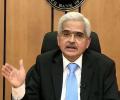
With inflation under control, the Monetary Policy Committee's (MPC's) job is to support growth because the economy had recovered well from the lows in the initial months of the pandemic, according to the panel's members, who met in the first week of this month. The minutes of the meeting show the Reserve Bank of India (RBI) governor in his statement said: "Given the sharp moderation in inflation along with a stable near-term outlook, monetary policy needs to continue with the accommodative stance to ensure that the recovery gains greater traction and becomes broad-based." Ashima Goyal, external member of the MPC, said: "The current macroeconomic configuration and its expected future evolution imply there is space for the MPC to continue to support the revival of the economy with inflation remaining in the target band."

High-frequency macroeconomic data suggests that worst is behind us and the economic cycle is turning.

ONGC was the top loser in the Sensex pack, shedding around 5 per cent, followed by SBI, Axis Bank, ICICI Bank, Bajaj Auto and Maruti. On the other hand, IndusInd Bank, HUL, Dr Reddy's, NTPC and Reliance Industries were among the gainers.

Many weekly indicators turn positive as economy prepares for Unlock 3.0.
The ongoing economic travails in India arise from a combination of severe macroeconomic difficulties and a sharp deceleration in the trend rate of economic growth.

While lenders create a hype around the services offered on digital platforms, customers think otherwise, given that frustration due to the quality of service has only increased, over the years.

TCS was the top gainer in the Sensex pack, rising around 4 per cent, followed by ONGC, ICICI Bank, HDFC Bank, Dr Reddy's, HDFC and HCL Tech. NSE Nifty advanced 76.65 points to 14,581.45.

'We expect the bull run to continue until economic growth continues.'
Top losers in the Sensex pack included ICICI Bank, Tata Steel, Vedanta, HDFC IndusInd Bank, Tata Motors, RIL and ONGC -- falling up to 4.45 per cent.

Zomato's initial public offer (IPO) is scheduled to open for subscription on July 14 and is priced between Rs 72 - 74 per share. At the upper end of the price band of the offering, the company aims to raise Rs 9,350 crore. Most analysts have given a 'subscribe' rating to the issue for listing gains.

Mahindra and Mahindra was the top gainer in the Sensex pack, advancing over 7 per cent, followed by Bajaj Finance, Reliance Industries, Maruti, TCS, HDFC Bank and Tata Steel. On the other hand, Bajaj Auto, HDFC, Bharti Airtel and HUL were among the laggards.

After rallying 543 points in the morning session and touching the 40,000-mark, the BSE Sensex surrendered all gains to close at 38,628.29, showing a loss of 839.02 points or 2.13 per cent. Similarly, the NSE Nifty tanked 260.10 points or 2.23 per cent to end at 11,387.50.
