
Buying or selling securities based on rumours about expected changes in tax rates or sectoral sops can backfire, advises Sarbajeet K Sen.

Titan was the top laggard in the Sensex pack, shedding 1.39 per cent, followed by HDFC, Axis Bank, Kotak Bank, HCL Tech and Tech Mahindra. On the other hand, Asian Paints, SBI, M&M, TCS, Bajaj Finserv and ICICI Bank were among the winners, spurting as much as 3.25 per cent.

Swiss brokerage Credit Suisse expects the economy to continue to show positive surprises and record up to 9 per cent growth in the next fiscal. For the current financial year too, the brokerage anticipates growth to be higher than the consensus forecast of 8.4-9.5 per cent, and printing in at around 10.5 per cent. As a policy, Credit Suisse does not provide absolute growth numbers in its forecast.

The Reserve Bank on Wednesday retained the GDP growth forecast at 9.5 per cent for the current fiscal but cautioned that the economic recovery is not yet strong enough to be self-sustaining and durable.
The department of investment and public asset management is racing against time to launch the LIC IPO, which could become the largest-ever listing on the Indian bourses. This would lead to some delay in the strategic divestment of IDBI Bank.

Falling valuations, slowing funding rounds and faltering investor sentiment seem to have prompted many start-ups to lay off employees in a bid to conserve cash. The latest to do so is SoftBank-backed Cars24, a leading e-commerce platform for pre-owned vehicles, which has laid off over 600 staff, according to sources in the know. The move, they said, is aimed at conserving cash amid cautious investor sentiment and a slowdown in funding.

'In macroeconomic policy, timing is all, and by leaving things too late, Mr Modi may have made around 50 seats in the Lok Sabha highly vulnerable,' says T C A Srinivasa Raghavan.

India's crude oil import bill is set to exceed $100 billion in the current fiscal year ending March 31, almost double its spending last year, as international oil prices trade at seven-year highs. India spent $94.3 billion in the first 10 months (April-January) of the ongoing financial year that started April 1, 2021, according to data from the oil ministry's Petroleum Planning & Analysis Cell (PPAC). It spent $11.6 billion in January alone when oil prices had started to surge.

Gita Gopinath, the IMF's Indian-American chief economist has been promoted as its First Deputy Managing Director recognising her exceptional intellectual leadership in helping the global economy and the Fund to navigate the "twists and turns" of the "worst economic crisis of our lives". Gopinath would replace Geoffrey Okamoto who plans to leave the International Monetary Fund early next year, Kristalina Georgieva, IMF's managing director announced on Thursday. Gopinath, who was scheduled to return to her academic position at Harvard University in January 2022, has decided to stay, she said. Gopinath, 49, has served as the first female chief economist of the Washington-based global lender for three years.

Bajaj Finserv was the top loser in the Sensex pack, shedding around 3 per cent, followed by Bajaj Auto, Bajaj Finance, L&T, Asian Paints, Dr Reddy's, ICICI Bank, HDFC Bank and RIL. NSE Nifty finished 101.45 points down at 14,929.50.

India's manufacturing sector activities moderated in August, as business orders and production rose at softer rates due to the pandemic and rising input costs, a monthly survey said on Wednesday. The seasonally adjusted IHS Markit India Manufacturing Purchasing Managers' Index (PMI) stood at 52.3 in August, down from 55.3 in July, indicating a softer rate of growth that was subdued and below its long-run average. The August PMI data pointed to an improvement in overall operating conditions for the second straight month.

Amid concerns over misleading claims of huge returns on cryptocurrency investment, Prime Minister Narendra Modi on Saturday chaired a meeting on the way forward on the issue, with government sources asserting that such unregulated markets cannot be allowed to become avenues for "money laundering and terror financing".

The Survey adopts an unfettered approach in thinking about the appropriate economic model for India. This endeavour is reflected in the sky blue cover of the Survey, Chief Economic Adviser Krishnamurthy V Subramanian said.

After a contraction in the current financial year, India's economy is forecast to bounce back with a sharp growth rate of 9.5 per cent next year provided it avoids further deterioration in financial sector health, Fitch Ratings said on Wednesday. The coronavirus pandemic will lead to shrinking of the already slowing economy in 2020-21 that started in April. Fitch Ratings forecast a 5 per cent contraction in the GDP in the ongoing financial year.

India's manufacturing sector activities witnessed the strongest rate of growth in three months in July amid improved demand conditions and easing of some local COVID-19 restrictions, a monthly survey said on Monday. The seasonally adjusted IHS Markit India Manufacturing Purchasing Managers' Index (PMI) rose from 48.1 in June to 55.3 in July, pointing to the strongest rate of growth in three months. In PMI parlance, a print above 50 means expansion while a score below 50 denotes contraction.

'India has entered an economic super-cycle driven by a housing cycle turnaround.'

Axis Bank was the top gainer in the Sensex pack, soaring over 6 per cent, followed by Bajaj Finserv, HDFC, Bajaj Finance, ITC, IndusInd Bank, SBI, ICICI Bank and Reliance Industries.

Reserve Bank of India (RBI) Governor Shaktikanta Das on Thursday said the country's economy has recovered stronger than expected from the initial impact of the COVID-19 pandemic, but there is a need to be watchful of demand sustainability after the end of festivities. Speaking at the annual day event of Foreign Exchange Dealers' Association of India (FEDAI), Das said there are downside risks to growth across the world and also in India. It can be noted that the Indian economy contracted by 23.9 per cent in the first quarter of the fiscal year, and the RBI expects the economy to shrink by 9.5 per cent in FY21.
IMF's Chief Economist Gita Gopinath will leave her job in January next year and return to the prestigious Harvard University, according to the global financial institution.

Paytm CEO Vijay Shekhar Sharma said on Wednesday that the company's share market performance has been in line with that of global peers in the sector over the past six months due to macroeconomic factors. "Macro factors like quantitative easing, free money due to US monetary policy and other parameters led to a spook in the market in terms of pricing the IPO. "Paytm's shares have received a similar response to that of global peers in the last six months...But that is not a complete reasoning.

M&M was the top gainer in the Sensex pack, rallying over 5 per cent, followed by Bajaj Finance, HDFC Bank, ICICI Bank, Bharti Airtel and Hero MotoCorp. NSE Nifty rose 65.30 points, or 0.71 per cent, to finish at 9,270.90.

Moody's Investors Service on Thursday said the credit downturn arising out of COVID-19 will be short-lived but most economies will not return to pre-pandemic activity levels until 2022. In the year since the World Health Organisation (WHO) declared COVID-19 a pandemic on March 11, 2020, the virus has disrupted the global economy and triggered a credit downturn accompanied by a spike in bond defaults. "The credit challenges arising from COVID-19 have been substantial, but the credit downturn likely will be relatively short-lived. "Risks remain more significant for the sectors most vulnerable to restrictions on their normal activities," Moody's said in a global report in coronavirus. Stating that most economies will not return to pre-pandemic activity levels until 2022, Moody's said it expects a slow and bumpy global recovery and uncertainty around the macroeconomic outlook remains much higher than usual.

The biggest headwind to the consumption story in FY23 is a sharp decline in government subsidies on food, fertiliser and fuel, and overall decline in revenue expenditure net of interest payments. This, analysts say, will adversely impact purchasing power of households at the lower end of the income pyramid, translating into lower spending on consumer goods and services.
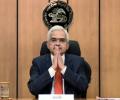
'Even if there is a third wave or a fourth wave, it is hard to see the economy will suffer like that (during the first wave).'

'Earning expectations remain strong.'

India's services sector remained in contraction territory for the third straight month in July, as business activity, new orders and employment declined further largely due to the COVID-19 pandemic and local restrictions, a monthly survey said on Wednesday. The seasonally adjusted India Services Business Activity Index rose from 41.2 in June to 45.4 in July, but was stuck in the red due to subdued demand conditions amid the COVID-19 crisis. In Purchasing Managers' Index (PMI) parlance, a print above 50 means expansion, while a score below 50 denotes contraction.

'For the next two years, we expect the bulk of earnings growth contribution from sectors like financials and energy, where the outlook remains positive, while the sectors which are linked to domestic consumption and are currently witnessing strains on margins have low salience for Nifty earnings.'

The net NPA ratio declined to 3.7 per cent in September 2019 from just below 4 per cent in March 2019, reflecting increased provisioning.

Despite unprecedented levels of uncertainty in Samvat 2077, investors have little to complain about on the returns front. The BSE Sensex delivered returns of 38 per cent in this period, while the Nifty registered a return of over 40 per cent. As is the case in bull markets, companies in the small- and mid-capitalisation basket outperformed the benchmarks, with returns almost twice those of frontliners.

Kotak Bank was the top loser in the Sensex pack, dropping over 2 per cent, followed by Sun Pharma, Bajaj Finserv, L&T, Bajaj Finance, HUL and Titan.
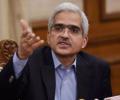
These are the highlights of RBI Governor Shaktikanta Das's statement and resolution of the Monetary Policy Committee (MPC):
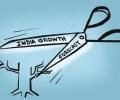
India's projected economic growth for 2022 has been downgraded by over two per cent to 4.6% by the United Nations, a decrease attributed to the ongoing war in Ukraine, with New Delhi expected to face restraints on energy access and prices, reflexes from trade sanctions, food inflation, tightening policies and financial instability, according to a UN report released on Thursday. The UN Conference on Trade and Development (UNCTAD) report downgraded its global economic growth projection for 2022 to 2.6 per cent from 3.6 per cent due to shocks from the Ukraine war and changes in macroeconomic policies that put developing countries particularly at risk. The report said while Russia will experience a deep recession this year, significant slowdowns in growth are expected in parts of Western Europe and Central, South and South-East Asia.

The central bank has not set a deadline for banks to conclude the stress-test exercise, but senior bankers opine that some were already looking at this, and will now fast-track it by September-end, when they will have a better picture of their books after the moratorium on the servicing of loans and a 180-day view on the performance of borrowers' accounts.

The government is mulling changes in the income tax laws to bring cryptocurrencies under the tax net, with some changes that could form part of the Budget next year, a top official said. Revenue secretary Tarun Bajaj said that in terms of income tax, some people are already paying capital gains tax on the income from cryptocurrency, and in respect of Goods and Services Tax (GST) also the law is "very clear" that the rate would be applicable as those in case of other services.

According to the latest report from Stranded Workers Action Network (SWAN), a voluntary effort started in March 2020 to mobilise relief for stranded migrant workers, almost 92 per cent workers, whom the group contacted between April 21 and May 31, had not received any money from their employer. This was after restrictions were imposed and work had stopped. The survey, which was conducted among 1,396 worker groups, adding up to 8,023 people that included 4,836 women and children, showed that 76 per cent of the workers had less than Rs 200 left with them.

Thanks to the recapitalisation by the government and measures taken by the central bank, collapse of any large housing finance company won't pose as big a risk as it had six months ago.

The employment situation remains dire. Whatever can be done to promote greater low-skill employment should be pursued aggressively, advises former chief economic adviser Shankar Acharya.

After several years of downgrades to the country's medium-term growth outlook, the estimates are likely to be upgraded now, Credit Suisse said in a report. The country's economy is showing signs of bottoming out, it said. According to the report, the consensus forecasts of GDP growth for FY2022 over FY2020 stopped falling after October 2020 (currently at (-) 1 per cent). Analysts at Credit Suisse expect these estimates to be revised upwards.

Fitch Solutions on Thursday said the new climate targets announced at the COP26 summit by Prime minister Narendra Modi pose an upside risk to its outlook for renewable growth in the country. With the new targets, it expected to see attempts to alleviate the issues regarding supply chains, manufacturing and project development that have long plagued renewable proliferation.

That's why he is now finally focusing on the two things that alone can help: Fiscal expansion -- from December onwards -- and supply management via amended laws and rules that affect business, notes T C A Srinivasa-Raghavan
