
Trade and business associations across India are organising a 'No UPI Day' on October 2 to protest the upcoming 0.4 per cent merchant discount rate (MDR) on Unified Payments Interface (UPI) transactions exceeding 2,000, effective from October 15.

The Congress party has strongly refuted claims by Parliamentary Standing Committee on Finance Chairperson Bhartruhari Mahtab that opposition MPs supported levying a Merchant Discount Rate (MDR) on UPI transactions. Congress MP Manish Tewari termed Mahtab's remarks "erroneous and fallacious," clarifying that the committee's recommendation was to "explore" revenue models, not to implement MDR. The party accused Mahtab of misleading due to his recent switch to the BJP.

Former NITI Aayog vice-chairman Rajiv Kumar has urged the government to maintain zero-fee UPI transactions for several more years, arguing that the benefits of UPI as a public good outweigh the costs. This comes amidst the government's recent decision to introduce a 0.4% fee on person-to-merchant UPI transactions above Rs 2,000 from October 15, a move that has drawn criticism.

The BJP has accused the Congress of spreading "fake news" regarding UPI transaction charges, asserting that the government has clarified that consumers will not be levied merchant discount rate (MDR) charges. This comes after the Congress criticised a government notification, alleging it paves the way for imposing fees on UPI transactions. The BJP has strongly refuted these claims, highlighting that most UPI transactions remain free and the government provides incentives to maintain a charge-free ecosystem for users.

Jammu and Kashmir Chief Minister Omar Abdullah has expressed support for the Centre's decision to levy charges on UPI transactions, citing the cost of maintaining the digital payment infrastructure. However, he emphasised the need to protect retail consumers from these fees. Abdullah also discussed the upcoming seven-day Assembly session, highlighting the government's commitment to smooth functioning and addressing MLAs' concerns, and touched upon efforts to tackle drainage issues affecting water bodies.

A Public Interest Litigation has been filed in the Supreme Court challenging the Centre's decision to impose a 0.4 per cent Merchant Discount Rate (MDR) on UPI person-to-merchant transactions exceeding Rs 2,000. The plea argues that the levy was introduced without adequate statutory safeguards, transparency, or public consultation, and questions its constitutional validity and potential adverse effects on merchants and consumers.
The Indian government has introduced a 0.4 per cent Merchant Discount Rate (MDR) on UPI payments exceeding Rs 2,000 made to merchants, effective from October 15, with a comprehensive framework set to take full effect by October 15, 2026. This policy aims to regulate transaction fees while protecting small merchants and person-to-person transactions.

Shares of fintech firms, particularly Paytm, saw significant movement after the Indian government introduced a 0.4 per cent fee on UPI transfers exceeding Rs 2,000 made to merchants, effective October 15.

The Congress party has strongly refuted government claims that its MPs on the Parliament Standing Committee on Finance supported a fee on high-value UPI payments. Congress leaders, including Gaurav Gogoi and Manish Tewari, stated that the "UPI tax" proposal was not specifically discussed by the committee, accusing the Modi government of diverting attention from public backlash and appeasing US companies. The government, however, cited the committee's report which pressed for a tiered Merchant Discount Rate (MDR) framework.
The Indian government has introduced a 0.4% Merchant Discount Rate (MDR) on UPI person-to-merchant (P2M) transactions exceeding Rs 2,000, effective October 15. This move ends nearly six years of fully free UPI payments, though person-to-person (P2P) transfers and small P2M payments remain free. The charges aim to bolster investment in UPI infrastructure, with specific exemptions and caps for essential sectors.

Opposition MPs have voiced strong criticism against the government's new fee on UPI payments exceeding Rs 2,000 to merchants, calling it "anti-people" and expressing widespread "outrage". The issue was raised in a Parliamentary Standing Committee meeting, where concerns were also flagged regarding the methodology of GDP growth calculation and the government's stance on Virtual Digital Assets.

Opposition MPs have voiced strong concerns regarding the government's decision to levy a 0.4 per cent fee on UPI payments above Rs 2,000 made to merchants, effective October 15. They argue that this "anti-people" move will negatively impact a large segment of the population, despite the finance ministry clarifying that the charge is on the merchant ecosystem and not directly on customers for P2P or small payments.

Trai has brought app-based spam calls under tighter regulations through new A2P call rules.

The Finance Ministry has clarified that the 0.4 per cent Merchant Discount Rate (MDR) on UPI transactions above Rs 2,000, effective October 15, is not expected to increase cash transactions or cause inflation. The ministry also dismissed allegations of US pressure influencing the decision, asserting that the policy aims to promote RuPay credit cards within the UPI ecosystem, and a monitoring mechanism will ensure the MDR burden is not passed on to consumers.

The Indian government has challenged Congress leader Rahul Gandhi's criticism of levying fees on UPI payments above Rs 2,000 to merchants. The government highlighted that a parliamentary standing committee, which included Congress MPs, had previously backed a tiered Merchant Discount Rate (MDR) framework for UPI. This move aims to ensure the financial sustainability of the UPI ecosystem and reduce its dependence on government subsidies, a concern raised by the committee due to the significant funding gap between allocations and operational costs.

Opposition parties, including Congress, TMC, and RJD, have strongly criticised the government's decision to impose a 0.4% Merchant Discount Rate (MDR) on UPI transactions exceeding Rs 2,000 made to merchants. They allege the move is a result of "American imperialism" and will lead to increased commodity prices, while the government maintains the charge is on merchants and not consumers, with person-to-person transactions remaining free.

The opposition has strongly criticised the government's decision to introduce a 0.4% Merchant Discount Rate (MDR) on UPI transactions above Rs 2,000 for merchants, effective October 15. They allege the move is a result of US pressure and will lead to increased commodity prices, calling it a "betrayal" of the common man. The government, however, clarifies that customers will not be charged, and the MDR applies only to merchants for larger transactions.

The Finance Ministry has dismissed allegations of US pressure influencing the 0.4% Merchant Discount Rate (MDR) on select UPI transactions. It clarified that NPCI guidelines prioritise RuPay credit cards on UPI and do not favour international cards. The ministry also asserted that the MDR, applicable to person-to-merchant transactions above Rs 2,000, is unlikely to increase cash transactions or cause inflation, with measures in place to prevent burdening consumers.
The Indian government has introduced a 0.4% transaction fee on Unified Payments Interface (UPI) payments exceeding Rs 2,000 for merchants, effective October 15, marking the end of nearly six years of free service. Person-to-person transfers and small-value transactions below Rs 2,000 remain free. The new Merchant Discount Rate (MDR) is capped at Rs 300 for transactions above Rs 75,000, with differentiated rates for essential sectors and investments, and safeguards to prevent costs from being passed to consumers.
The Indian government has introduced a 0.4% fee on UPI transfers above Rs 2,000 made to merchants, effective October 15, ending nearly six years of free merchant payments. This move led to initial rallies in fintech stocks like Paytm and Mobikwik, though some later pared gains. Person-to-person transactions and small payments remain free for customers, with the fee being a Merchant Discount Rate (MDR).

The Indian coal ministry announced that 147 commercial coal blocks auctioned since 2020 are expected to attract approximately 55,000 crore in capital investment, generate 490,000 jobs, and contribute significantly to state revenues.
Former Haryana Chief Minister Bhupinder Singh Hooda has criticised the newly introduced fees on UPI payments, stating they will lead to increased inflation for the common man. He dismissed government claims that customers would not be burdened, arguing that merchants would pass on the costs. Hooda demanded the immediate withdrawal of these fees, highlighting that the government's move contradicts its 'Digital India' initiative.
The Congress party has accused the Modi government of succumbing to US pressure by introducing a 0.4% Merchant Discount Rate (MDR) on UPI transactions over Rs 2,000 for merchants. The party alleges this move aims to benefit US card companies and links it to broader US actions against India, including tariffs and H-1B visa issues. The government, however, clarifies that consumers will not be charged.
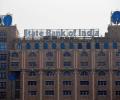
State Bank of India (SBI) anticipates that the newly introduced Merchant Discount Rate (MDR) on person-to-merchant (P2M) UPI transactions above 2,000, effective October 15, will enable it to recover the costs incurred in processing and facilitating these transactions, potentially even generating a small surplus.

Finance Minister Nirmala Sitharaman announced that the Goods and Services Tax (GST) Council's October 7 meeting will focus on 'GST 2.0' process reforms, including e-invoicing and input tax credit rules, while also addressing complex issues surrounding the taxation of the digital economy and cryptocurrency.

Trump has enacted a new law imposing significant sanctions on Russia and Iran, which could lead to tariffs of up to 100% on major energy importers like India and China.

Industry is pushing for GST reforms that would let companies use unused tax credits from one state to pay GST liabilities in another, potentially freeing up working capital trapped across state registrations.
The Congress party has criticised the Modi government over a notification regarding UPI transactions, alleging it paves the way for imposing fees, especially on transactions above Rs 2,000. Rahul Gandhi claimed the government is surrendering to American pressure, while Mallikarjun Kharge highlighted the potential burden on common citizens amidst inflation. The government's notification prohibits charges on UPI transactions up to Rs 2,000 but remains silent on higher amounts, sparking fears of a "Digital Payments Tax."

US President Donald Trump has extended the USD 100,000 fee on employers for H-1B foreign workers for another year, citing a significant decrease in registrations from large IT outsourcing firms. This move, aimed at protecting American jobs and ensuring highly-skilled workers, also includes a separate proclamation for enhanced scrutiny of H-1B applications, particularly concerning potential layoffs of US workers.

The Indian government has introduced a 0.4% transaction fee on UPI payments above Rs 2,000 for merchants, effective October 15, sparking a political row. The Congress party has labelled it a "Modi tax" and accused the government of succumbing to US pressure, while the BJP has defended the move, clarifying that consumers will not be charged and small vendors are protected. The finance ministry reiterated that the charge is on merchants, not customers.
The Indian government has introduced a 0.4% fee on UPI transactions above Rs 2,000 for merchants, effective October 15, sparking strong opposition from political parties and traders. Despite accusations of foreign influence and demands for a rollback, the finance ministry and top functionaries have stated there will be no reversal, citing the need for a self-sustaining digital payments ecosystem.

A member of the National Traders' Welfare Board (NTWB) has urged the central government to withdraw its decision to impose a 0.4 per cent Merchant Discount Rate (MDR) on UPI transactions exceeding Rs 2,000, effective from October 15. He warned that the new charge, which will be borne by merchants, could negatively impact business growth and lead to higher prices, contradicting the government's 'ease of doing business' policy.
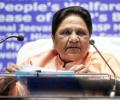
BSP chief Mayawati has criticised the Centre's decision to introduce a 0.4 per cent fee on UPI merchant transactions exceeding Rs 2,000, effective October 15. She termed it a "capitalist profiteering attitude" that burdens the common people, while the government clarified that the charge is on merchants and not customers for person-to-person transactions.
The opposition has intensified its criticism of the government's decision to impose a 0.4 per cent Merchant Discount Rate (MDR) on UPI transactions above Rs 2,000, effective October 15. Leaders like Rahul Gandhi and Jairam Ramesh allege the move is a result of US pressure, particularly from American card companies, and demand an immediate rollback, warning of increased costs for consumers.
Samajwadi Party president Akhilesh Yadav has criticised the BJP government's proposed Merchant Discount Rate (MDR) on high-value UPI transactions, calling it a "chungi" (tax) on digital payments. He alleged the move was an attempt to extract money from people's transactions, contradicting the government's goal of a trillion-dollar economy. The new UPI framework will impose a 0.4% MDR on person-to-merchant transactions above Rs 2,000 from October 15, with certain sectors having a flat Rs 5 MDR.

A Fast-Track Special Court in Hoshiarpur has sentenced a 33-year-old migrant labourer, Nanke Yadav alias Radhe Sham, to death for the aggravated sexual assault and murder of a five-year-old boy. The court termed it a 'rarest of rare' case, with the death sentence subject to confirmation by the Punjab and Haryana High Court.

The US House of Representatives has passed the Lindsey O Graham Sanctioning Russia and Iran Act of 2026, authorising President Trump to impose sanctions on Russia's energy sector and tariffs on countries like India and China that purchase Russian oil and gas. The legislation aims to curb Russia's ability to evade existing sanctions and reduce global dependence on its energy exports, despite some Democratic opposition to increased tariff authority for the President.

Indian stock market investors are closely monitoring crude oil prices, geopolitical developments in West Asia, and the implications of the US Sanctioning Russia and Iran Act, which could impose tariffs on countries, including India, that purchase Russian crude.

US lawmakers are racing to amend the Russia sanctions bill before recess. One amendment specifically names India, China, and other countries as potential targets for 100% tariffs due to their oil trade with Russia. Another significant amendment proposes to scrap the tariff section entirely, while others address presidential waiver powers and aid to Ukraine.

'Treating stock brokers as merchants for MDR is fundamentally misplaced.'
