
India's unemployment rate fell to a six-year low of 3.2 per cent in the July-June 2022-23 period, down from 4.1 per cent in the same period the previous year, according to the latest annual Periodic Labour Force Survey (PLFS) report. The report, released by the National Statistical Office (NSO) on Monday, showed a decline in unemployment rates in both rural and urban areas during the 2022-23 period to 2.4 per cent and 5.4 per cent, respectively, from 3.2 per cent and 6.3 per cent in the 2021-22 period. The unemployment rate for rural women (1.8 per cent) was lower than that for rural men (2.7 per cent) in 2022-23; in urban areas, the rate was higher for females (7.5 per cent) compared to males (4.7 per cent).

'The more educated a young person is, the higher the chances of him or her remaining unemployed.'

Despite declining by three percentage points in 2022-23 (FY23) compared to FY19, Odisha's unemployment rate remains higher than the average in India.

Youth unemployment (ages 15 to 29) is higher than the national average of 12.4 per cent in Telangana (14.2 per cent) and Rajasthan (13 per cent), followed by Chhattisgarh (6.7 per cent) and MP (6 per cent).

Employment in India saw a V-shaped recovery after being adversely impacted between April and June 2020 during the Covid lockdown and during April-June 2021, when the second wave struck, said Krishnamurthy V Subramanian, former chief economic advisor, in a paper released on Friday. Subramanian is now serving as executive director of the International Monetary Fund (IMF). From the official survey data of the National Sample Survey Organisation (NSSO), the paper titled 'Employment in India: Data Sources, Facts, and Trends' showed that both worker-population ratio (WPR) and labour force participation rate (LFPR) were higher, while the unemployment rate was lower during October-December 2022 when compared to the corresponding quarter in 2019.

India can sustain 8 per cent annual GDP growth and the conducive macroeconomic configuration may become a launching pad for a step-up in the country's growth trajectory, said an article on the 'State of Economy' in the central bank's March Bulletin published on Tuesday. Over the period 2021-24, gross domestic product (GDP) growth has averaged above 8 per cent. The global economy is losing steam, with growth slowing in some of the most resilient economies and high frequency indicators, pointing to further levelling in the period ahead, said the article authored by a team led by RBI Deputy Governor Michael Debabrata Patra.

'It feels like Assam is good just as a tourist spot and not a place to earn and live.'

India's urban unemployment rate declined in Q4FY23 to 6.8 per cent - the lowest in over four years -- after it stagnated at 7.2 per cent in the previous October-December quarter, reflecting improvement in the labour market, according to the Periodic Labour Force Survey (PLFS) released by the National Statistical Office (NSO) on Monday. The unemployment rate in current weekly status (CWS) terms for all ages in the March quarter was the lowest recorded in more than four years, from the time the NSO released India's first quarterly urban jobless rate for the December quarter in 2018. The jobless rate in urban areas had been on a continuous decline since the peak of 20.8 per cent in the April-June quarter of FY21.

The state's economic health is in focus as it has consistently breached the fiscal deficit in eight of the last 10 years since Telangana's formation.

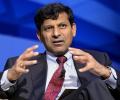
Former Reserve Bank Governor Raghuram Rajan said India will still remain a lower middle country if the potential growth rate remains at 6 per cent annually without any rise in population by 2047 (Amrit Kaal) and will be reaching the end of the demographic dividend by then. Speaking at a programme organised by Manthanon on Saturday, the economist said if the country does not grow faster, it will grow older (demographically) before it gets richer, which means there is the burden of an aging population to deal with also at that point. Rajan said the GDP growth in India for the past two quarters was in the region of 7.5 per cent and if one looks at the labor force participation, it is very low and when it comes to female participation, "it is the lowest in the G20".

'Investment creates capacity and reduces inflation. Income, employment, and savings rise.'

A remarkable story which helped in transforming a bureaucratic organization, to a customer centric organization. This experience may inspire several government / private organizations to modify or adopt digitisation to transform their business, notes Professor N Ravichandran (retd).

The unemployment rate for persons of 15 years and above in urban areas slipped to 8.7 per cent in October-December 2021 from 10.3 per cent in the year-ago quarter, showed a periodic labour force survey by the National Statistical Office (NSO). Joblessness or unemployment rate (UR) is defined as the percentage of unemployed persons in the labour force. Joblessness was high in October-December in 2020 mainly due to the staggering impact of the lockdown restrictions in the country, which were imposed to curb the spread of the deadly coronavirus.

Only one in four workers in Karnataka receive a salary, the lowest among the four industrialised states of India, a Business Standard analysis of the latest annual Periodic Labour Force Survey (PLFS) data shows. While 31.6 per cent workers in Gujarat receive regular wages (or salaries), followed by Tamil Nadu (30.3 per cent) and Maharashtra (29.4 per cent), only 25.7 per cent workers in Karnataka receive the same. The figure stands at 21.5 per cent at the national level, according to the 2021-22 PLFS data.

Buoyancy in the real estate sector along with improved construction activities created jobs and facilitated the return of migrant workers to cities, the Economic Survey for 2022-23 tabled in Parliament on Tuesday said. This assumes significance in view of loss of jobs due to lockdown restrictions imposed in various parts of the country from time to time amid different waves of pandemic since March 2020. The survey points towards sustained recovery in the economic activities during 2022-23 fiscal year.

Assuming we still have a Modi-led majority government after May 2024, there is no guarantee that reforms will move at anything more than a snail's pace, though we must be thankful even for that, notes R Jagannathan.

Unemployment rate for persons of age 15 years and above in urban areas dipped to 12.6 per cent in April-June 2021 from 20.8 per cent in the same month of the previous year, showed a periodic labour force survey by the National Statistical Office (NSO). Joblessness or unemployment rate (UR) is defined as the percentage of unemployed persons in the labour force. The joblessness was high in April-June in 2020 mainly due to the impact of lockdown restrictions in the country which were imposed to curb the spread of deadly coronavirus.

The unemployment rate is higher among urban women as was the case before the pandemic.

'In the short term the relationship will get worse.'

All the global transitions are working in India's favour, giving it the potential to become a force in today's uncertain world, but one of the country's biggest challenges is inclusive growth, Tata Sons chairman N Chandrasekaran said on Monday. In his address at the JRD Tata Oration, the head of the Tata group also asserted that Artificial Intelligence (AI) is here to stay and it will be beneficial if India prepares for it. Post the cold war era of relative stability and prosperity, the world appears to have given way to unpredictable conflicts and economic uncertainty, he said, adding that the pandemic resulted in supply chain shocks of gigantic proportion.

'When you do some job for a few hours, you are hardly earning enough to survive.'

'The government should act proactively to instil confidence in the private investors, and also boost the purchasing power of people directly or indirectly by ensuring minimum wages.'

Unemployment rate for all ages in urban areas rose to 9.3 per cent in January-March 2021 from 9.1 per cent in the same month of the previous year, showed a periodic labour force survey by the National Statistical Office (NSO). Joblessness or unemployment rate (UR) is defined as the percentage of unemployed persons in the labour force. The UR for in CWS (current weekly status) in urban areas for persons of age 15 years and above was 10.3 per cent in October-December 2020, the ninth Periodic Labour Force Survey (PLFS) showed.

The state's joblessness is three times higher than the national average of 7.8 per cent.

Growing at a robust rate due to economic reforms in key sectors like digitisation and infrastructure, India has emerged as a star performer and is projected to contribute more than 16 per cent of the global growth, the International Monetary Fund said on Monday. "What we have been observing for quite some time now is that India has been growing at a very robust rate. "It's one of the star performers when it comes to real growth when you look at peer countries.

The scarcity of resources is particularly evident in the case of Rajasthan compared to many other states.

The situation raises concerns about whether the promised freebies will once again push the state into a revenue deficit.

A combination of one of the lowest labour costs and a large surplus workforce, which will continue to grow until 2031, is one of the key competitive edges that India is leveraging to challenge its rivals in Southeast Asia in the race for a China-Plus-One strategy. Apart from India, the countries in the race to woo global companies that manufacture in China, as well as the supply chains to their country include Thailand, Indonesia, Malaysia, the Philippines, and Vietnam. On the labour front, India is a clear winner.

Improved monsoon, solid fiscal performance, and capex push by the public and private sectors augurs well for India's macroeconomic stability and growth, the finance ministry's monthly economic review for June 2023 said. But the report said that while India's domestic fundamentals remain strong, negative cross-border spillovers and adverse global developments could act as a deterrent in achieving the high growth path this financial year. "An improved matching of aggregate supply and aggregate demand in the Indian economy underpins the progress made in the control of domestic inflation and the consequent strengthening of macroeconomic stability," the review said.

Unemployment rate rose to 13.3 per cent in July-September 2020 as compared to 8.4 per cent in the year-ago period, according to a periodic labour force survey by the National Statistical Office (NSO). Joblessness or unemployment rate (UR) is defined as the percentage of unemployed persons in the labour force. The UR was 20.9 per cent in April-June 2020, the eighth Periodic Labour Force Survey (PLFS) showed.

'The pipeline of new industrial projects is the best I've seen in the last 10 years, and it looks solid enough to sustain for at least a few quarters,' points out Naushad Forbes, adding, 'It is only when we get back to the same labour force participation we saw before Covid that the economy will have truly recovered.'

'Karnataka's finances are much healthier than the Union government's, which is indebted to nearly twice the extent of the state.'

Get more people working, get more people working in modern manufacturing and services in our cities, and get people working better and longer, suggests Naushad Forbes, past president, CII.

Of the 3,893,149 registered applicants on the MP Rojgar portal, only 21 individuals have been successfully placed in government and semi-government positions since April 2020.
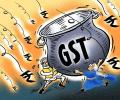
Economic Advisory Council to the Prime Minister (EAC-PM) chairman Bibek Debroy on Tuesday said the government was losing revenue due to the GST, which should be revenue neutral with a single rate. Speaking at an event organised by the Calcutta Chamber of Commerce in Kolkata, he however said that GST has led to a lot of simplification. "The ideal GST is one that has a single rate, and it was meant to be revenue neutral.

NITI Aayog has not said what the reasons were for having achieved or not having achieved what was sought to be achieved, or what lessons can be learned for the future, points out Aakar Patel.

Fitch Ratings on Tuesday affirmed India's sovereign credit rating at 'BBB-' with a stable outlook, saying the rating derives strengths from the country's robust growth outlook and still-resilient external finances. It said India's robust medium-term growth outlook is a key supporting factor for the rating. A clear improvement in corporate and bank balance sheets, which were under strain prior to the pandemic, is likely to facilitate a steady acceleration in investment in the coming years.

He spent his last days at the campus of Avani, an organisation he was associated with for three decades. Avani works towards the empowerment of the marginalized children, child labourers, migrant brickyard and sugar cane workers and the women in the labour force.

What the labour market statistics of March 2022 show is India's biggest sign of economic distress, points out Mahesh Vyas.
 © 2026 Rediff.com - Investor Information - Advertise with us - Disclaimer - Privacy Policy - Sitemap - Feedback - About us - Terms of use - Grievances