
India's main inflation measure, the Consumer Price Index (CPI), is set for another major update, even though it has been in its current form for only about 15 years.

The average Indian worker must labour for an extraordinary 160 full working days to afford Apple's latest iPhone 17 Pro.

With the reality of coalition politics staring the BJP in its face, this was inevitable, points out Ramesh Menon.
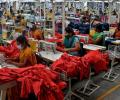
The share of women workers in registered factories submitting annual returns - working more than the statutorily-mandated maximum limit of 48 hours in a week - increased to a 11-year high of 33.6 per cent in 2019, shows the latest annual data released by the labour bureau. In comparison, only 27.9 per cent male workers worked more than the statutorily-mandated hours. Earlier in 2008, 39.2 per cent women workers had worked more than the prescribed work time.

A government panel examined the records of employees surveyed by Labour Bureau's quarterly enterprises surveys and mapped it with the EPFO's subscribers and found "unexplained variations" between the two.

Working hours cannot go beyond 48. Those who give a four-day week will have to provide three consecutive holidays after that.

Employment in nine selected sectors, including construction, manufacturing and IT/BPO, was at 3.08 crore in the April-June quarter of 2021-22, reflecting a growth of 29 per cent compared to 2.37 crore reported in the Economic Census of 2013-14, according to a survey. Labour and Employment Minister Bhupender Yadav on Monday released the report of Quarterly Employment Survey (QES) part (April to June 2021), of the All-India Quarterly Establishment-based Employment Survey (AQEES) prepared by the Labour Bureau. Announcing the results, Yadav said the estimated total employment in the nine selected sectors from the first round of QES is 3 crore and 8 lakh approximately against a total of 2 crore and 37 lakhs in these sectors taken collectively, as reported in the sixth Economic Census (EC 2013-14) reflecting a growth rate of 29 per cent.

The ministry of labour & employment on Friday announced a hike in variable dearness allowance for more than 1.5 crore workers in the central sphere by Rs 105 to Rs 210 per month. The hike, which will be effective from April 1, 2021, will also result in an increase in rate of minimum wages for central sphere employees and workers. It will be for scheduled employment in central sphere and applicable to the establishments under the authority of central government, Railway administration, mines, oil fields, major ports or any corporation established by the central government. These rates are equally applicable to contract and casual employees/workers.
The Prime Minister's Office has decided to set up a panel, led by former chief statistician T C A Anant, to deliberate on whether the enterprise-level quarterly data, which is released by the labour bureau, should be discontinued.
Most economists were of the view that the NSSO should release the data, as any move to withhold it will dent the image of country's statistical system.

India's jobless rate stood at 3.8 per cent during the last fiscal, with Daman and Diu and Gujarat topping the list of least unemployed among states and UTs.

The Labour Bureau survey, which analysed the period between June and September, noted that the country's overall employment increased by 315,000 during this quarter.
The number of new jobs created declined by around 65 per cent to 64,000 in April-June 2017, from 185,000 in January-March 2017, according to the Labour Bureau's quarterly report on employment.

Three years after the prime minister's election promise that his government would create 10 million jobs, the emerging picture is not pretty. Employment HAS TO take on a critical status in the government's agenda, says Shyamal Majumdar.

43 months after Modi's election promise that his government would create 10 million jobs, the reality does not paint a pretty picture, warns Shyamal Majumdar.

The implementation of four labour codes in one go from April 1 next year will usher in a new wave of reforms in industrial relations and also help in attracting more investments but employment generation will remain a key challenge in 2021. This year has also been a challenging year for the work force as well as for employers due to the outbreak of the COVID-19 pandemic. The government imposed a nationwide lockdown from March 25, which had an adverse impact on economic activities and resulted in exodus of migrant workers from large cities to their homes in the hinterland. Many migrant labourers lost their jobs and it took months for them to return back to their work places from their native places.

The NDA govt launched the Mudra scheme to give unsecured loans of up to Rs 10 lakh to small enterprises with the objective to provide self-employment

The payroll data has been revised downwards for each of the nine months between September 2017 and May this year

The unemployment rate in India has shot up to a five-year high of five per cent in 2015-16, with the figure significantly higher at 8.7 per cent for women as compared to 4.3 per cent for men, says a report by Labour Bureau.

ASK Wealth Advisors says 5 million, CMIE's estimate is 2 million and Ghosh & Ghosh said it was 7 million!

Gujarat had lowest unemployment rate in the country last fiscal, while Sikkim had the highest.

'In May 2020-2021, nearly 10 crores (100 million) lost jobs. 'Covid is not the reason for the present crisis. It aggravated the crisis.'
Added bulk of rise in labour-intensive sectors for September quarter; export segments fuel increase across the board

Terrorism has to be fought at its root of origination. Today we are just removing cobwebs but not killing the spider, asserts counter-insurgency expert Brigadier Narender Kumar (retd).
In what would surely come as intriguing information for policy-makers, a Labour Ministry survey has found that with an increase in education levels in the country, the unemployment rate was also increasing across age groups.

It is necessary that at least three million additional jobs (if not more) are created every year to ensure that there isn't an increase in the stock of unemployed, says Mahesh Vyas.

Job creation in metals and automobile sectors declined by 0.04 lakh and 0.05 lakh, respectively.
Why unemployment figures in India mean little.

The second annual employment and unemployment survey 2010-11, by the Labour Bureau, will show an improvement in the employment situation, officials said, while attributing the positive trend to a change in methodology, sample size and some extent to an improved labour situation in the country.
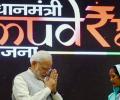
After taking benefit of the scheme, jobs increased by around 11 mn in establishments that took loans.

An upward trend in employment has been continuously observed since July 2009.

However, several other Indian products continue to be in this list.

With exports turning positive since November 2009, the sector added 1.87 lakh jobs during the January - March period over the previous quarter.

"As per the labour bureau inputs, some improvements are noticeable and there are possibilities of further improvements," labour and employment minister Mallikarjun Kharge told reporters in New Delhi.

Over five million man-days were lost last year due to strikes and lockouts in the country, while 61 units were closed down affecting around 2200 workers, an official report has said.

During this period, employment increased in almost all sectors except transport, which saw a marginal decline, according to the Labour Bureau, under the labour and employment ministry.

Consumer price-based index of products consumed by agricultural labourers rose to 17.21 per cent in December compared to 15.65 per cent in previous month, a Labour Bureau statement said on Wednesday. However, inflation measured by wholesale prices was 7.31 per cent in December.

A positive outcome in the year was when India signed an ILO-sponsored 'jobs pact' in July and put employment and social protection at the centre of crises responses.
The survey covered around 3,000 units from sectors like textiles, gems and jewellery, metal and metal products, leather, automobiles, as well as infotech and business process outsourcing. The latest survey says total employment in the surveyed units was 15.72 million. This is less than the 16.2 million jobs in the same units seen in September 2008.

A pick-up in farmer income could have a cascading impact on the rural economy, though agriculture is becoming a smaller part of India's overall rural incomes.
 © 2026 Rediff.com - Advertise with us - Disclaimer - Privacy Policy - Sitemap - Feedback - About us - Terms of use - Grievances