
Indian intelligence agencies are set to question Ugin Thinley Dorjee, the Tibetan spiritual leader known as the 17th Karmapa Lama. Intelligence agencies suspect the Karmapa Lama is allegedly operating as an agent for China in Himachal Pradesh and trying to set up China-friendly Tibetan institutions all along the Himalayan region.
Till now, apart from a few statements issued by his office, the young Karmapa Lama has refused to come out of his reserve and comment on the accusations levelled against him, particularly the cash donations received by his monastery but not deposited in a bank, and his relations with India. For the first time, he agrees to speak to Rediff.com, in an exclusive interview to Claude Arpi
Till now, apart from a few statements issued by his office, the young Karmapa Lama has refused to come out of his reserve and comment on the accusations levelled against him, particularly the cash donations received by his monastery but not deposited in a bank, and his relations with India. For the first time, he agrees to speak to Rediff.com, in an exclusive interview to Claude Arpi
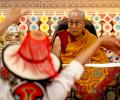
On July 2 or July 6, the Dalai Lama will reveal his mind on his successor. This makes Beijing extremely nervous as the Communist regime fully realises the importance of controlling the next Dalai Lama, points out Claude Arpi.
Karmapa Ugyen Thinley Dorje, head of the Kagyu school of Tibetan Buddhism, on Monday rubbished allegations that he was a Chinese spy and expressed readiness to make clarification to any government official in this regard.

'Isn't it in India's long-term interests that Tibet-related issues do not remain a point of discord in Sino-Indian relations?' asks Ambassador M K Bhadrakumar.

'The Dalai Lama is in a tearing hurry.' 'The 'reincarnation' card remains unplayed, and time is running out.' 'Is something big being planned for the event of Tibetan Buddhist leaders in Leh in November?' asks Ambassador M K Bhadrakumar.
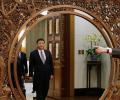
China's white paper on Asia-Pacific security cooperation extends an olive branch to India. It mentions India 15 times -- a record in all Chinese white papers issued so far. New Delhi's response will need to be carefully calibrated, says China expert Srikanth Kondapalli.

She lived for two-thirds of her life in India, adopted its national cause and customs, and took an Indian passport. She served a prison sentence in Lahore as part of Gandhi's protests against an Imperial power which happened to be her motherland. Freda Bedi delighted in confounding accepted definitions of identity.

'While wishing the Tibetan leader a long and healthy life, one can hope for a 'selection' of the Tibetan leader in the Indian Himalayas.' 'It is vital for Tibetan Buddhism, but it is also in India's political interests,' says Claude Arpi.
 © 2026 Rediff.com - Investor Information - Advertise with us - Disclaimer - Privacy Policy - Sitemap - Feedback - About us - Terms of use - Grievances