
India's nuclear energy share in total installed capacity remains limited, fluctuating between 1.9 per cent and 2.9 per cent from FY10 to FY24.
The Bill is likely to pave the way for amending two existing legislations -- the Atomic Energy Act 1962, and the Civil Liability for Nuclear Damage Act 2010.

India and Russia are expected to unveil a major nuclear energy partnership during Vladimir Putin's visit, potentially involving Russian small modular reactors and expanded cooperation as India pushes toward its 100-GW nuclear goal by 2047.
M R Srinivasan focused on the peaceful use of nuclear power at a time when the popular view among the 'hawks' was that India should build a nuclear arsenal as a deterrent.

KAPP-3, the country's 23rd nuclear power reactor, is a 700 MW Pressurised Heavy Water Reactor (PHWR) designed indigenously, the NPCIL said in a release. The components and equipment for the reactor have been manufactured by Indian industries, and its construction was undertaken by various Indian contractors, it said.
Residents of Surat, who fear for their lives after the heavy leakage at the nuclear plant, have started an online campaign to know about the incident.

Those worried say Kakrapar was lucky to have witnessed leakage of heavy and light water from the coolant channel without any serious damage to fuel bundles in the reactor.

With this, the unit has exited the construction phase and began the operational phase.
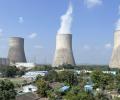
In a significant move, the United States on Wednesday removed restrictions on three Indian nuclear entities, over a week after National Security Advisor Jake Sullivan announced that Washington was finalising steps to 'remove' hurdles for civil nuclear partnership between Indian and American firms.

Whether the ambitious targets are achievable is a moot question as India's earlier target was 20,000 MW of nuclear power by 2020.
The Central Industrial Security Force had on Tuesday night called off the search operation within the plant premises.

AAERB's permission for RAPP-7 paves the way for the subsequent phases of reactor commissioning leading to its commercial electricity generation.

'Bharat Small Reactors are essentially similar to the existing 220 MWe Pressurised Heavy Water Reactors. The existing regulations are applicable for BSRs.'
'When the cause of the leak is identified, is the AERB going to order a shutdown of all the other pressurised heavy water reactors in the country to fix the underlying problem?'
Sustained campaign forces NPCIL to issue statement on Kakrapar fuel leak. But there is still not clarity on what went wrong.
'The leak is likely to continue for some time before it becomes stable, but this is something that NPCIL, who is the plant operator, will have to do. For this, we have to plan very carefully.'
Presenting the Union Budget, Sitharaman announced that the government will partner with the private sector to set up Bharat Small Reactors and in the research and development of small modular reactors.
According to officials, the leakage of heavy water that is used in cooling off the nuclear reactor core was detected around 9 am and it was fixed in some time and the temporary emergency was lifted shortly afterwards.
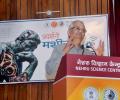
'Why should we disclose classified information to satisfy those who doubt our Hydrogen Bomb capability?'
Scientists are puzzled by what caused the mysterious nuclear leak at the Kakrapar Nuclear Power Plant in Gujarat last year, reveals Pallava Bagla.
The Nuclear plants in Gujarat, Uttar Pradesh and Rajasthan remained unaffected by the earthquake that hit the Pakistan-Iran border region this evening, impact of which was widely felt in northwest India.

While nuclear engineers cheer KNPP's first full operation, on nine other sites which house atomic reactors, scientists spend sleepless nights.
Nuclear Power Corporation's first indigenous 700 Mega Watt Pressurised Heavy Water Reactor at Kakrapar Atomic Power Project in Gujarat is expected to be commissioned in 2015.

According to J L Gautam, Operations Head of National Centre for Seismology, "The earthquake measuring 6.8 on the Richter scale at a depth of 190 km hit Hindukush mountain region at 3:58 pm."
India will complete the process of putting its 14 civilian nuclear facilities under IAEA safeguards by the year end as part of a commitment made under the Indo-US nuclear deal.

Here's the full text of President Ram Nath Kovind's customary address to the joining sitting of Parliament on the first day of the budget session.

India has said it is committed to implementing the highest safety standards at its nuclear power plants as it seeks to harness the benefits of atomic energy to meet its growing energy requirements.
 © 2026 Rediff.com - Investor Information - Advertise with us - Disclaimer - Privacy Policy - Sitemap - Feedback - About us - Terms of use - Grievances