
The country's reserve position with the International Monetary Fund also increased by $ 3.6 million to $ 3.344 billion.

India's foreign exchange reserves declined $1.15 billion to $571.56 billion for the week ended July 22, according to RBI data. The reserves has been declining amid continuing volatility in the rupee which has also significantly depreciated against the US dollar. In the previous reporting week, the overall reserves had declined by $7.54 billion to $572.71 billion.

India is expected to contribute 15 per cent to the global growth in 2023, an International Monetary Fund (IMF) official said on Tuesday. "Both India and China are expected to contribute 50 per cent of the global growth in the upcoming year (2023). "However, the share of India's contribution to global growth is expected to be around 15 per cent," Krishna Srinivasan, director, Asia and Pacific Department (APD) at IMF said at a roundtable with reporters from south Asian countries.
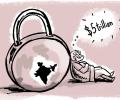
India decisively withstood global headwinds in 2023 and is likely to remain as the world's fastest-growing major economy on the back of growing demand, moderate inflation, stable interest rate regime and robust foreign exchange reserves. Despite widespread pessimism witnessed among the developed nations and the worsening geopolitical situation, India recorded a gross domestic product (GDP) expansion of 6.1 per cent in the March quarter. The growth moved up to 7.8 per cent in the June quarter and was 7.6 per cent in the September quarter. For the first six months of this fiscal, the growth was 7.7 per cent.

The country's foreign exchange reserves declined by $5.01 billion to $588.31 billion in the week ended July 1, according to RBI data released on Friday. In the previous week ended June 24, the reserves had increased by $2.73 billion to $593.32 billion. During the reporting week ended July 1, the fall in the foreign exchange reserves was due to a dip in Foreign Currency Assets (FCA), a major component of the overall reserves, and also in the gold reserves.

The International Monetary Fund (IMF) warned on Tuesday that India's general government debt (comprising both central and state government debt) could exceed 100 per cent of gross domestic product (GDP) in the medium term. It also cautioned that long-term debt sustainability risks are high due to the significant investment required to meet India's climate change mitigation targets. The Indian government, however, disagreed, arguing that risks from sovereign debt are extremely limited as it is predominantly denominated in domestic currency.

With India's G20 presidency ensuring several tangible outcomes, world leaders at the two-day summit in New Delhi hailed Prime Minister Narendra Modi for his 'decisive leadership' and for championing the voice of the Global South, sources said on Sunday.

The main Opposition BNP of former premier Khaleda Zia, 78, who is under house arrest, is boycotting the elections amidst violence.

Keen to capitalise on the growing geopolitical support from African nations after the recently concluded G20 Summit, India is working with the African Union to hold the fourth India-Africa Forum Summit later this year in Kenya's Nairobi, sources said. Prime Minister Narendra Modi is expected to attend the mega meet along with as many as 50 African leaders, they added. First held in New Delhi in 2008, the India-Africa Forum Summit marked India's initial diplomatic efforts to seek a comprehensive partnership with the African bloc of nations as a whole, at a time when China had begun its own outreach.

Continuing their downward trajectory for the third consecutive week, the country's foreign exchange reserves declined by $2.03 billion to stand at $617.648 billion in the week ended March 25, RBI data showed on Friday. In the week ended March 18, the forex kitty had declined by $2.60 billion to $619.68 billion. It had plunged by $9.65 billion to $622.27 billion in the week ended March 11.

Gandhi took a swipe at the government on Twitter by tagging a chart that showed IMF growth projections for 2020-21 for Bangladesh, Myanmar, Nepal, China, Bhutan, Pakistan, Sri Lanka, Afghanistan and India.

Growing at a robust rate due to economic reforms in key sectors like digitisation and infrastructure, India has emerged as a star performer and is projected to contribute more than 16 per cent of the global growth, the International Monetary Fund said on Monday. "What we have been observing for quite some time now is that India has been growing at a very robust rate. "It's one of the star performers when it comes to real growth when you look at peer countries.

Declining for the third consecutive week, India's forex reserves dipped by $77 million to reach $635.83 billion for the week ended December 10, RBI data showed on Friday. In the previous week, the reserves had slid by $1.78 billion to $635.90 billion. In the reporting week ended December 10, the dip in the forex kitty was on account of a decline in foreign currency assets (FCA), a major component of the overall reserves.
The country's foreign exchange reserves declined $9.65 billion to $622.27 billion in the week ended March 11, according to the latest data from the RBI. In the previous week ended March 4, the reserves rose $394 million to $631.92 billion. It touched a lifetime high of $642.45 billion in the week ended September 3, 2021.
The country's foreign exchange reserves increased by $394 million to $631.92 billion in the week ended March 4, the RBI data showed. In the previous week ended February 25, the reserves had declined by $1.425 billion to $631.527 billion. It touched a lifetime high of $642.453 billion in the week ended September 3, 2021.

Significantly, for the first time, the FATF put Myanmar in the "high risk jurisdictions subject to a call for action", often referred to as the watchdog's black list.

The country's foreign exchange reserves increased by $2.76 billion to $632.95 billion for the week ended February 18 on a healthy rise in the value of gold reserves and core currency assets, the RBI said on Friday. In the previous reporting week, the overall reserves had declined by $1.76 billion to $630.19 billion. During the reporting week, the rise in overall reserves was on account of an increase in the foreign currency assets (FCA), a major component of the overall reserves, the Reserve Bank of India's (RBI) weekly data released on Friday showed.

The BRICS nations on Friday underlined the need for using local currencies in international trade and financial transactions besides committing themselves to supporting rule-based open and transparent global trade. A joint statement issued at the end of the meeting of the BRICS Ministers of Foreign Affairs and International Relations, also pressed for a robust Global Financial Safety Net with a quota-based and adequately resourced International Monetary Fund (IMF) at its centre. It further said the process of IMF governance reform under the 16th General Review of Quotas, including a new quota formula as a guide, should be completed by December 15, 2023.

India's forex reserves decreased by $1.145 billion to $640.874 billion for the week ended on November 5 on a fall in currency and gold assets, the Reserve Bank said on Friday. The overall reserves had increased by $1.919 billion to $642.019 billion for the previous reporting week. Foreign currency assets, a major part of the overall reserves, decreased by $881 million to $577.581 billion for the reporting week, the RBI said in the weekly data.
The country's foreign exchange reserves declined by $1.76 billion to $630.19 billion in the week ended on February 11, the RBI data showed. In the previous week ended February 4, the reserves had risen by $2.2 billion to $631.95 billion. It touched a lifetime high of $642.45 billion in the week ended on September 3, 2021.

Kakar, a lawmaker belonging to Balochistan Awami Party (BAP), will lead a caretaker government until a new election later this year.
The country's foreign exchange reserves increased by $2.19 billion to $631.95 billion in the week ended February 4, RBI data showed. In the previous week ended January 28, the reserves had declined by $4.53 billion to $629.76 billion. It touched a lifetime high of $642.45 billion in the week ended September 3, 2021.
The country's foreign exchange reserves declined by $4.53 billion to stand at $629.75 billion in the week ended January 28, RBI data showed on Friday. In the previous week ended January 21, the reserves had decreased by $678 million to $634.29 billion. It touched a lifetime high of $642.45 billion in the week ended September 3, 2021.

India's decision to ban the export of non-basmati white rice has pushed up global prices, prompting multilateral lending agencies, such as the International Monetary Fund (IMF), to call for a reconsideration of the move. Though nothing has been spelled out yet officially, sources said, the government might consider requests for government-to-government sale of non-basmati white rice, especially to West African nations where India is a major supplier. Also, traders and exporters of specialty regional rice varieties like sona masuri or gobindo bhog feel that they have been short-changed.

Indian-American business leader Ajay Banga is poised to become the next President of the World Bank after the nomination period closed and no country proposed an alternate candidate for the prestigious post. In February, President Joe Biden announced that the US would be nominating Banga to lead the World Bank because he is "well equipped" to lead the global institution at "this critical moment in history." The World Bank on Wednesday closed a month-long window for nominations for its next president, with no alternatives announced to 63-year-old Banga.
The country's foreign exchange reserves declined by $678 million to $634.29 billion in the week ended January 21, according to RBI data. In the previous week ended January 14, the reserves had increased by $2.23 billion to $634.96 billion. It touched a lifetime high of $642.45 billion in the week ended September 3, 2021.

India's foreign exchange reserves declined for the second consecutive week, ending $1.78 billion down at $635.91 billion for the week ended December 3, RBI data showed on Friday. In the previous week, the reserves had slid by $2.71 million to $637.68 billion. In the reporting week ended December 3, the dip in the forex kitty was mainly on account of a decline in foreign currency assets (FCA), a major component of the overall reserves.

Get more people working, get more people working in modern manufacturing and services in our cities, and get people working better and longer, suggests Naushad Forbes, past president, CII.

The country's foreign exchange reserves declined by $878 million to stand at $632.74 billion in the week ended January 7, RBI data showed on Friday. In the previous week ended December 31, the reserves had dropped by $1.47 billion to $633.61 billion. It had touched a lifetime high of $642.45 billion in the week ended September 3, 2021.
In the steepest weekly fall ever, India's forex reserves slid by $11.17 billion to $606.47 billion as the currency came under pressure due to geopolitical developments, according to the Reserve Bank data released on Friday. For the previous reporting week ended March 25, the overall reserves had slid by $2.03 billion to $617.65 billion. The steep fall in the reserves was because of a decline in the core currency assets, which fell by $10.73 billion to $539.73 billion.
India's forex exchange reserves increased by $289 million to $640.401 billion for the week ended November 19, the Reserve Bank said on Friday. The overall reserves had declined by $763 million to $640.11 billion in the previous reporting week. They had touched a life time high of $642.45 billion in the week ended September 3, 2021.

Pakistan-India bilateral relations remained frozen for the fourth year over the vexed Kashmir issue but analysts hope the strained ties could be repaired if Nawaz Sharif becomes the prime minister for a record fourth time in the general elections in February in the absence of his main challenger Imran Khan who is in jail in multiple cases.

The country's foreign exchange reserves declined by $1.47 billion to $633.61 billion in the week ended December 31, RBI data showed. In the previous week ended December 24, the reserves dipped by $587 million to $635.08 billion. It touched a life-time high of $642.45 billion in the week ended September 3, 2021.
India's forex reserves decreased by $587 million to $635.08 billion for the week ended December 24, the RBI said on Friday. In the previous week ended December 17, the overall reserves had decreased by $160 million to $635.67 billion. The kitty had touched a lifetime high of $642.45 billion in the week ended September 3, 2021.

The African Union on Saturday joined the G20 after all member countries accepted Prime Minister Narendra Modi's proposal to bring the key bloc of the Global South to the high table of the world's top economies, a major diplomatic achievement of India's presidency.

The summit is being attended by more than 30 heads of state and top officials from the European Union and invited guest countries and 14 heads of international organisations.
The country's foreign exchange reserves declined by $160 million to stand at $635.667 billion in the week to December 17, RBI data showed on Friday. In the previous week ended December 10, the reserves had decreased by $77 million to $635.828 billion. It touched a lifetime high of $642.453 billion in the week ended September 3, 2021.

A recession is unlikely in the APAC region in the coming year, although the area will face headwinds from higher interest rates and slower global trade growth, Moody's Analytics said on Thursday. In its analysis titled 'APAC Outlook: A Coming Downshift', Moody's said India is headed for slower growth next year more in line with its long-term potential. On the upside, inward investment and productivity gains in technology as well as in agriculture could accelerate growth.

What some of our leaders were up to on Tuesday, November 15.
The country's foreign exchange reserves grew by $2.23 billion to $634.96 billion in the week ended January 14, RBI data showed. In the previous week ended January 7, the reserves had declined by $878 million to $632.74 billion. It touched a lifetime high of $642.45 billion in the week ended September 3, 2021.
