
Finance Secretary Arun Ramanathan said the government was closely watching the trickle-down effect of the first two stimulus packages and will respond to the evolving situation.
Pranab Mukherjee in the Interim Budget for 2009-10 announced that the government has given in-principle or final approval 50 infrastructure projects worth Rs 67,700 crore (Rs 677 billion).
Given the debilitating effects of the economic slowdown on various industry sectors and indeed on the nation's GDP growth, the government would have been well within its right to push through a populist budget under the garb of not letting the country's economy drift till such time as a new government is put in place after the general elections.
The United Progressive Alliance (UPA) government has launched many new schemes to provide steady monetary assistance to weak and downtrodden people in the society.
The praise for peasants, most of whom are subsistence farmers, comes ahead of general elections due in a few months. The minister presented statistics to hard-sell the government's initiatives to prop up the agriculture sector and improve the conditions of roughly about 60 per cent of the country's population depending upon it.
India's foreign direct investment inflow between April and November 2008 was $23.3 billion, a growth of 45 per cent compared with that during the same period in 2007, said union Foreign Minister Pranab Mukherjee, who is holding additional charge of the finance portfolio while presenting the Interim Budget for 2009-10 on Monday in parliament.
The government has pegged fiscal deficit at 5.5 per cent of gross domestic product for the next financial year, against the revised figure of 6 per cent in the current financial year. The fiscal deficit target for the current fiscal was 2.5 per cent. However, fiscal measures initiated in the wake of the global economic downturn and reduction in revenue collection have impacted resource mobilisation resulting in widening of deficit.
Railway Minister Lalu Prasad on Friday left freight rates unchanged in his interim budget to keep traffic from shifting to road transport that has become cheaper following cut in diesel prices.
A fiscal deficit of 6.8 per cent of GDP, up from 5.5 per cent postulated in February's Interim Budget, means an additional stimulus of nearly Rs 80,000 crore (Rs 800 billion).
The government on Monday allocated an increased sum of Rs 3073 crore for the Sports Ministry in the Union budget for fiscal 2009-10, and also proposed to sanction Rs 3472 crore for next year's Commonwealth Games. The budget for the Ministry of Youth Affairs and Sports has been increased by Rs 1480 crore than what was proposed in the interim budget presented before the Lok Sabha elections.

They may be on the same side of political power, but that did not stop Railway Minister Mamata Banerjee and her predecessor Lalu Prasad from taking pot-shots at each other during the presentation of Railway Budget in the Lok Sabha.
Presenting the Railway Budget on Friday in the Parliament, Railway Minister Mamata Banerjee proposed an outlay of Rs 40,745 crore for 2009-2010, which is 2,840 crore more than the allocation proposed in the interim budget.

The finance ministry is racing to prevent a situation in which a second vote-on-account would be required. This is why it has announced it will present its Budget on July 6, and aim to get it passed in Parliament by July 31.
M Govinda Rao hopes the Budget will contain the deficit while continuing to create conditions for pushing growth.

GST will create a single, unified Indian market

This is Jaitley's first overseas visit since his kidney ailment was confirmed in April last year.
Do you think this move will help the BJP win the ensuing elections? Tell us.\n\n
Stock market expert Rajan Malik offers some valuable tips.
Revival hopes of the diamond industry have been dashed as gems and jewellery manufacturers feel that little help has been provided to them in the Interim Budget for 2009-10.
Troubles for the textile industry, which has been grappling with financial blood-letting both in international and home markets, are likely to deepen further. While there are fears of half-a-million more job losses, exports from the sector are likely to take a hit of about Rs 15,000 crore (Rs 150 billion), according to industry estimates.
For a capital-scarce country like India, it is criminal if the government fails to manage its own expenses.
Pranab Mukherjee's speech was so boring that half of the Treasury benches were found napping. Newsmen peeped from the Press Gallery to see the mood of the MPs.
The National Investigation Agency, set up in the wake of audacious strikes in Mumbai, has been allocated Rs 10 crore for 2009-10.
He said most of the states where farmers were committing suicide were being run by Congress or its United Progressive Alliance constituents. "We (NDA government) had left the country in a healthy economic state. Now things are bad," he alleged.
The corpus of the Rural Infrastructure Development Fund (RIDF), which is the main instrument of the government to channelise bank funds for financing rural infrastructure, has been increased from Rs 5,500 crore (Rs 55 billion) in 2003-04 to Rs 14,000 crore (Rs 140 billion) for the year 2008-09 ensuring greater availability of funds for its activities.
While the plan allocation for agriculture has gone up by 300 percent between the period 2003-04 and 2008-09, the agriculture credit disbursement too has increased from Rs 87,000 crore (Rs 870 billion) to Rs 2,50,000 crore (Rs 2500 billion) up to 2007-08.
Refraining from tinkering with tax and duty rates in the interim Budget, Finance Minister Pranab Mukherjee on Monday made a huge allocation of Rs 30,100 crore (Rs 301 billion) to government's flagship rural employment programme and many other schemes in a bid to counter the economic recession.
The welfare of the common man continues to be the top priority. The minister has reduced fares for the fourth successive year.
The outlay for the flagship programmes, which -- in addition to the Bharat Nirman scheme -- include the National Rural Employment Guarantee Scheme, Sarva Shiksha Abhiyan and others, is proposed to be raised to Rs 1,23,000 crore (Rs 1,230 billion) during 2009-10 from Rs 90,000 crore last year, representing an increase of about 37 per cent.
Here is a quick round up of what budget 09-10 is expected to hold for the Indians this coming year.
Apart from this, the health sector as a whole has an allocation of Rs 4,447 crore (Rs 44.47 billion). The finance Minister said the response for Rashtriya Swasthya Bima Yojana, which was operationalised last year, has been very good.
Finance Minister Pranab Mukherjee presented the Budget for 2009-10 on July 6. Following is the Budget Speech of Finance Minister Pranab Mukherjee:
He's the first finance minister to present Budgets on either side of an election and the first to do so after a quarter-century gap.
The Centre's fiscal deficit for the first two months (April-May) of the current fiscal has increased to Rs 90,758 crore, which is 27.3 per cent of the Interim Budget estimate, according to the Controller General of Accounts data released on Tuesday. The Budget estimate for the fiscal deficit in the year 2009-10 is Rs 3,32,835 crore.
The finance minister should attempt to quickly get back to a path of fiscal consolidation.
The Budget will be presented in the first week of July, Finance Minister Pranab Mukherjee said.
As part of its fiscal tightening measures, the finance ministry has asked all government departments not to seek any increase in their allocations for 2009-10 over and above what has already been provided for in the Interim Budget presented on February 16.

CBDT has been given a collection target of Rs 5.69 trillion in personal income tax in the fiscal year 2019-20 - 19.2 per cent more than the Rs 4.77-crore collection in the previous year.
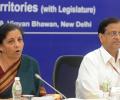
Subhash Chandra Garg, the former finance secretary who was shunted out of the finance ministry within three weeks of Modi-2.0 government's first budget last year, on Saturday alleged that new Finance Minister Nirmala Sitharaman got him transferred out.
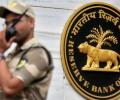
A high-level panel led by former RBI governor Bimal Jalan, set up to decide the appropriate capital reserves that the central bank should maintain, on Wednesday finalised its report.
 © 2026 Rediff.com - Investor Information - Advertise with us - Disclaimer - Privacy Policy - Sitemap - Feedback - About us - Terms of use - Grievances