
The polytechnic graduate is on the front line of our war to establish a vibrant manufacturing sector in India, says Ajit Balakrishnan.

As the new ecommerce paradigm works its way through multiple sectors of the economy it is likely to encounter legal challenges, says Ajit Balakrishnan.

A new book may help companies in getting corporate social responsibility right, notes Ajit Balakrishnan.

We are all 'Chasing the Monsoon', notes Ajit Balakishnan.

Why, centuries after the French Revolution promised an end to feudalism, do political dynasties persist -- even in democracies, asks Ajit Balakrishnan.

Students' flagging interest in the written word is because of a generational digital divide, says Ajit Balakrishnan.

Across the world, middle class families are dealing with the consequences of competition to get into high-quality institutions.

Content marketing is perhaps part of the tectonic shift that is under way in media with the advent of the web, says Ajit Balakrishnan.
.jpg)
In India, the need to find a solution for the jobs problem is perhaps even more urgent considering the oft-quoted number of a million young people arriving every month looking for jobs.

An HR person's job is all about talent management.

Ajit Balakrishnan rewinds to a decade when mobile phones were unheard of and when an IIM degree had a different purpose and value.

A new generation of scholars -- this time, sociologists and anthropologists, who hitherto have been busy with researching social practices of primitive tribes and social structures like India's caste system -- are starting to cast their eyes on the financial sector.

How did Greece, the country of Archimedes and Socrates and Plato and Pythagoras, come to such dire straits, asks Ajit Balakrishnan.

Facebook owns WhatsApp and Microsoft owns Skype, the two services that are at the centre of the current "net neutrality battle".

Retirement blues can sometimes result in actions that are dysfunctional, notes Ajit Balakrishnan.

The international investors who are investing, merging and shaping India's new ecommerce start-ups are betting that if China can produce an Alibaba with an expected market value of $ 170+ billion market value when it does its IPO, India should produce at least one or two with a $5bn+ market value, says Ajit Balakrishnan.

India needs to build an economic system that will provide adequate capital to budding entrepreneurs, says Ajit Balakrishnan.

May be the strong United States growth will lead the world back to a period of growth and help us all put this painful recrimination behind us.

The American university, once the envy of the world, is in crisis, notes Ajit Balakrishnan in his latest column.

It is only gradually dawning on us that some of the information we have trustingly shared with commercial service providers can be used against us when we apply for a job or when we apply to admission to a college, says Ajit Balakrishnan.

Successful parents are increasingly faced with continuing to support children in their 20s or 30s.

Neither pharma nor IT would have become the stars of the economy without the active but largely invisible hand of the Indian State, says Ajit Balakrishnan.

And then we are in our mid-60s and a time of reckoning with one's life - if one believes in Erikson.

The e-commerce marketplace is like an information intermediary these days.

The step forward in marketing could be a move to bypass the media and towards owning it directly, says Ajit Balakrishnan.

Now, the world over, policymakers are dusting off their copies of Keynes' classic, The General Theory of Employment, Interest and Money, and figuring out whether there are any answers there to our own challenges of growing our economies.

Will China's new military reforms endanger Xi Jinping's rule?

Some 800 million or more Indians gaze at their mobile phones all day. Whoever can crack what's news on the mobile phone for them and their families, for a nominal payment of Rs 10 a month, is a winner, says Ajit Balakrishnan.

The government is by far the largest employer; job security is guaranteed for government employees, and their wages are set through once-in-10-year Pay Commission.

'Make in India' could suffer the same fate as did privatisation and the command economy, says Ajit Balakrishnan.
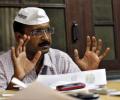
Aam Aadmi Party member Sanju Verma on what constitutes modern-day anarchy and why AAP is the only political party that can make a real difference.

Without civilisational moorings, India, more a sub-continent than a country, could not exist. Primacy of Dharma has been the cornerstone of Indian civilisation, says Colonel Anil A Athale (retd).

A special episode of the Prime Minister's radio broadcast Mann ki Baat featuring US President Barack Obama and Prime Minister Narendra Modi was aired on Tuesday night. The 35-minute special broadcast of 'Mann Ki Baat', which marked the rapport between Modi and Obama, touched on issues ranging from public health and personal inspirations of the two leaders, both of whom have come up from simple beginnings to assume to top positions of the respective countries. What follows is a transcript of the Mann ki Baat episode.
 © 2026 Rediff.com - Investor Information - Advertise with us - Disclaimer - Privacy Policy - Sitemap - Feedback - About us - Terms of use - Grievances