
'Exiting during corrections tends to lock in losses. Patient investors have benefited from holding through similar drawdowns in past cycles.'

Gold prices surged by Rs 4,000 to touch an all-time high of Rs 1,37,600 per 10 grams in the national capital on Monday, tracking firm global cues, according to the All India Sarafa Association. The precious metal of 99.9 per cent purity had closed at Rs 1,33,600 per 10 grams on Friday.

'We expect modest returns in 2026 versus the steep gains seen over the past few years.'

The Reserve Bank on Wednesday revised upward its growth estimates for the current fiscal year to 6.8 per cent and lowered its inflation projection to 2.6 per cent based on an above-normal monsoon and the rationalisation of GST rates.

Average employee salaries in India are set to increase by 9 per cent in 2026, with a renewed focus on short-term incentives and skills-based systems, a report said on Wednesday. According to Mercer's Total Remuneration Survey 2026, organisations in India are shifting toward broader, more holistic value propositions and the top factors influencing salary increases include individual performance, inflation and the organisation's competitiveness in the job market, among others.

In half a century, actors have aged or passed away, the shape of the city has altered, the film industry has changed beyond recognition, most single screens have made way for multiplexes, audiences tastes have changed, rural life is very different now, and inflation has devalued the rupee. But a great film is forever. Deepa Gahlot salutes Sholay, as it re-releases in theatres.

'Previously, contributing only 25 per cent of material costs, states now face burdens of 40 per cent to 100 per cent of total costs, ensuring poorer states will curb project approvals, directly stifling work demand.'

Economic Advisory Council to the Prime Minister (EAC-PM) member Sanjeev Sanyal on Thursday said he is not concerned about the rupee at all, arguing that even China and Japan witnessed exchange rate weaknesses during their high growth phases.

Wholesale price inflation moderated to 2.31 per cent in January due to the decline in prices of food items especially vegetables, government data released on Friday showed. The Wholesale Price Index (WPI) based inflation was 2.37 per cent in December 2024. It was 0.33 per cent in January 2024.

While gold continues to provide safety after its strong 2025 rally, well-chosen real estate investments held with a long-term view remain attractive.

The Indian rupee, swaying through multiple headwinds, tiding over global trade disruptions and massive foreign fund outlfows, is unlikely to arrest its descent until tariff impact overhangs, notwithstanding robust domestic macroeconomic tailwinds. The Reserve Bank of India (RBI), which sees the rupee's depreciation as a silver bullet to offset the tariff shock, expects the currency to find its stable course once India reaches a trade deal with its largest trading partner, the US.

'Now there is no fight between us (Thackerays); now the fight is with them.'

Among the Sensex constituents, Eternal, Tata Steel, Kotak Mahindra Bank, UltraTech Cement, Maruti Suzuki India, Sun Pharmaceuticals, Tech Mahindra, HDFC Bank, Tata Motors Passenger Vehicles, Infosys, Trent, Mahindra & Mahindra, Reliance Industries and HCL Technologies were the gainers. However, Asian Paints, Bharti Airtel, Bajaj Finance, PowerGrid, Axis Bank, ICICI Bank and Titan were among the laggards.
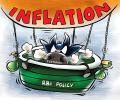
Retail inflation slipped to seven-month low of 3.61 per cent in February mainly due to easing prices of vegetables, eggs, and other protein-rich items, creating space for the RBI to go for another cut in interest rate next month.

The government has circulated among members ofParliament a new draft of the Amendment of Insurance laws Bill, 2025, proposing stricter safeguards on the utilisation of life insurance funds and other specified insurance business funds, particularly for dividend payouts, bonuses, and servicing of debentures.

A scam of nearly Rs 11 crore in the mid-day meal scheme was brought to light in Uttar Pradesh's Balrampur district, leading to a first information report (FIR) against 45 people and the arrest of five individuals, including a village head and an assistant teacher, police said on Thursday.

Former IPS officer Amar Singh Chahal allegedly shot himself after claiming he was duped of Rs 8.10 crore by cyber thugs. He was one of the accused in the 2015 police firing cases related to anti-sacrilege protests in Faridkot.

Investing in gold trumped most other asset classes in terms of compounded annualised returns over the long term, suggests a report by FundsIndia.

'Earnings growth will be the main driver of India's market in 2026, with profits expected to rise 9% to 10% in H2 FY26 and accelerate to 12% to 15% in FY27.'

Even if the Reserve Bank of India's Monetary Policy Committee decided to hold interest rates in the October meeting, it acknowledged the scope for further rate cuts while waiting for the impact of the past steps to play out.

Mundane as it may seem, this is in some ways a metaphor for the challenges facing the nation, argue Arvind Subramanian and Devesh Kapur in their new book, A Sixth Of Humanity.

Deloitte India on Thursday projected India's economy to grow 6.7-6.9 per cent in the current fiscal amid buoyant demand and policy reforms. Indian economy grew 7.8 per cent in the April-June quarter of current fiscal.

The consolidated net profit of Marico, the maker of Parachute coconut oil, declined 0.7 per cent in the second quarter (July-September) of 2025-26 (Q2FY26).
So far this year, the rupee has fallen by 4.2 per cent, the worst among its Asian peers.

Domestic PMI data, US Federal Reserve meeting minutes and the progress on India-US trade deal negotiations are likely to influence movement in the equity market in the week ahead, according to analysts. Moreover, the trading activity of foreign investors would also influence the equity market trends.

Wholesale price inflation rose to 2.37 per cent in December 2024, led by spike in manufactured products even though prices of food items eased, government data released on Tuesday showed.

The Indian government has expressed its disagreement with the IMF staff's 'baseline' assumption that the 50 per cent US tariffs on its goods exports 'would remain in place indefinitely', based on which the staff pegged the country's GDP growth at 6.6 per cent this year, and pared its 2026-27 projection by 20 basis points to 6.2 per cent.
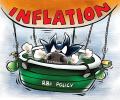
The Reserve Bank of India (RBI) has projected retail inflation at 4.2 percent for the next financial year beginning April while retaining the forecast for 2024-25 at 4.8 percent. The central bank attributed the expected easing of inflation to good kharif production, winter-easing in vegetable prices and favorable rabi crop prospects. However, the RBI also noted that continued uncertainty in global financial markets coupled with volatility in energy prices and adverse weather events presents upside risks to the inflation trajectory.

Ask rediffGURU Reetika Sharma your insurance, mutual fund and personal finance-related questions.

Amid the ongoing global tariff war, Reserve Bank Governor Sanjay Malhotra on Wednesday said he is more worried about its impact on growth than inflation. Speaking to the media after presentation of the first bi-monthly monetary policy for the current financial year, Malhotra said, RBI has reduced the growth forecast for 2025-26 by 20 basis points to 6.5 per cent.

Retail investors are moving away from a buy-and-hold approach and towards more informed short-term positioning, recent investment patterns show.

These losses increase insurance premiums for customers and reduce insurer margins on the other.

Filmmaker Vikram Bhatt and his wife have been arrested in connection with a Rs 30 crore cheating case filed in Rajasthan. They are accused of defrauding an Udaipur-based businessman under the guise of producing a biopic.
Filmmaker Vikram Bhatt and his wife have been arrested in connection with a Rs 30 crore cheating case filed in Rajasthan. They are accused of defrauding an Udaipur-based businessman under the guise of producing a biopic.

From Rs 73k to over Rs 1.2L between January-December 2025 -- is buying gold in 2026 still sensible?

India's manufacturing sector activity strengthened in October, buoyed by Goods and Services Tax relief, productivity gains and tech investment, even as international sales rose at a weaker pace, a monthly survey said on Monday.
Stock market investors this week would track the renewed tariff tensions between the US and China, domestic inflation data, besides, quarterly earnings from blue-chips HCL Tech, Infosys and Reliance Industries would also drive the momentum in equities, analysts said.

'Trump had done a deal with the current regime minus Maduro. The current regime is giving Trump entry into Venezuelan oil. They are obeying him and doing whatever he says.' 'They are happy because they have saved their heads by sacrificing only two, Maduro and his wife. Thousands of Venezuelan military leaders would have been jailed or killed in American action had Maduro stayed in power.'

Continuing the downward trend, retail inflation fell to a five-month low of 4.31 per cent in January, mainly due to a decline in the prices of vegetables, eggs, and pulses. The Consumer Price Index-based retail inflation was 5.22 per cent in December and 5.1 per cent in January 2024. The previous low inflation was in August 2024 at 3.65 per cent.

'The real story of 2025 is that India officially stopped being a 'market of the future' and started acting as the world's primary economic engine.'
