
Mukherjee, who arrived in Washington on Monday, would be leading the official Indian delegation to the CEOs Forum meeting.

The main focus of US Secretary of State Condoleezza Rice's talks in New Delhi will be the increasingly cordial Indo-US relations.
Describing the nuclear deal as a "landmark" in Indo-US relations, Prime Minister Manmohan Singh on Monday said the two countries are finalising details to make the pact fully operational, a step that will remove restriction on the flow of nuclear technology and open a large area of commercial opportunity for American businesses.
Menon said the current global economic crisis figured prominently during his meetings with officials of the Obama administration and congressional leaders in his trip to Washington.
Stating that India is committed to move forward on the deal, India's new Ambassador to the US Meera Shankar said, "This (deal) is very high on our priority. We are conscious of the fact that it was the US government which did the heavy hitting, if I may use a cricketing metaphor to get this deal through. We would very much like to move forward in a concrete way with agreements for building nuclear reactors with US assistance in India."
The White House has said the Indo-US relationship has been exceedingly well in the last eight years of Bush regime and is expected to continue during the incoming Obama Administration.
India and the United States enjoy excellent relations and these can be further strengthened through extensive trade and business between the two countries, said Senator Satveer Chaudhary of Minnesota state.
Assistant US Secretary of State Robert Blake said that both the sides hoped to sign the end-use monitoring agreement in defence field under which the US would be able to supply sensitive technology to India.
According to census data, Indian-Americans were the fastest-growing ethnic group in the 1990s, and remained one of the largest sources of legal immigration to the United States, the report noted.
High-technology trade can cover anything from equipment that could be used to build nuclear-capable missiles to high-speed computers.
United States Secretary of State Hillary Clinton will arrive in New Delhi on Monday to attend the second round of Indo-US strategic dialogue on Tuesday during which a host of key bilateral, regional and international issues including situation in Afghanistan and Pakistan and security cooperation in the backdrop of recent Mumbai blasts will be discussed.
"India's historic leadership of the non-alignment movement and desire to maintain strategic autonomy somewhat constrain cooperation at a level USPACOM (US Pacific Command) desires," the US Pacific Command Commander Admiral Robert Willard said in his testimony before House Armed Services Committee.
China has apparently decided to adopt a flexible stand on the Indo-US nuclear deal by expressing willingness to do some "creative thinking" along with the international community in the Nuclear Suppliers Group.
People's Daily, the mouthpiece of the ruling Communist Party of China, on Monday described Indo-US nuclear deal a "major blow" to non-proliferation, apparently reflecting the Chinese government's thinking on the issue.
"Both sides strongly condemned terrorism in all its forms and manifestations and underscored it as a major threat to democracy, pluralism, international peace and security," said a statement from the Indian Embassy. Host of issues like regional counter-terrorism efforts, threat assessments in South Asia, Middle East and South East Asia, bio-terrorism, anti-terrorism assistance training programme and co-operation in the field of forensic epidemiology were discussed.
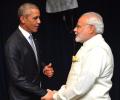
Prime Minister Narendra Modi and President Barack Obama on Monday decided to "further refine" the Indo-US strategic partnership while pushing ahead with cooperation in the areas of security, counter-terrorism, defence, economy and climate change.
While a clear-cut answer is not available, the 46-year-old Illonis Senator who overcame an intense electoral battle against his rival Hillary Clinton in the Democratic presidential nomination race had reluctantly backed the legislation on the deal worked out by the Republican administration of President George W Bush.
Not subscribing to the view that the Indo-US nuclear deal is dead, Prime Minister Manmohan Singh on Wednesday said he was still hopeful of the deal. "I hope good sense will prevail. I am negotiating in good faith," the Prime Minister said. His remarks came in the midst of government's renewed bid to enlist the support of Left parties for going ahead with securing the India-specific safeguards agreement with the IAEA.
The president emeritus of Asia Society and former Kennedy administration official Phillips Talbot has said the nuclear agreement would benefit both countries as it would ensure strategic ties between Washington and New Delhi "for 20 or 30 years".
Key provisions of the Indo-US nuclear deal.
The Indo-US Business Confidence Index, carried out by the Indo-American Chamber of Commerce, has dipped to 217 at the end of 2007, compared to 219 in 2006 and the decline was attributed to deceleration in the growth of export of services from India due to appreciation of rupee and slowdown in the US economy, according to latest index released on Monday.

Prime Minister Narendra Modi and United States President Joe Biden have expressed 'deep pride' and appreciation about their nations' close cooperation to fight the deadly COVID-19 pandemic, as they noted that all sections of the society were mobilised in unprecedented ways to share emergency relief supplies during each country's times of need.
Kakodkar had come to inaugurate the fourth Asian Particle Accelerator Conference at the Raja Ramanna Centre for Advanced Technology near Indore.
"I don't think you heard anybody say that in the course of the President's three-day visit (to India), we're looking to counterbalance China in any way," Robert Blake, Assistant Secretary of State for South and Central Asia, Robert Blake, told journalists in New York and Washington during a digital video press conference.
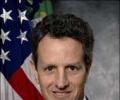
US Treasury Secretary Timothy Geithner has left for New Delhi to launch the Indo-US Economic and Financial Partnership which according to him would set the pace and put and economic relationship between the two countries on a new trajectory.
Indian Ambassador Ronen Sen has said that Prime Minister Manmohan Singh's prediction to President George W Bush at their first meeting that 'the best was yet to come' in Indo-US relations 'were prophetic', but that even he could not have imagined it to have fostered to the extent it has.
The security of Asia's dominant powers, India and China, cannot be viewed as a zero sum game, a top Pentagon official said on Thursday, asserting that Indo-US proximity should not be seen a threat to China, and vice versa.
The list of international and national companies in queue to tap the business opportunities arising out of the Indo-US nuclear deal is pretty impressive.
"In response, China may push to cut a similar deal with Pakistan, which could further destabilize South Asia," Berman said in a recent address at the institute.
'The nation, at this critical juncture, depends on its representatives in Parliament to ensure that decisions taken today do not inhibit our future ability to develop and pursue nuclear technologies for the benefit of the nation'
In many ways, the United States and India are fulfilling our own destinies now, as we cooperate even more closely together.

Pilot noted that 'the kind of damage that entities and groups and people can cause through the Internet and through the cyber-world is somehow disproportionate to their conventional capacities'.
Major powers including Britain and France said the agreement would benefit the non-proliferation regime.

The summit would be organised by the Indo-American Chamber of Commerce.
 © 2026 Rediff.com - Investor Information - Advertise with us - Disclaimer - Privacy Policy - Sitemap - Feedback - About us - Terms of use - Grievances