
Dr Suresh Moses Lee and his wife Suseela who have lived at the township built near the Kalpakkam nuclear power plant for three decade, ally fears of people living near nuclear plants.

Keeping in view the ever-increasing energy requirement, India is all set to establish at least four nuclear reactors besides the world's first thorium-based reactor by 2020.
Baldev Raj, scientist and director, Indira Gandhi Centre for Atomic Research, Kalpakkam, said the current installed nuclear power generation capacity is likely to increase five-fold to 25,000 Mwe by 2050 from the current 3,900 Mwe. The proposed expansion would require over Rs 125,000 crore. Nuclear power accounts for 3 per cent of India's total electricity generation and is estimated to go up to 25 per cent in 2050.
India's strong nuclear programme, with comprehensive capability for the entire nuclear fuel cycle and the strong technical support from Bhabha Atomic Research Centre and Indira Gandhi Centre for Atomic Research, were highly appreciated, according to Chairman of Atomic Energy Regulatory Board S K Sharma, who led the 17 member high-level Indian delegation. India presented its 206-page report for the first time that included the effective regulatory mechanism for power plants.
The Department of Atomic Energy invites applications for its one-year Orientation Course for engineering graduates at the Indira Gandhi Centre for Atomic Research Training School at Kalpakkam as part of the BARC Training School programme.
The body of a missing computer engineer of the Indira Gandhi Centre for Atomic Research at Kalpakkam near Chennai has been found, the police said on Friday. The body of 37-year old S Ananthanarayanan was found near the railway track between Vandalur and Guduvancherry section on February 15, the day he went missing, but was identified only on Thursday night by his father-in-law, said the Kalpakkam police.
Two more fast breeder reactors of 500 mega watt electric capacity each would be set up here by 2020, a top official of the Indira Gandhi Centre for Atomic Research said on Tuesday.
The Indira Gandhi Centre for Atomic Research will conduct six-week summer training programmes in Physics and Chemistry for students entering the final year of their Master's degree.

After nearly two decades of nuclear competition with Pakistan, India with the several long-range ballistic missiles in development is seemingly now paying attention to its future strategic relationship with China, a think-tank report has said.
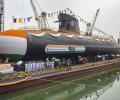
The status of the current submarine force level is alarming and we need to address the threat perceptions expeditiously. Critical decisions pertaining to national security cannot be delayed any further due to the rapidly changing maritime threat perceptions and growing strategic importance of the Indian Ocean region, asserts Commodore Venugopal Menon (retd).
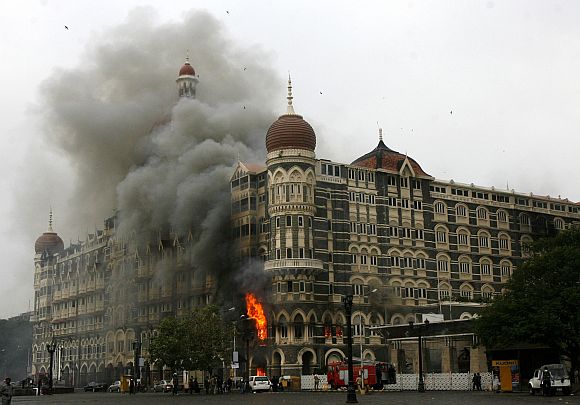
'Headley's testimony indicates to what extent the Pakistan government and its proxies can go to destroy not only Indian scientific talent but also international expertise.'

'If not, we can become frighteningly chaotic, more chaotic than what we are today.' 'In today's environment in the country, we still have a window of opportunity.'

'India is going to maintain its ties to China, India is going to develop a strong relationship with the United States. It means that India is going to have the flexibility to pick and choose its friends.' 'That's traditional Indian foreign policy, and it's smart.' Former US ambassador to India Frank Wisner, one of America's sharpest minds on South Asia, tells Aziz Haniffa/Rediff.com what Washington can expect from Narendra Modi's visit.
 © 2026 Rediff.com - Investor Information - Advertise with us - Disclaimer - Privacy Policy - Sitemap - Feedback - About us - Terms of use - Grievances