
Over the years, India has enjoyed bipartisan support in the US and this asset must be kept intact and nurtured through across the board political and civil society engagement, suggests former foreign secretary Shyam Saran.

'Over the next 12 months, it will be difficult to make 15 to 20 per cent return in the markets as the valuations appear stretched.'

Gautam Adani on Tuesday said his ports-to-energy conglomerate never slowed or stopped investing in the country as the group's success is based on its alignment with the India growth story. Speaking at the annual shareholder meeting of the group companies, he said the previously announced $70 billion investment in new energy business will help turn India from being a net importer of oil and gas to an exporter of clean energy. "Never have we walked away from investing in India, never have we slowed our investments," he said. "We believe our scale, our diversified business, and our track record of performance positions us very strongly to continue to perform well in a variety of market conditions."

ITC, State Bank of India, HCL Technologies and IndusInd Bank were the other big laggards. NTPC, UltraTech Cement, HDFC Bank and Mahindra & Mahindra were among the gainers.

Prime Minister Narendra Modi has met leading American economist Paul Romer, investor and co-founder of hedge fund, Bridgewater Associates Ray Dalio, and other eminent thought leaders and exchanged views with them and briefed them about the reform trajectory of his government to foster economic growth. Prime Minister Modi is in New York on the first leg of his maiden state visit to the US at the invitation of President Joe Biden. Modi and Romer held discussions on India's digital journey, including the use of Aadhaar and innovative tools like Digilocker.

Trends in the global energy markets are crucial if India's growth outlook is to remain healthy. Prices for the Indian crude basket were averaging around $86.2 per barrel through Q1FY25 and then moderated to $84 in July and to $78-79 in August (so far). But global crude supply may outpace weak global demand in the short term.

The Survey is authored by Chief Economic Advisor V Anantha Nageswaran and his team.
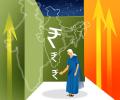
India no longer needs big ticket reforms but small and basic ones to drive the growth forward, Chief Economic Advisor V Anantha Nageswaran said on Monday. Addressing the media after the Economic Survey 2023-24 presented in Parliament, Nageswaran said there is a need to pursue all possible approaches without any ideological orientation. "In terms of the kind of reforms that we need to do, it is no longer big-ticket reforms that dominate your front pages but more about grunt works.

India Inc on Thursday pitched for lowering income tax burden on common man, increase in capital expenditure, and firm steps to contain food inflation in their nearly two-hour long interaction with finance minister Nirmala Shitharaman ahead of the Union Budget. During pre-Budget consultation with Sitharaman, the industry leaders and associations also urged the government to focus more on infrastructure development with a view to maintaining the economic growth momentum. The industry leaders also laid stress on boosting the MSME (micro, small, and medium enterprises) sector, considered a backbone of the Indian economy and main employment generator.

The International Monetary Fund (IMF) on Tuesday slashed India's growth forecast for 2022-23 (FY23) by 80 basis points to 7.4 per cent, citing less favourable external conditions and rapid policy tightening by the central bank. In its update to the April World Economic Outlook, the IMF said that though a global recession in 2022 was ruled out with a growth estimate of 3.2 per cent, the balance of risks was squarely to the downside, driven by a wide range of factors that could adversely affect the global economic performance. "The risk of recession is particularly prominent in 2023, when in several economies growth is expected to bottom out, household savings accumulated during the pandemic will have declined, and even small shocks could cause economies to stall.

'The top 10 per cent of the population should adopt and handhold the bottom 20 per cent of the population as a social responsibility.'
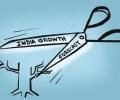
The biggest risk to India's growth outlook is an escalation of geopolitical tensions, especially if these tensions spread to the Asian region, RBI Monetary Policy Committee (MPC) member Jayanth R Varma said on Wednesday. Varma, in an interview to PTI, said that inflation and inflationary expectations appear to be moderating and high inflation will certainly not become the 'norm' in the country. He is cautiously optimistic about the Indian economy as after the pandemic abated, consumption demand has begun to recover though the recovery is uneven across sectors and industries.

Moody's on Thursday slashed India's growth estimate for the current year to 9.1 per cent, from 9.5 per cent earlier, saying high fuel and fertilizer import bill could limit the government's capital expenditure. In its 'Global Macro Outlook 2022-23 (March 2022 Update): Economic Growth will suffer as fallout from Russia's invasion of Ukraine builds' report, the rating agency said Russia's invasion of Ukraine has significantly altered the global economic backdrop through three main channels -- spike in commodities prices, risks to global economy from financial and business disruption and dent in sentiment due to heightened geopolitical risks. It said Russia is the only G-20 economy that will contract this year and forecast that its economy will shrink 7 per cent in 2022, and 3 per cent in 2023, down from projected growth of 2 per cent and 1.5 per cent respectively, before the invasion of Ukraine.

You can make all the speeches you want, you cannot argue against 39 straight months of slowing, observes Aakar Patel.

To minimise risk, invest in a debt fund whose duration matches your investment timeframe.

'In the short term you keep your return expectations very, very low; in the medium term be prepared to invest and in the long term growth will come and your returns from stocks will be high.'

S&P Global Ratings on Friday said it will watch the fiscal numbers for the next 1-2 years, besides pro-growth policies of the new government, before deciding on India's sovereign rating upgrade. S&P, which earlier this week upgraded India's outlook to positive while retaining the sovereign rating at BBB-, expects the new government to continue with pro-growth policies, infrastructure investment and commitment to fiscal consolidation.

The EAM when asked about his view of the world at present, said it would be "very grim forecast, for the next five years".
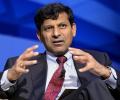
The argument that India is going towards a 'Hindu rate of growth' is "ill-conceived, biased and pre-mature" when weighed against the respective data on savings and investments, said SBI Research in its Ecowrap report. The term Hindu rate of growth was coined by economist Raj Krishna in 1978, which denoted the economic growth of about 3.5-4.0 per cent in terms of GDP during 1947-1980. "India's quarterly sequential Y-o-Y GDP growth has been in a declining trend in FY23.
S&P Global Ratings on Wednesday cut India's growth projection for the current fiscal to 7.3 per cent from 7.8 per cent earlier on rising inflation and the longer-than-expected Russia-Ukraine conflict. In its Global Macro Update to Growth Forecasts, S&P said inflation remaining higher for long is a worry, which requires central banks to raise rates more than what is currently priced in, risking a harder landing, including a larger hit to output and employment. S&P had in December last year pegged India's GDP growth in the 2022-23 fiscal, which began on April 1, 2022, at 7.8 per cent.
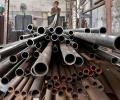
On June 30, mining and metals giant Vedanta, announced that it had decided to initiate a strategic review of its steel and steel-making raw material businesses. The review would begin immediately and evaluate a broad range of options, including but not limited to a potential strategic sale of some or all of the steel businesses, the company said in its stock exchange filing. The signs have been there - approaches had been made to steel players over the past year. Last December, Anil Agarwal, chairman Vedanta group, told Business Standard that the steel plant capacity was about 3 million tonnes (mt).

Mandaviya, Union Minister of Petroleum and Natural Gas, Hardeep Singh Puri, and Indian Olympic Association President PT Usha unveiled the ceremonial outfit, playing kits, performance shoes and travel gear for the Indian team.

Fitch Ratings on Tuesday raised India's growth forecast for the current fiscal to 7.2 per cent, from 7 per cent projected in March, saying elevated consumer confidence will drive spending, besides increased investments. In June update to its global economic outlook report, Fitch said it expects inflation to decline to 4.5 per cent by end of this year and RBI to cut policy interest rates by 25 basis points to 6.25 per cent.

Rating agency Fitch on Tuesday slashed India's growth forecast for the next fiscal to 8.5 per cent from 10.3 per cent, citing sharply high energy prices on account of the Russia-Ukraine war. With the Omicron wave subsiding quickly, containment measures have been scaled back, setting the stage for a pick-up in GDP growth momentum in the June quarter this year, the agency said. It has revised upwards the GDP growth forecast for the current fiscal by 0.6 percentage points to 8.7 per cent.

Hospitality players want the government to accord infrastructure status to hotels to make investments on new properties more attractive rather than categorising them as luxury or even 'sin goods' in the upcoming Union Budget considering the sector's potential to play a key role in India's growth. They also want the government to consider incentives in the form of tax breaks or subsidies for adopting sustainable and eco-friendly practices, while asserting that the upcoming budget must accelerate the tourism agenda saying it is an opportunity to make Indian hospitality the emerging engine for GDP growth and employment generation.
The International Monetary Fund (IMF) on Tuesday lowered India's economic growth projection for the current fiscal to 5.9 per cent from 6.1 per cent earlier. Yet India will continue to be the fastest-growing economy in the world. In its annual World Economic Outlook, IMF also lowered the forecast for 2024-25 fiscal (April 2024 to March 2025) to 6.3 per cent from the 6.8 per cent it had predicted in January this year. The growth rate of 5.9 per cent in the 2023-24 fiscal compares to an estimated 6.8 per cent in the previous year.

Moody's Analytics said that the reduced political stability and the need for consensus building that is inherent with a coalition government, might erode investor confidence in the near term.
Enthused by higher than expected GDP numbers in the fourth quarter of 2022-23, Chief Economic Adviser (CEA) V Anantha Nageswaran on Wednesday said India's economic growth may exceed the initial estimate of 6.5 per cent in the current fiscal and the country can look for another year of solid economic performance.

The International Monetary Fund (IMF) on Tuesday said it is expecting some slowdown in the Indian economy next fiscal year and projected the growth to 6.1 per cent from 6.8 per cent during the current fiscal ending March 31. The IMF on Tuesday released the January update of its World Economic Outlook, according to which the global growth is projected to fall from an estimated 3.4 per cent in 2022 to 2.9 per cent in 2023, then rise to 3.1 per cent in 2024. "Our growth projections actually for India are unchanged from our October Outlook.

The spike in volatility, amid election uncertainty, has done little to dent the confidence of retail investors, shows demat account addition and equity mutual fund (MF) investment data. In May, investors opened a net 3.6 million demat accounts, taking the total to 158 million. MF data released on Monday pegged the net inflows into equity schemes and SIP investments at new record highs of Rs 34,697 crore and Rs 20,904 crore, respectively.
Citing various macroeconomic parameters that are doing pretty well, India's G20 Sherpa and former CEO of Niti Aayog Amitabh Kant projected that the country is all set to overtake Japan as 4th largest economy in the world by 2025. The size of India's GDP is currently ranked 5th, after the US, China, Germany, and Japan. It overtook the UK in 2022.

S&P Global Ratings on Monday kept its forecast for India's economic growth unchanged at 6 per cent in the fiscal year starting April 1, before rising to 6.9 per cent in the following year. In the quarterly economic update for Asia-Pacific, S&P saw inflation rate easing to 5 per cent in 2023-24 fiscal, from 6.8 per cent in the current financial year. It saw India's gross domestic product (GDP) likely growing by 7 per cent in the current financial year ending March 31 (2022-23), before slowing to 6 per cent in the next 2023-24 fiscal.

"Our humble contribution to India's growth story will continue. Jai Hind," Billionaire Gautam Adani said.

'For experienced and risk-taking investors, now may be the time to go all in.' 'By 'experienced and risk-taking', I refer to those who remained net buyers in equities during the early stages of the 2020 pandemic.' 'On the other hand, those who exited the markets during the pandemic may go the SIP way.'

Moody's Ratings on Tuesday said India's growing water shortage can disrupt farm and industry sectors and is detrimental to the credit health of the sovereign as rising food inflation and decline in income may spark social unrest. It said decreases in water supply can disrupt agricultural production and industrial operations, resulting in inflation in food prices and hence can be detrimental to credit health of sectors that heavily consume water, such as coal power generators and steel-makers.
India's economic growth slowed down to 4.4 per cent in the third quarter of 2022-23 mainly due to poor performance of the manufacturing sector. In October-December 2021, the economy grew by 11.2 per cent and by 6.3 per cent in the July-September 2022 quarter, according to data released by the National Statistical Office (NSO) on Tuesday.

'The expeditious enactment of labour codes and strategic measures to bridge the skills jobs gap are critical.'
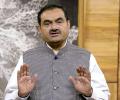
The Supreme Court on Wednesday directed the SEBI to complete its probe into two pending cases relating to allegations against the Adani group within three months. Holding that it cannot regulate Sebi's power of investigation, a bench headed by Chief Justice D Y Chandrachud noted that Sebi has completed its probe in 22 out of 24 cases relating to allegations against the Adani group.

'We are seeing signs of improvement in rural overall in terms of demand, but I would still keep my fingers crossed.'
S&P Global Ratings on Tuesday raised India's growth projection for the current fiscal to -7.7 per cent from -9 per cent estimated earlier on rising demand and falling COVID infection rates. "Rising demand and falling infection rates have tempered our expectation of COVID's hit on the Indian economy. S&P Global Ratings has revised real GDP growth to negative 7.7 per cent for the year ending March 2021, from negative 9 per cent previously," S&P said in a statement. The US-based rating agency said its revision in growth forecast reflects a faster-than-expected recovery in the quarter through September. For the next fiscal, it projected India's growth to rebound to 10 per cent.
 © 2026 Rediff.com - Investor Information - Advertise with us - Disclaimer - Privacy Policy - Sitemap - Feedback - About us - Terms of use - Grievances