
US President Donald Trump's announcement of 25 per cent tariff on all goods coming from India starting August 1, plus an unspecified penalty, is expected to impact Apple's plans to expand iPhone manufacturing in India as well as export of other electronics to the US. The move comes at a time when Indian electronics production is reeling under pressure due to restrictions imposed by China on supply of several critical components, capital goods and even skilled technology professionals.

Shipments of personal computers grew 3.8 per cent on a year-on-year basis to 14.4 million driven by demand for gaming and AI-powered PCs, market research firm IDC said on Monday. IDC India, South Asia and ANZ, associate vice president for devices research, Navkendar Singh said the weakening rupee can lead to an increase in device costs, which can impact the price-sensitive SMB (small and medium businesses) and consumer segments but despite all challenges, the India PC market is most likely to witness a low single-digit growth in 2025.

Indian smartphone sales, traditionally dominated by the entry and mid-range segments, are set to change as high-end and super-premium devices capture consumer attention. The premium category is expected to grow by more than 20 per cent in calendar year (CY) 2024 compared to the previous year. While the overall smartphone market is expected to w

India's smartphone shipment grew by 11.5 per cent in the first quarter of calendar year (CY) 2024 on a year-on-year basis to 34 million units. This is the third consecutive quarter of growth in shipments, International Data Corporation's (IDC) Worldwide Quarterly Mobile Phone Tracker said.

The Indian PC market grew by 17.8 per cent in shipment to 3.7 million units in the April-June 2022 quarter, International Data Corporation (IDC) said in a report on Thursday. The PC market includes desktops, notebooks and workstations.The notebook category continued to be the volume driver, with the shipment of 2.6 million units in the June 2022 quarter. However, its growth rate reduced to 7.3 per cent compared to over 30 per cent on average for the last three quarters.
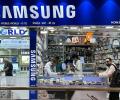
As many as 37 per cent of smartphones sold in India in 2022 cost Rs 15,000 or more.

India's traditional PC market, inclusive of desktops, notebooks, and workstations declined by 11.7 per cent year-on-year (YoY) in Q3CY22 (Jul-Sep) after 8 consecutive quarters of growth despite strong shipments of 3.9 million units, according to new data from the International Data Corporation (IDC) Worldwide Quarterly Personal Computing Device Tracker. All segments declined except the government, which grew by 91.5 per cent YoY on the back of government orders, leading to strong growth in the third consecutive quarter. While the desktop and workstation categories grew by 23.4 per cent and 17.6 per cent YoY respectively, the notebook category declined by 19.5 per cent YoY.

China's Vivo said on Thursday it will export more than one million 'Made in India' smartphones in 2023 to achieve a target announced last year when it sent out its first indigenous shipment to Thailand and Saudi Arabia. Vivo India, known for its economical phones, has proposed investing Rs 7,500 crore in the country and it is set to spend Rs 3,500 crore of that amount by end of this year. According to the firm's India Impact Report 2022, it will start production at a new 'state of the art' manufacturing facility by early 2024 after regulatory clearance.

The India personal computer (PC) market shipment, inclusive of desktops, notebooks, and workstations, dropped by an overall 30.1 per cent in the first quarter of CY2023 over the previous year, to only 2.99 million units, according to the latest data from the International Data Corporation (IDC) Worldwide Quarterly Personal Computing Device Tracker released on Tuesday. In Q1CY23, while the demand for desktops was positive, the notebook category witnessed another weak quarter as it declined by 40.8 per cent year-on-year (y-o-y). The consumer segment declined by 36.1 per cent y-o-y primarily due to slowing demand and weak market sentiment.

India's smartphone market has fallen by one per cent in the first half of 2022, as shipments of Xiaomi - the top-selling brand - declined 28 per cent due to weak consumer demand in the quarter ended June. According to the International Data Corporation's (IDC's) Worldwide Quarterly Mobile Phone Tracker, 71 million smartphones were shipped from January to June this year. The highest decline was in the below-$100 segment, which lost its market share by 5 per cent.

India's IT and business services market is expected to grow 5.4 per cent annually to reach $13 billion by December this year, research firm IDC said. The segment grew 5.3 per cent year-on-year (y-o-y) in January-June (H1) 2020 period as compared to 8.9 per cent growth in H1 2019, IDC said in a report. Of the IT and business services market, the IT services market contributed 77.4 per cent in H1 2020, growing 5.9 per cent y-o-y as compared to 9.3 per cent growth in the year-ago period.

Indian PC shipments for the third quarter of CY21 touched a total of 4.5 million, making it India's biggest-ever single quarter. To put this in perspective, it is bigger than the total yearly consumer shipments in 2019, a year before the pandemic hit. As a result, many brands also reported their biggest quarter of PC shipments.

For Q4CY20, PC shipments grew by 27 per cent year-on-year, said data from the IDC.

The market showed signs of revival in the fourth quarter of 2009 with a year-on-year growth of 2.3 per cent to touch 28.36 million units.

Sixty-six per cent of 467 chief information officers surveyed by IDC India revealed that they expect the economic slowdown to end by October-December 2009.

Amid the protests against leading e-commerce firms, Flipkart and Amazon, shipments through the online route in fact witnessed a double-digit growth every quarter.
Domestic IT and ITeS market is likely to reach Rs 1,10,000 crore mark in 2008, as revealed in a study.

Demonetisation impacted the smartphone market at almost all levels, including customer demand and stock movement in distribution channels.

The first half of the year (H1-2020) was marked by sluggish growth with demand down 26 per cent YoY, while the second half saw recovery. H2-2020 recovered with 19 per cent YoY growth, reports Shivani Shinde.

The scales started tilting in favour of smartphones in 2014, when a slew of new, yet vibrant, brands entered the market, with their competitively priced offerings helping smartphones become the indispensable device that it has turned into today.
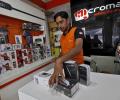
According to research firm IDC, a slowdown in smartphone shipments began showing up as early as late February, though companies insist that the March quarter was fine, albeit on a low base.

The new iMac, two iPads and iPhone 12 and 12 Mini will be open for ordering starting April 30, just like in the US, the UK, China and Japan.
Tier-II and Tier-III cities to emerge as new BPO hubs to offer services in Indian languages for telecom, aviation sectors.

Even as most manufacturers are still assessing the overall impact on their businesses, early projections suggest the market may grow at its lowest ever rate, in 2020.
The Dataquest-IDC best employer top 20 list is made up of a mix of firms Indian IT firms and the India development centres of software multinationals.

With 19 per cent market share, Samsung rules supreme in India.

From market leader HP and premium player Apple to China's Lenovo and Asus, all major brands in the market are witnessing rapid surge in the demand for notebooks.

Rising prevalence of work-from-home and e-learning is driving sales of notebooks and tablets for most brands, but Apple's superior performance has more to do with its product quality.
India has shipped close to 85 million mobile handsets between April 2007 and March 2008, compared to under 66 million units shipped in the previous fiscal, registering an year-on-year growth of around 29 per cent.
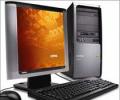
The India PC market performance in 2Q CY2009 has shown what may be termed as early signs of a revival.

After six weeks into the second half, the faltering offline channel, which traditionally rakes in 60 per cent of sales for the market, has become the biggest hurdle towards the path of revival.
The Indian IT and IT-enabled services industry is expected to grow at 10.8 per cent in 2009, the lowest in the last five years, due to the global economic meltdown, a report said.
'IIT-ians want to contribute to nation building and the Pan IIT meet provides a channel to do that. We want to move beyond words and set up an action plan for this,' says Pradeep Gupta.
Computer hardware majors like Dell, HP and HCL launch products to woo companies.

India continues to be the fastest growing smartphone market in the Asia Pacific region.
During the third quarter of 2007, the overall Indian personal computer (notebooks and desktop combined) market grew 25.1 per cent year-on-year, in terms of unit shipments, to 1.8 million. For the same period last year, desktop PC shipments showed growth of 10.9 per cent.
The average Rs 6,20,000 per annum salary was significant, considering the 30-40 per cent annual incrase in the talent pool of the top 50 companies, a nation wide survey by IDC India for Cybermedia's flagship publication Dataquest said.
The use of information technology across all hierarchies of an organisation not only increased but also became more sophisticated in the last one year, according to the observations made by a survey.
The Indian PC market grew 24 per cent over the third quarter figures of 2005 to exceed the 1.4 million shipment mark
 © 2026 Rediff.com - Advertise with us - Disclaimer - Privacy Policy - Sitemap - Feedback - About us - Terms of use - Grievances