
Tahawwur Hussain Rana, a jailed accused in the 2008 Mumbai terror attacks, has moved a court in New Delhi seeking permission to speak to his family. The 64-year-old Pakistani-origin Canadian businessman is currently in judicial custody and is accused of conspiring with David Coleman Headley and operatives of Lashkar-e-Taiba (LeT) and Harkat-ul-Jihadi Islami (HUJI) to carry out the terror attacks. Rana was brought to India after the American Supreme Court dismissed his review plea against his extradition.
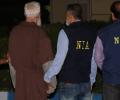
Tahawwur Hussain Rana, a key accused in the 26/11 Mumbai terror attacks, was brought to India on Thursday after being "successfully extradited " from the US, the National Investigation Agency (NIA) said. The 64-year-old Canadian citizen of Pakistani origin landed in Delhi in a special plane on Thursday evening, ending days of speculation of when and how he will be extradited, officials said. The NIA said in a statement that it had secured the successful extradition after years of sustained and concerted efforts to bring to justice the key conspirator behind the 2008 mayhem that claimed 166 lives. Rana is accused of conspiring with David Coleman Headley alias Daood Gilani, and operatives of designated terrorist organisations Lashkar-e-Taiba (LeT) and Harkat-ul-Jihadi Islami (HUJI) along with other Pakistan-based co-conspirators, to carry out the the three-day terror siege of India's financial capital.
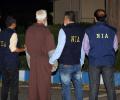
He was sent to judicial custody on May 9 and lodged in Tihar jail after his custodial interrogation by the NIA.
Tahawwur Hussain Rana, a Canadian national accused of involvement in the 2008 Mumbai terror attacks, has been extradited to India from the United States. Rana's interrogation is expected to shed light on the role of Pakistani state actors in the attacks, which claimed 166 lives. Indian authorities are particularly interested in his travels across India in the days leading up to the attacks, including visits to Hapur, Agra, Delhi, Kochi, Ahmedabad, and Mumbai. Rana's extradition follows a lengthy legal battle, with the US Supreme Court ultimately denying his application to challenge it. Rana is known to be associated with Pakistani-American terrorist David Coleman Headley, one of the main conspirators of the 26/11 attacks. The investigation into the Mumbai attacks has implicated senior members of terror outfits Lashkar-e-Taiba (LeT) and Harkat-ul Jihadi Islami (HuJI), as well as officials from Pakistan's Inter-Services Intelligence (ISI).
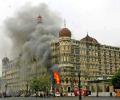
Tahawwur Rana, accused of involvement in the 2008 Mumbai terror attacks, is expected to be extradited to India from the United States soon. The US Supreme Court denied his last-ditch effort to stop his extradition, moving him closer to being handed over to Indian authorities. Rana's extradition is expected to help probe agencies expose the role of Pakistani state actors behind the attacks and shed new light on the investigation. He is associated with Pakistani-American terrorist David Coleman Headley, one of the main conspirators of the 26/11 attacks.
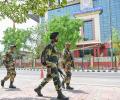
The 64-year-old Pakistani-origin Canadian businessman would also be questioned on his suspected links with the officials of Pakistan spy agency Inter-Services Intelligence (ISI) and his association with terror group Lashkar-e-Taiba (LeT), which had orchestrated the attacks.
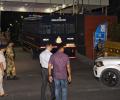
Tahawwur Hussain Rana, the key mastermind of the 2008 Mumbai terror attacks, is being interrogated for eight to ten hours daily by the National Investigation Agency (NIA) to unravel a larger conspiracy behind the strikes. Rana, who was extradited from the US, is being grilled by NIA investigators to probe a larger conspiracy behind the attacks, in which 166 people were killed and over 238 injured. He is being allowed to meet his lawyer and is being provided with basic necessities. The investigators hope to find some important leads on his travels in parts of northern and southern India days before the carnage in Mumbai on November 26, 2008.
Tahawwur Hussain Rana, a Pakistan-born Canadian national and close associate of David Coleman Headley, is set to be extradited to India from the US. Rana was involved in the planning and execution of the 2008 Mumbai terror attacks, which killed 166 people, including six Americans. He assisted Headley in obtaining a visa for India, established a front company in Mumbai, and helped in reconnaissance of targets in Mumbai and New Delhi. Rana was convicted in the US for providing material support to Lashkar-e-Taiba (LeT) and sentenced to 14 years in prison. His extradition to India will allow authorities to question him about his involvement in the Mumbai attacks and potentially uncover new information about the role of Pakistani state actors.
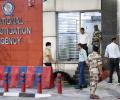
Tahawwur Hussain Rana, the mastermind behind the 2008 Mumbai terror attacks, has been taken into 18-day custody by the National Investigation Agency (NIA) in India. Rana was extradited from the United States after years of legal battles and will be questioned to unravel the complete conspiracy behind the attacks.

Tahawwur Hussain Rana, a Canadian national convicted in the United States for his role in the 2008 Mumbai terror attacks, has been extradited to India. Rana, a close associate of Pakistani-American terrorist David Coleman Headley, was involved in the conspiracy from 2005 onwards and assisted Headley in obtaining a visa for India. He is the third person to be sent on trial in India for the 26/11 attacks after Ajmal Kasab and Zabiuddin Ansari alias Abu Jundal. Rana's extradition comes after US President Donald Trump approved the request.

Bangladesh on Wednesday executed banned Harkat-ul-Jihad al-Islami chief Mufti Abdul Hannan and his two associates for a 2004 attack on a shrine that killed three people and wounded the British high commissioner at the time.

To divert part of the international attention away from it and project the increase in jihadi terrorism as a sub-continental and not a purely Pakistani phenomenon, the ISI is likely to accelerate this process of giving Al Qaeda-inspired International Islamic Front, of which all these organisationals are members, a sub-continental visage and clothing and project the so-called Kashmir issue as a root cause of this expanding phenomenon.
The United States of America and the United Nations declaring the Harkat-ul-Jihadi Islami as a terrorist organisation recently has come as a welcome relief for India, especially where this dreaded outfit has been spreading its tentacles like cancer. Vicky Nanjappa takes a look at the inception of HuJI and also the major attacks that it has been involved in prior to this ban.
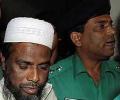
Eight Harkat-ul-Jihad al-Islami terrorists, including its chief, were sentenced to death by a Bangladeshi court on Monday for a 2001 bomb attack targeting Bengali new year celebrations that claimed 10 lives.
Few hours after their escape from police custody in Jammu and Kashmir's Ramban district, two top militants of Harkat-ul-Jehad Islami were on Thursday arrested from Doda district.
Security agencies have detained Hafiz Aamir, a suspected Harkat ul Jehadi al Islami operative, for allegedly sending a terror email in the aftermath of the blast outside the Delhi high court on September 7. Aamir is understood to have told the investigators that an email claiming responsibility on behalf of the HuJI was sent on his directions, sources said on Thursday. Aamir, who has been detained in Kashmir's Kishtwar district, is alleged to be an operative of the HuJI.
The United States has blacklisted extremist outfit Harakat-ul-Jihad-i-Islami Bangladesh, suspected of involvement in bomb attacks in India and other countries, as a 'global terrorist organisation'. The US financial institutions will now be required to freeze assets and properties of the outfit that are in the US or "within the control of US persons," a US embassy statement said. Bangladesh, which has already banned HuJI-B, immediately reaffirmed its position against terrorism
The Hyderabad police said it had gained the custody of a commander of the terror outfit Harakat ul Jihad al Islami who was wanted in connection with a suicide attack in the city.
Bangladeshi security forces on Thursday arrested Moulana Yahiya, chief of banned terror outfit Harkat-ul-Jihad al-Islami, along with two of his accomplices from Kishorganj district. "We have arrested him (Yahiya) today morning," said elite Anti-crime Rapid Action Battalion's intelligence wing chief Lieutenant Colonel Ziaul Ahsan. He said the three were arrested after intercepting a passenger bus in which they were traveling to Kishorganj from Sylhet.

Nine people lost their lives. The aftermath too was chaotic with cops opening fire to quell a mob and in the bargain five people lost their lives.
Magistrate, Alipore court, Jayanta Kolay directed the CID to hand them over to the Uttar Pradesh police and produce them in an appropriate court in Lucknow by June 30.
Khwaja is a self styled commander of the HuJI and had concentrated largely on operations in south India. The police say that he is likely to have information on the manner in which the HuJI had masterminded the Hyderabad twin blasts.
Pakistan's latest claim -- about the Bangladesh-based Harkat-ul-Jihadi planning the terror attacks in Mumbai -- may have a boomerang effect. Sabahuddin Ahmed has revealed that the HuJI carries out its operations with the patronage of the Pakistan-based Lashkar-e-Tayiba. In his confessional statement, Sabahuddin clearly states that Lashkar operatives use the porous Bangladesh border whenever they are fleeing.
There have been many reports in the past to show how terrorist outfits have preferred recruiting women into their fold in order carry out subversive activities. It was the Al Qaeda and the Lashkar-e-Tayiba which had started using women for their activities and most of the times it was seen that these women acted as carriers. Vicky Nanjappa reports.
The prosecution on Friday told a Delhi court that a Pakistan-based Harkat-ul-jehadi Islami terrorist, who along with five others are accused of plotting to kidnap Sachin Tendulkar and Sourav Ganguly, had confessed that he came to abduct the cricketers and then bargain the release of two members of the outfit.
The arrested reportedly confessed to their links with terror groups and their plans to trigger explosions in about 20 places in Karnataka.
The chief of Bangladesh-based Harkat-ul-Jihad-al-Islami was on Tuesday sentenced to death along with two of his associates for a 2004 grenade attack on the then British envoy to Dhaka that killed three people. A trial court tribunal set up in Sylhet, 190 km northeast of Dhaka, sentenced HuJI leader Mufti Abdul Hannan and two other members of the terrorist outfit Shahid Shahidul Alam and Delwar Hossain Ripon to death by hanging.
Sources revealed that Mohammad Ilyas Kashmiri, the commander of Harkat-ul Jihad al Islami, who was reportedly killed in a United States drone attack in South Waziristan last month, is still alive, DawnNews reported.
With the Lashkar-e-Tayiba taking a back seat as far as India operations are concerned for the time being, it looks like dreaded terror outfit Harkat-ul-Jihad-al-Islami -- which operates primarily out of Bangladesh -- is planning on taking the centre stage.

Dreaded terrorist Ilyas Kashmiri, one of the most wanted men in India for his role in various terror strikes, has been killed, according to media reports.Kashmiri was killed in a drone strike by the United States, BBC Urdu reported on Saturday.Kashmiri is the chief of the Al Qaeda'a 313 brigade.
HuJI leader Abu Zandal, who was recently arrested, said they had sent several consignments of grenades to Lashkar outfits operating in India until 2004, an unnamed security official was quoted as saying by the Prothom Alo daily. But the outfit failed to send the last such consignment as the Lashkar representative who was supposed to receive it was killed in an encounter with the Border Security Force near Bangladesh's Kaliganj frontier.
The Al Qaeda-linked terror group Harkat-ul-Jihad al-Islami has threatened to attack Pakistan's foreign office, its high commission in India and top diplomats if Islamabad does not stop sharing information about it with New Delhi. HuJI has threatened it will attack the foreign office, the foreign secretary, Pakistan's high commission in New Delhi and High Commissioner Shahid Malik if its demand is not met.
More than a week after serial blasts rocked Assam, investigators have found clues that the United Liberation Front of Assom and the NDFB carried out the deadly explosions with the help of Bangladesh-based HuJI's expertise.Home Ministry sources said the investigators have found enough evidence that the banned ULFA had carried out the October 30 serial blasts with the help of dominant Bodo militant group NDFB.
Indicating a Harkat-ul-Jihadi Islami hand behind the serial blasts in Assam, the Border Security Force on Thursday said they had prior information on a possible intrusion by militants from Bangladesh for carrying out the deed.
Police teams from Hyderabad and Mumbai are in Lucknow to interrogate the two HUJI militants, arrested in Barabanki in connection with serial blasts in the civil courts in Uttar Pradesh, for their possible involvement in the Mecca Masjid blasts in Andhra Pradesh.
While reporting the developments in the recently-busted assassination plot, the media has brazenly stated that many of the men arrested from Bangalore, Hyderabad and Nanded have connections with terror outfit Harkat-ul-Jihad al-Islami.
Bangladesh's two former ministers, who aided banned extremist group the Harkat-ul-Jihad-al Islami in its botched attempt to kill Premier Sheikh Hasina in 2004, also helped the outfit procure arms for use against India, a Dhaka court was told.
Bangladesh based Harkat-ul-Jihad-al-Islami, a militant outfit responsible for a series of terror attacks in the country and India was trying to mobilise foreign funds by setting up a charity to carry out subversive activities under its garb.
The police alleged that the two were involved in the serial blasts that left over a dozen people dead and nearly 50 other injured.
Dismissing as "baseless" reports about suspected involvement of the Bangladesh-based outlawed HuJI militant group in the deadly Assam blasts, Dhaka has said it would never allow this country's territory to be used to aid attacks on other nations.
 © 2026 Rediff.com - Investor Information - Advertise with us - Disclaimer - Privacy Policy - Sitemap - Feedback - About us - Terms of use - Grievances