
India's booming outsourcing sector has been hit by a fraud again.
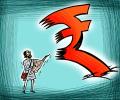
'When the rupee was at 65 a dollar, we wanted to go to Thailand for a holiday.' 'Now at 72, we may find Goa much more attractive.' 'That's how correction happens.' 'If you don't let that correction happen, then it's a pressure cooker that bursts one day.'
Foreign banking major HSBC plans to inject $180 million in India operations to support its growth in the country.
Foreign banking major HSBC said on Thursday that it will decide on hiking its 14.6 per cent stake in UTI Bank after the government comes up with a policy on foreign direct investment and voting rights.

The HSBC India Services Business Activity Index, that tracks changes in activity at Indian services companies on a month-by-month basis, fell from 51.6 to exactly 50.0 in October.

The survey, commissioned by HSBC last year, covered 16,000 people.

In the mid-quarter monetary policy review last month, RBI Governor Raghuram Rajan had left the key policy rate unchanged, after raising it 50 bps in two instalments since he took over on September 4, saying he was waiting for more data clarity.

The HSBC India Composite Output Index, which maps both services and manufacturing, increased from 48.9 in March to 49.5 in April, but remained below the crucial 50 mark which indicates contraction for the second successive month.
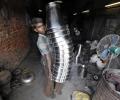
Factory growth picked up in May.

On price rise, HSBC said that the rate of cost inflation decelerated sharply while output prices were unchanged.

The recent weakness of the rupee has been due to yuan's devaluation.
The HSBC India Manufacturing Purchasing Managers' Index, a measure of factory production, stood at 51.3 in April, unchanged from 51.3 in March, amid moderate expansion of incoming new business orders.
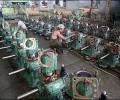
The headline HSBC India Purchasing Managers' Index -- a composite gauge designed to give a single-figure snapshot of manufacturing business conditions -- stood at 54.5 in December, up from 53.3 in the prior month.

As yields rise, bond prices fall. Higher yields not only translate into losses for investors, it also pushes up borrowing cost for companies as well as government
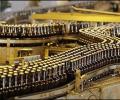
A figure above 50 indicates that the sector is expanding, while a figure below that level means contraction.

Private sector output in India expanded for the first time in 8 months in February as slump in the services sector moderated and manufacturing grew at a stronger pace, an HSBC survey said.

The recovery in manufacturing is still likely to prove "protracted" given the lingering structural constraints.

Sector-wise, pharmaceuticals, transport equipment and textiles will help accelerate overall export growth.
.jpg)
The subdued labour market is likely to recover.
According to official figures, retail inflation in June touched its lowest mark at 7.31 per cent since January 2012.
Strong new business growth was the primary factor.

The 57-year-old Bhattacharya, front-runner for the post on account of years of service left, was managing director and chief financial officer of the bank prior to her elevation.

India's working population relies heavily on cash deposits and a second home to generate post -retirement income, according to an HSBC report.

New business orders fall at faster pace, with index at 47.6 in March from 49.5 in February.

The HSBC/Markit Purchasing Managers Index for the services industry fell to 46.7 in December from 47.2 in November, registering the sixth consecutive monthly drop in output levels, the longest period of continuous reduction since the 2008/2009 global financial crisis.

The HSBC India Manufacturing Purchasing Managers' Index for the manufacturing industry climbed from 49.6 in October to 51.3 in November on the back of a rebound in new orders and output.

The HSBC/Markit purchasing managers index for the services industry inched up to 47.1 in October from 44.6 in September, the fourth successive monthly contraction of service sector output across India.

India's manufacturing sector activity contracted for the third straight month in October amid falling levels of production and new orders, as the business climate within the country remained tough, an HSBC survey said on Friday.
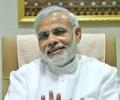
The headline HSBC Services Business Activity Index was at a 17-month peak of 54.4 in June rising from a modest 50.2 in May, HSBC said adding that 'the Modi wave has struck the service sector'.

The index has posted below the 50 mark, which marks contraction, for the third consecutive month.

India's manufacturing sector activity contracted for the second consecutive month in September as both output and new orders witnessed a decline, an HSBC survey said.

The index went below the crucial 50 mark.

The HSBC India Composite Output Index, which maps both services and manufacturing activity, fell to 48.4 in July, down from 50.9 in June, indicating an overall contraction.
