
The global COVID-19 situation, rollout of vaccines, geopolitical trends, Union Budget and economic recovery would be the major factors driving investor sentiments in 2021 after a tumultuous year which saw both 'the worst of times and the best of times' for the stock market, said analysts. What a year 2020 turned out to be! From witnessing gigantic losses to record-shattering gains, investors went on a roller-coaster ride amid the coronavirus pandemic and massive stimulus measures. Markets closed 2020 with remarkable gains of around 16 per cent, but will the winning ways continue in 2021 as well?

Morgan Stanley removed banking stocks from its model portfolio when it slashed its weighting on the sector by 500 basis points. Several foreign brokerages, such as UBS, JP Morgan, and Credit Suisse, of late, have also become less optimistic about banking stocks.

'The markets could shrug off demonetisation as a one-off extraordinary period.'

Indians face COVID-19 with record debt, stalled income.

The Sensex posted its biggest single-day jump in over a decade at 1,921 points and investors' wealth soared by a staggering Rs 6.8 lakh crore after Finance Minister Nirmala Sitharaman delivered a surprise cut in corporate tax rates on Friday.

Among the 30-share basket, 27 stocks led by Bajaj Auto and Bharti Airtel ended with losses.

Nearly 400 stocks hit their 52-week low on BSE on Thursday.

Stock markets in structural bull run but there can be bouts of volatility says Ravi Gopalakrishnan, head, equities, Canara Robeco Mutual Fund

Good growth prospects and reasonable valuations will help select mid-caps deliver superior returns, say experts.

Volatility in local share markets have hit India Inc's equity fund-raising plans, with the total deal value this year set to fall below the level seen in 2008.

'For the same level of return, you can reduce portfolio volatility significantly with a 10% to 15% exposure to international funds.'

Morgan Stanley entered India in 1989 through an offshore fund --The India Magnum Fund. Ridham Desai, managing director and co-head (equity), has been with the firm since 1997. In an interview with Vandana, he speaks about the recent spike in the Indian stock market and the global recovery.

The market last tumbled 10% or more in December 2016 following demonetisation. The decline was followed by a sharp rebound. This time the chances of such a v-shaped recovery are less.

Yes Bank was the top gainer in the Sensex pack, surging 3.76 per cent, followed by SBI at 3.18 per cent.

'We all wanted a strong Centre with a decisive mandate from the people, to allow them to take bold decisions.'

Investors not stop their SIPs or STPs due to election-related uncertainty.

Property sales have been sluggish and the sector has been facing headwinds. So, firms are in wait-and-watch mode.
RBI Governor Raghuram Rajan in his maiden policy review, however, eased liquidity though a reduction in the marginal standing facility rate, at which banks borrow from the central bank, by 0.75 per cent to 9.5 per cent.

Real estate, infrastructure, BPOs and telecom are likely to be the major sectors that will be going for fund raising.

They are making switch to the high-growth alternative investments fund industry, reports Pavan Burugula.

Bonuses are typically commensurate with deal activity in any given year. Investment banks, on average, pocket 2-3 per cent as fees for managing an IPO and 1.5-2 per cent for handling QIPs.

Ravi Gopalakrishnan, head-equities, Canara Robeco Mutual Fund, tells Ashley Coutinho that earnings growth will pick up once the benefits of reform initiatives accrue.
From a longer term prospective, while the markets are not as attractive as they were six months back, it would be correct to say that there is reasonable upside for medium to long term investor, said Prashant Jain, head-equities, HDFC Mutual Fund.

Three key instruments that can help you meet your financial goals, while also allowing you to enjoy tax deductions are ELSS, term cover and health cover.
'The outcome of next year's assembly elections, macroeconomic indicators/corporate earnings growth and global events could keep the markets choppy.'

'Allocate 30% to 35% of your equity portfolio to mid-cap funds and 10% to 15% to small-cap funds.'

It's good for diversifying portfolio and saving for long-term goals

When looking at fund returns, avoid looking at just the past 12 months' performance, says Sanjay Kumar Singh

A first in 7 years, the combined institutional investor flow stands at Rs 69,000 crore in 2016-17

A majority of economists predicted RBI Governor Raghuram Rajan would leave policy rates unchanged on Tuesday and expected a dovish commentary, as crude oil prices and inflation cool off.

Markets now expect the Fed to normalise rates gradually.
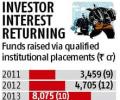
The return of investor confidence in the equity markets is bringing some of the large companies back to the fund-raising table.

The event will also hurt PNB's asset quality in the March 2018 quarter. While the finer details of the fraud have not been provided, making it difficult to gauge the exact impact, analysts say it will dent the bank's financials.

Wonder why corporate India is showering dividends?

The introduction of GST would constitute India's biggest reform.

During the dot-com bubble, it had touched a high of 1.9.

Do not decide your investments based on election results.

The recovery was led by pharma majors led by Dr Reddy's Labs.

Before participating, consider company's long-term prospects, premium offered and acceptance ratio.
Balanced funds may be a good option for first-time investors.
 © 2026 Rediff.com - Investor Information - Advertise with us - Disclaimer - Privacy Policy - Sitemap - Feedback - About us - Terms of use - Grievances