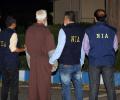
He was sent to judicial custody on May 9 and lodged in Tihar jail after his custodial interrogation by the NIA.

Tahawwur Hussain Rana, the key mastermind of the 2008 Mumbai terror attacks, is being interrogated for eight to ten hours daily by the National Investigation Agency (NIA) to unravel a larger conspiracy behind the strikes. Rana, who was extradited from the US, is being grilled by NIA investigators to probe a larger conspiracy behind the attacks, in which 166 people were killed and over 238 injured. He is being allowed to meet his lawyer and is being provided with basic necessities. The investigators hope to find some important leads on his travels in parts of northern and southern India days before the carnage in Mumbai on November 26, 2008.
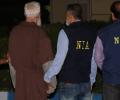
The National Investigation Agency (NIA) has begun questioning Tahawwur Hussain Rana, the mastermind behind the 2008 Mumbai terror attacks, to uncover the larger conspiracy behind the deadly strikes. Rana, who was extradited from the US, is being held at the NIA headquarters in New Delhi. The interrogation is focused on his possible connection with the Lashkar-e-Taiba (LeT) and his suspected links with the Pakistani spy agency Inter-Services Intelligence (ISI).
Tahawwur Hussain Rana, a Canadian national accused of involvement in the 2008 Mumbai terror attacks, has been extradited to India from the United States. Rana's interrogation is expected to shed light on the role of Pakistani state actors in the attacks, which claimed 166 lives. Indian authorities are particularly interested in his travels across India in the days leading up to the attacks, including visits to Hapur, Agra, Delhi, Kochi, Ahmedabad, and Mumbai. Rana's extradition follows a lengthy legal battle, with the US Supreme Court ultimately denying his application to challenge it. Rana is known to be associated with Pakistani-American terrorist David Coleman Headley, one of the main conspirators of the 26/11 attacks. The investigation into the Mumbai attacks has implicated senior members of terror outfits Lashkar-e-Taiba (LeT) and Harkat-ul Jihadi Islami (HuJI), as well as officials from Pakistan's Inter-Services Intelligence (ISI).
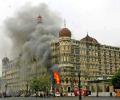
Tahawwur Rana, accused of involvement in the 2008 Mumbai terror attacks, is expected to be extradited to India from the United States soon. The US Supreme Court denied his last-ditch effort to stop his extradition, moving him closer to being handed over to Indian authorities. Rana's extradition is expected to help probe agencies expose the role of Pakistani state actors behind the attacks and shed new light on the investigation. He is associated with Pakistani-American terrorist David Coleman Headley, one of the main conspirators of the 26/11 attacks.
Tahawwur Hussain Rana, a key accused in the 26/11 Mumbai terror attacks, was brought to India on Thursday after being "successfully extradited " from the US, the National Investigation Agency (NIA) said. The 64-year-old Canadian citizen of Pakistani origin landed in Delhi in a special plane on Thursday evening, ending days of speculation of when and how he will be extradited, officials said. The NIA said in a statement that it had secured the successful extradition after years of sustained and concerted efforts to bring to justice the key conspirator behind the 2008 mayhem that claimed 166 lives. Rana is accused of conspiring with David Coleman Headley alias Daood Gilani, and operatives of designated terrorist organisations Lashkar-e-Taiba (LeT) and Harkat-ul-Jihadi Islami (HUJI) along with other Pakistan-based co-conspirators, to carry out the the three-day terror siege of India's financial capital.

Tahawwur Hussain Rana, a Pakistan-born Canadian national and close associate of David Coleman Headley, is set to be extradited to India from the US. Rana was involved in the planning and execution of the 2008 Mumbai terror attacks, which killed 166 people, including six Americans. He assisted Headley in obtaining a visa for India, established a front company in Mumbai, and helped in reconnaissance of targets in Mumbai and New Delhi. Rana was convicted in the US for providing material support to Lashkar-e-Taiba (LeT) and sentenced to 14 years in prison. His extradition to India will allow authorities to question him about his involvement in the Mumbai attacks and potentially uncover new information about the role of Pakistani state actors.

Jamaat-ud-Dawah founder Hafiz Muhammad Saeed has in an interview with a Pakistani news channel said that India has always maintained double standards when it came to relationship with Pakistan. Tahir Ali reports
JuD chief and 26/11 mastermind Hafiz Saeed has alleged that United States wants to gain two objectives by announcing the $10 million bounty on his head, reports Tahir Ali
"We believe Hafiz Muhammad Saeed, the LeT chief, is a khawarij (rebel) and needs to be punished under the law," secretary general of the Markazi Jamiat-e-Ahl-e-Hadees, Maulana Asghar Ali Imam Mehdi Salfi, said.

Makki and other LeT/JUD operatives "have been involved in raising funds, recruiting and radicalising youth to violence and planning attacks in India, particularly in Jammu and Kashmir (J&K)," the sanctions committee said, providing a statement for the reasons of Makki's listing.
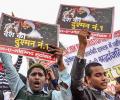
They are the first to be declared terrorists under the new anti-law, a home ministry official said.
Making provocative comments again, Jamaat-ud-Dawah chief Hafiz Muhammad Saeed has vowed to enter India through Jammu and Kashmir.

Lashkar-e-Tayiba chief and 26/11 attacks mastermind Hafiz Muhammad Saeed has said that 2001 Parliament attack convict Afzal Guru was executed merely to satisfy the "ijtimai zameer" (collective conscious) of the Indian nation that can only be satisfied with blood.
Jamat-ud-Dawa chief Hafiz Muhammad Saeed, who has a United States bounty of 10 million dollars on his head, has said those enjoying government perks in Pakistan are not only violating the Constitution, but also principles outlined in Islam. Saeed, who founded the Lashkar-e-Tayiba, filed a petition before the Lahore high court challenging the 'VIP culture' for officials enjoying the top-most government posts in the country.
The Pakistan government will not defend Jamaat-ud-Dawa chief Hafiz Muhammad Saeed before a United States court in connection with the 2008 Mumbai terror attacks. The government stated this before the Lahore high court in reply to Saeed's petition seeking a direction for the Pakistan government to defend him before a US court, which has issued summons to him, along with top Pakistani intelligence personnel, in connection with the November 2008 Mumbai terror siege.
Smita Salaskar, the widow of slain encounter specialist Vijay Salaskar, who fell to terrorists' bullets in the 26/11 attacks, talks to Rediff.com's Prasanna D Zore about the hanging of Ajmal Kasab
Union Home minister P Chidambaram has said that the announcement made by the US government of a $10 million bounty leading to the arrest and conviction of Lashkar-e-Tayiba Hafiz Muhammad Saeed, will put pressure on the Pakistani government to take action against him.
Pakistan has demanded actionable evidence from India against Jamaat-ud-Dawa chief Hafiz Muhammad Saeed. Pakistan can take action against the JuD chief if India provides practicable evidence against him, Interior minister Rehman Malik told Indian journalists in Islamabad.
The Indian government sees the hand of Pakistan army behind possibility of popping up, on the political platform, of Hafiz Muhammad Saeed, chief, Jamaat-ud-Dawah, which is considered the front of terrorist organisation Lashkar-e-Tayiba. Sheela Bhatt reports.
Jamaat-ud-Dawah chief Hafiz Muhammad Saeed, blamed for the 2008 Mumbai terror attacks, has kept the guessing game on about his reported political ambitions.
Jamaat-ud-Dawa chief Hafiz Muhammad Saeed, who has a $10 million US bounty on his head, has made his informal entry in the political arena by moving the Lahore high court against the Pakistan's corruption-riddled and profligate ruling elite through his first ever 'political-focused' petition.
Jamaat-ud Dawa chief Hafiz Muhammad Saeed has moved the Lahore high court seeking direction for the Pakistan government to defend him, Inter Services Intelligence officians and others before a United States court, which has issued summons to them in connection with the 2008 Mumbai terror attacks.
Chief of the banned organisation Jamaat-ul-Dawa Hafiz Muhammad Saeed on Wednesday made his first public appearance in Islamabad in over two years at a meeting of leaders of key religious parties and hardliners opposed to changes in Pakistan's controversial blasphemy law.
Jamaat-ud-Dawah chief Hafiz Muhammad Saeed may face fresh detention after British diplomats met senior Pakistani officials to convince them to crack down on the organisation, a front for the banned Lashkar-e-Tayiba. Diplomats from the British missions in Islamabad and New Delhi had a "successful rounds of talks with Pakistani leaders in the last week of July".These talks "might lead to the detention of JuD chief Hafiz Muhammad Saeed.
Jamaat-ud-Dawah chief Hafiz Muhammad Saeed on Thursday rubbished Pakistan governments efforts to improve relations with India, alleging that country had engaged in dialogue only to 'cause harm' to Pakistan and to sideline the Kashmir issue.
A young Pakistani national living in a suburb of Washington has pleaded guilty to providing material support to terror outfit Lashkar-e-Tayiba by making a propaganda video.
Jamaat-ud-Dawah chief Hafiz Muhammad Saeed claimed that India wants to "weaken the freedom movement" in Jammu and Kashmir under the pretext of talks with Pakistan.
The government of Pakistan's Punjab province has decided to disassociate itself from the case against Jamaat-ud-Dawa chief and Lashkar-e-Tayiba founder Hafiz Muhammad Saeed, the suspected mastermind behind the terror attack on Mumbai, and filed a plea for its withdrawal.On Monday, the provincial government informed Pakistan's Supreme Court that it has challenged the release of Saeed due to certain 'confidential evidence' against him.
Deputy Attorney General Naseem Kashmiri, in a written reply submitted on behalf of Foreign Ministry to Justice Umar Ata Bandial of the Lahore High Court, said: "The government is defending the ISI before the US court being an institute of the government while the JuD or its chief are not part of the government."
Continuing his anti-India rant, the chief of Jamaat-ud-Dawah Hafiz Muhammad Saeed, has now said that 'jihad' is the only way to free Jammu and Kashmir from the "Indian yoke". Saeed, who India blames for masterminding the 2008 Mumbai attacks, made the remarks while addressing a meeting of JuD workers at the Jamia Masjid Mukarram at Daska in Punjab province on Monday.
The United Nations Security Council has placed sanctions on Pakistan-based Jamaat-ud-Dawa, the front organisation of banned Lashkar-e-Tayiba, declaring it a terrorist organisation.Four top leaders of LeT including Hafiz Muhammad Saeed, Zaki-ur-Rehman Lakhvi, Haji Muhammad Ashraf and Zaki-ur-Bahaziq have also been declared as terrorists by the UNSC.Imposing the sanctions, the Council asked all member states to freeze their assets and impose travel ban and arms embargo.

Jamaat-ud-Dawah chief Hafiz Muhammad Saeed, blamed by India for masterminding the 2008 Mumbai carnage, on Tuesday night said New Delhi has never presented any evidence to back up its assertions that his group was involved in several terrorist attacks.

India had also sent proof and request for issuing a similar warrant against Lashkar commander Zarar Shah and Abu Al Qama, to which the Interpol has said that it was analysing the evidence against them.
Pakistan will be in 'great trouble' if President-elect Asif Ali Zardari does not change the policies of his predecessor Pervez Musharraf, which have 'derailed the Kashmir issue', the founder of the outlawed Lashker-e-Taiba has said.Militant ideologue Hafiz Muhammad Saeed, who now heads the Jamat-ud-Dawah, called on the people of Pakistan to gather at the Line of Control to show solidarity with the residents of Jammu and Kashmir.
The next war between India and Pakistan could be fought over water, Lashkar-e-Tayiba founder Hafiz Muhammad Saeed has claimed. Saeed, who currently heads the Jamaat-ud-Dawah, made the remarks while addressing a gathering at a mosque in Chowburji area of Lahore on Sunday.
Imam Hafiz Muhammad Hamid, Saeed's brother, was deported on Sunday and is expected to arrive in Pakistan on Tuesday morning, Daily Times reported from Washington on Monday.
The interesting observation by Saeed, who has been blamed for many terrorist attacks in India and figured top of the list of wanted persons, was made during a sermon at a prayer meeting in Lahore on Friday.
Founder of Lashkar-e-Tayiba Hafiz Muhammad Saeed has been named in the charge-sheet on the terror attack in Mumbai for his suspected role in hatching the criminal conspiracy to carry out the terror strikes. The Mumbai police, which filed a 11,280-page charge-sheet on Wednesday before a magistrate, has named 59-year-old Saeed as the first accused wanted for his suspected role in planning the unprecedented attack on the country's financial hub.
Asif Ali Zardari's remarks that the Kashmir issue should be put on the backburner drew mixed reactions on Monday with the ruling Congress-PDP coalition in Jammu and Kashmir saying it was positive but separatist leaders voiced their dismay. Zardari had said that India and Pakistan should set aside the Ksahmir issue to focus on other key issues.
 © 2026 Rediff.com - Advertise with us - Disclaimer - Privacy Policy - Sitemap - Feedback - About us - Terms of use - Grievances