
Indian and Indian-American IT businesses are being scapegoated for abuse of the visa programme - using it for cheap, immobile labour - that actually pervades the entire industry.
Slamming American immigration policies, Microsoft boss Bill Gates has said the US was shutting the door on the best and the brightest at a time when the country needed it the most.

'As far as skilled immigration is concerned, the US needs Indian skills and Indian talent, and there are no two opinions about it even among US companies.'

Illegal immigration, he said, has resulted in crime, corruption and inflation.
Many foreigners, including Indians, have benefitted from the immigration visa.

Those on H-1B visas have to find a new job within 60 days or head back to India.

Here are list of some of the big ticket announcements.
The US Citizenship and Immigration Services would accept petitions for the H-1B work visas on the first five working days beginning April 1.

The US is planning to resume the process of domestic visa revalidation in certain categories, like H-1B and L1 visas, on a pilot basis later this year, a move that will benefit tens of thousands of foreign tech workers, particularly from India. Until 2004, certain categories of non-immigrant visas, particularly the H-1B, could be renewed or stamped inside the US. After that, for the renewal of these visas, in particular, those on H-1B, the foreign tech workers have to go out of the country, mostly to their own country to get the H-1B extension stamped on their passport.

The EAM when asked about his view of the world at present, said it would be "very grim forecast, for the next five years".

In yet another immigration-friendly move that would benefit thousands of Indian-American women, the Biden administration has agreed to provide automatic work authorisation permits to the spouses of H-1B visa holders, most of whom are Indian IT professionals.

The US has announced that individuals travelling to the country on a business or tourist visa - B-1 and B-2 - can apply for new jobs and even appear in interviews, but the prospective employees must ensure that they have changed their visa status before starting a new role. B-1 and B-2 visas are generally referred to as "B visas", and they are the most common types of visa issued for a wide range of uses in the United States. The B-1 visa is issued mainly for short-term business trips, while the B-2 visa is issued mainly travelling for tourism purposes.

The Biden administration has proposed a massive hike in immigration fees, including the much sought-after H-1B visas for high-skilled foreign workers, which is very popular among Indian tech professionals. Under the proposed rule, published by the US Citizenship and Immigration Services (USCIS) on Wednesday, the application for the H-1B visa increases from $460 to $780, and L-1 from $460 to $1,385. The application fee for O-1 visas has been proposed to increase from $460 to $1,055.

US H1-B visa cap reached within 5 days for 3rd straight year.

It has been the preferred visa for Indian IT companies and has helped them keep costs down and gain a margin advantage over multinational players by sending engineers to the US.

rediffGURU Geeta Ratra offers expert advice on international courses, student visas and immigration processes.

The current Federal rules require an H-1B visa holder to leave the US along with family members within 60 days of losing his job. The H-1B visa holders have started a petition campaign on the White House website to extend the timeline for their stay in the US to 180 days after they are being laid off.

Indian start-ups and software product companies are trying to attract engineers and programmers who are either stranded in India because of the lockdown or H-1B visa holders who have been laid off.
Amid mass layoffs in the tech sector, the federal agency for immigration services has said it is wrong to assume that sacked workers holding the much-sought-after H-1B visas have to leave the country within 60 days, asserting they have multiple options to stay in the US. The H-1B visa is a non-immigrant visa that allows US companies to employ foreign workers in speciality occupations that require theoretical or technical expertise. Technology companies depend on it to hire tens of thousands of employees each year from countries like India and China.
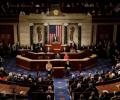
The proposals aims to impose new restrictions to prevent abuse and misuse of H-1B visas, besides ending the provision of granting extension for those who already have a green card.

US President Donald Trump has extended the freeze on the most sought-after H-1B visas along with other types of foreign work visas by three months to protect American workers, saying while therapeutics and COVID-19 vaccines are recently available, their effect on the labour market and community health has not yet been fully realised. The decision will impact a large number of Indian IT professionals and several American and Indian companies who were issued H-1B visas by the US government for the fiscal year 2021 beginning October 1. The freeze on various categories of work visas was ordered by Trump through two proclamations on April 22 and June 22 last year.

Reopening the country to people seeking green cards, or legal permanent residence, Biden in his proclamation on Wednesday said that the policy of former US President Donald Trump does not advance the interests of the United States.
The Indian IT companies, which account for a large number of H-1B applications, are likely to face the additional financial burden because of this proposed increase in H-1B filing fees.
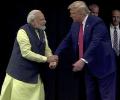
Congress chief spokesperson Randeep Surjewala wondered why Prime Minister Modi was 'silent' on his 'India First' policy as President Trump talked of 'America First'.

Trump to sign an executive order aimed at achieving a more skills-based and merit-based immigration system.

The ruling by a federal judge in Oregon means that there will be no change in the H-1B visa issuance process for the fiscal 2018 which begins on April 3.

A group of influential lawmakers have introduced a bipartisan legislation in the US Senate to comprehensively overhaul the H-1B and L-1 visa programmes and usher in more transparency in the recruitment of foreign workers. The H-1B visa is a non-immigrant visa that allows US companies to employ foreign workers in speciality occupations that require theoretical or technical expertise. Technology companies depend on it to hire tens of thousands of employees each year from countries like India and China.

As large-scale layoffs begin at Facebook's parent company Meta, employees on work visas such as H-1Bs are now faced with uncertainty over their immigration status, with CEO Mark Zuckerberg acknowledging "this is especially difficult if you're here on a visa" and offering support to those impacted. Meta announced that it is laying off 11,000 employees or 13 per cent of its workforce, with Zuckerberg describing it as "some of the most difficult changes we've made in Meta's history." US-based technology companies hire a large amount of H-1B workers, the majority of whom come from countries such as India.
External Affairs Minister S Jaishankar said if 'you look at the totality of our ties and we will look at where we have strong economic synergies, where we have strong technology promptings, these are really based on the flow of talent.'

The demand for white-collar gig roles saw an 11 per cent uptick year-on-year in March, amid muted hiring across industries due to global headwinds and job cuts, according to a recent report. The month saw white-collar hiring in India rise 2 per cent in terms of job posting activity compared to the same period the previous year, according to the report by staffing portal foundit.in (formerly Monster APAC and ME). Sectors such as retail, telecom, and Travel and Tourism saw the biggest growth in demand on an annual basis.
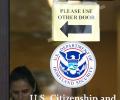
The United States on Saturday announced that from April 3 it will temporarily suspend the 'premium processing' of H-1B visas that allowed some companies to jump the queue as part of its efforts to clear the backlog.

Almost all Indian IT companies pay between $8,000 and $10,000 per H1B visa as per the hike

'We are only talking about 65,000 H1B visas a year, it is not going to go down drastically.' 'If the number reduces and when you spread that reduction across all the top IT services companies, the impact will be marginal.'

From May 26 onwards, the US Citizenship and Immigration Services will begin accepting applications for work visas from H-IB spouses, reports Aziz Haniffa/Rediff.com.

It said the decision was a result of the United States government's 'pro-growth economic agenda'.

Almost all Indian IT companies would pay between $8,000 and $10,000 per H1B visa from April 1

Infosys will pay California $800,000 to resolve allegations that, between 2006 and 2017, approximately 500 Infosys employees were working in the state on Infosys-sponsored B-1 visas rather than H-1B visas, California Attorney General Xavier Becerra said. In 2017, Infosys had agreed to pay the State of New York $1 million to settle allegations of submitting wrong documents to federal authorities.
Arun Vakil looks at H1B visas in the United States. He gives an introduction, reviews details and looks at the future of this most desired and least available visa.
 © 2026 Rediff.com - Advertise with us - Disclaimer - Privacy Policy - Sitemap - Feedback - About us - Terms of use - Grievances