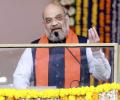
In a series of tweets, Shah also questioned Congress leaders Sonia Gandhi and Rahul Gandhi whether they support the People's Alliance for Gupkar Declaration (PAGD), a conglomerate of regional and national political parties in Jammu and Kashmir formed to demand the restoration of the Article 370, scrapped last year.
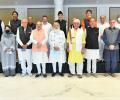
The high table might have yielded relief at personal levels, but its political implications look forbidding at this point in time, observes Mohammad Sayeed Malik, the distinguished commentator on Kashmir affairs.

At the moment, there appears to be no alternative political narrative to the one lying buried under the debris of havoc caused on this front by the fallout of 'August 5, 2019', asserts Mohammad Sayeed Malik, the distinguished commentator on Kashmir affairs.

The People's Alliance for Gupkar Declaration (PAGD) swept the maiden District Development Council (DDC) polls by winning 110 seats, while the Bharatiya Janata Party emerged as the single largest party by getting 75 seats after securing the largest vote share in Jammu and Kashmir, officials said on Wednesday.

The eight-phase DDC polls, which began on November 28, is also the first election after Jammu and Kashmir's special status under Article 370 was revoked last year and it was reorganised into a Union Territory.

But why should India be talking to the Taliban in the first place? There is no love lost there. India will never forget or forgive the humiliation to which the Taliban subjected it in the IC-814 hijack, notes Shekhar Gupta.
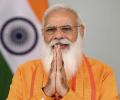
'Your confidence is shaken when the government does what it does these days, but then it is the same confidence that gives you the courage to stand up to the government's high-handedness.' 'There will always be people who will not fear jails or the physical and mental torture that visit citizens protesting against the government's draconian policies and laws.' 'There will always be Indians who will not be afraid to face the consequences of fighting for their Constitutional rights.'
 © 2026 Rediff.com - Investor Information - Advertise with us - Disclaimer - Privacy Policy - Sitemap - Feedback - About us - Terms of use - Grievances